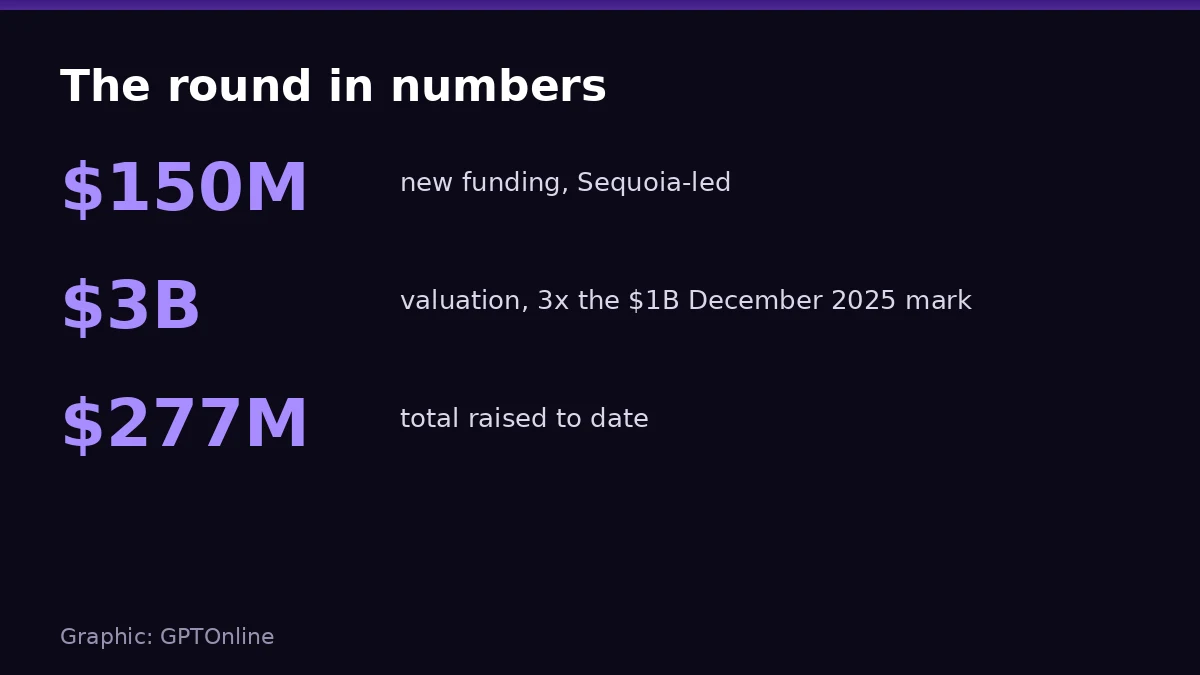
Serval, the San Francisco startup building AI agents for enterprise IT work, has raised $150 million in a Sequoia-led round that values the company at $3 billion, roughly triple the $1 billion valuation it reached last December, Reuters reported on October 29, 2026. The round brings Serval’s total funding to $277 million and marks one of the sharpest re-ratings this year for a company taking aim at entrenched enterprise software incumbents.
What Serval Announced
The round was led by Sequoia Capital, with previous backers including Elad Gil, First Round and General Catalyst also joining, according to Reuters. Serval develops AI agents that automate workplace processes, starting with IT operations such as managing employee access, troubleshooting and handling software and hardware assets.
Co-founder and CEO Jake Stauch told Reuters the company is not trying to add another AI layer on top of existing software. “It’s not an additional layer of AI spend on top of your existing system of record, it is a true alternative replacement for platforms like ServiceNow,” he said, directly naming two incumbents Serval is challenging: ServiceNow and Workday.
The new funding will support expansion of Serval’s Catalyst product, which is designed to help companies build and run automated workflows. Serval separates the agent that administrators use to build tools from the one employees use to access approved workflows, with permissions and approvals controlled by IT and security teams. Customers, Stauch said, still generally want human approval for sensitive actions such as password resets, application access and changes to sensitive systems.
The Proof Point: Lucid’s 45-Day Switch
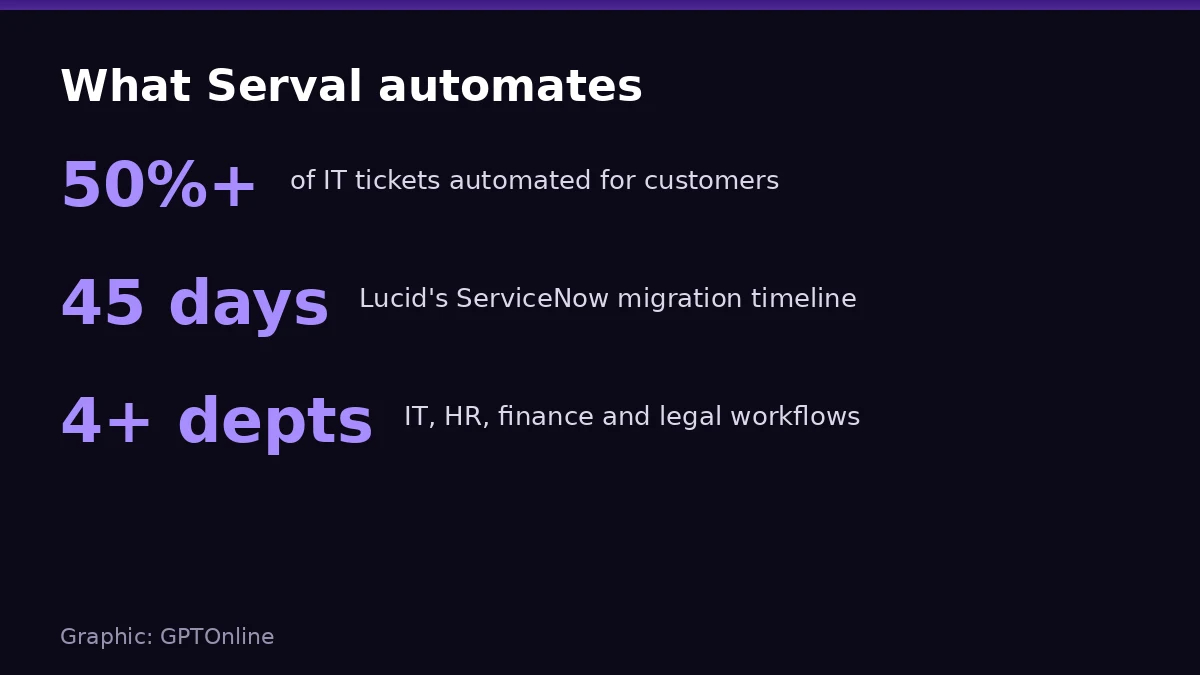
Serval’s boldest claim came with a concrete customer example. Stauch said electric vehicle maker Lucid Motors migrated from ServiceNow to Serval in 45 days, a timeline that, if representative, suggests Serval’s pitch to replace legacy IT service management platforms is landing with large organizations. The migration angle matters because many enterprises are locked into multi-year contracts with incumbent vendors, a barrier Serval tries to lower by also offering to run as an automation layer on top of existing systems until customers are ready to cut over.
A Year of Rapid Re-ratings
The $3 billion valuation continues a steep climb for a company founded only in 2024. In December 2025, Serval raised $75 million in a Sequoia-led round at a $1 billion valuation, lifting its total raised at the time to $127 million, the Economic Times reported. That round came just months after an August 2025 valuation of $232 million, per PitchBook data cited then.
Serval started as an AI-powered tech support assistant handling routine IT tasks for employees, such as fixing computer issues and granting software access, and has since expanded into human resources, legal and finance workflows. The company has said its platform automates more than 50% of IT tickets for customers, and early adopters have included AI companies such as Perplexity, Together AI, Mercor and Clay.
Why It Matters
The round is another sign that investors believe AI-native software can compete directly with incumbents in the enterprise service management market, a space long dominated by ServiceNow. Where earlier AI startups sold tools that sat on top of existing systems of record, Serval’s replacement-first framing, backed by a customer story of a full 45-day migration, argues the switching costs that protected incumbents may be eroding.
The deal also continues Sequoia’s deep relationship with the company: the firm led both the December 2025 and October 2026 rounds, a rare repeat lead that signals conviction about Serval’s path from IT ticketing into broader enterprise automation.
Sources
- Serval triples valuation to $3 billion as businesses adopt AI workflow automation (Reuters, Oct 29, 2026)
- CNA syndication of the Reuters report (Oct 29, 2026)
- Serval’s AI Agents Just Landed A $3 Billion Valuation (Finimize, Oct 29, 2026)
- AI startup Serval valued at $1 billion after Sequoia-led round (Economic Times, Dec 2025)