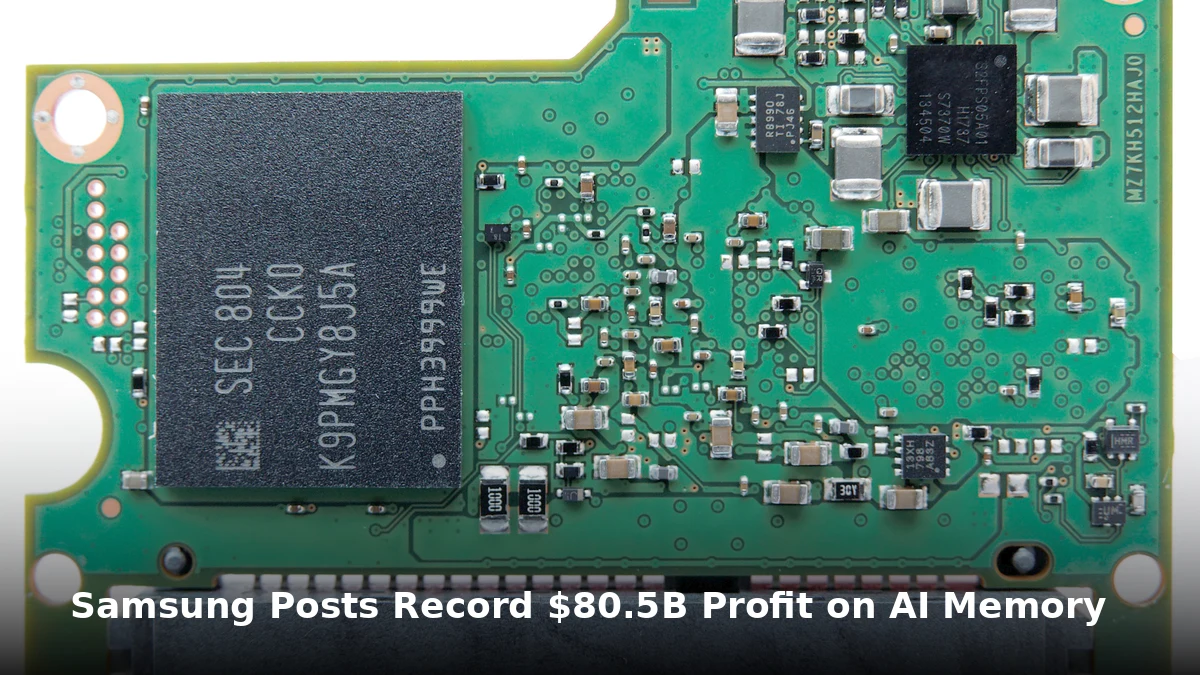
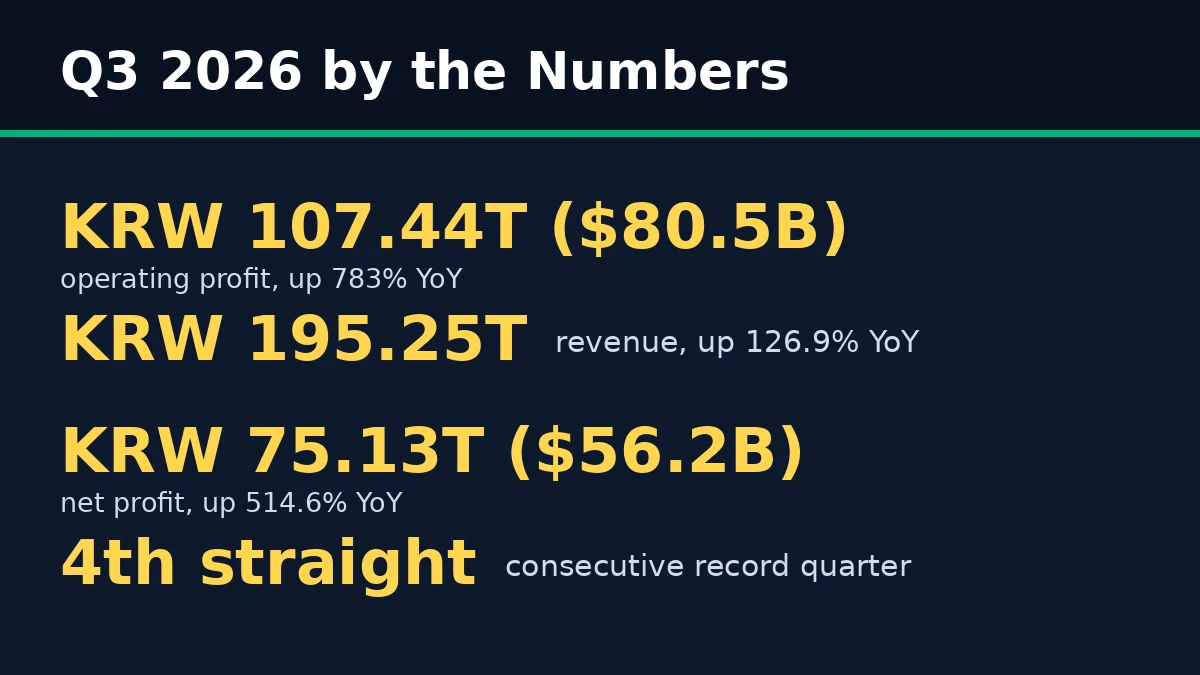
Samsung Electronics reported a Samsung Q3 record operating profit of 107.44 trillion won ($80.5 billion) for the July-September period, driven by booming demand for the memory chips that power AI infrastructure, Reuters reported on Thursday. The result makes Samsung the first global technology company to post quarterly operating profit above 100 trillion won, extending a record streak to four consecutive quarters.
The milestone comes amid a prolonged boom in memory chips, fueled by heavy investment in AI infrastructure that has driven up chip demand and prices, with Yonhap News Agency reporting the world’s largest memory chipmaker is riding what it calls an AI chip supercycle.
Record Numbers Across the Board
The third quarter was Samsung’s strongest on nearly every measure. Revenue rose 126.9% from a year earlier to 195.25 trillion won, another quarterly record, while operating profit surged 783.1% on-year, the company said in a regulatory filing. Net profit jumped 514.6% to 75.13 trillion won ($56.2 billion). Compared with the second quarter, revenue increased 13.9% and operating profit rose 20.1%.
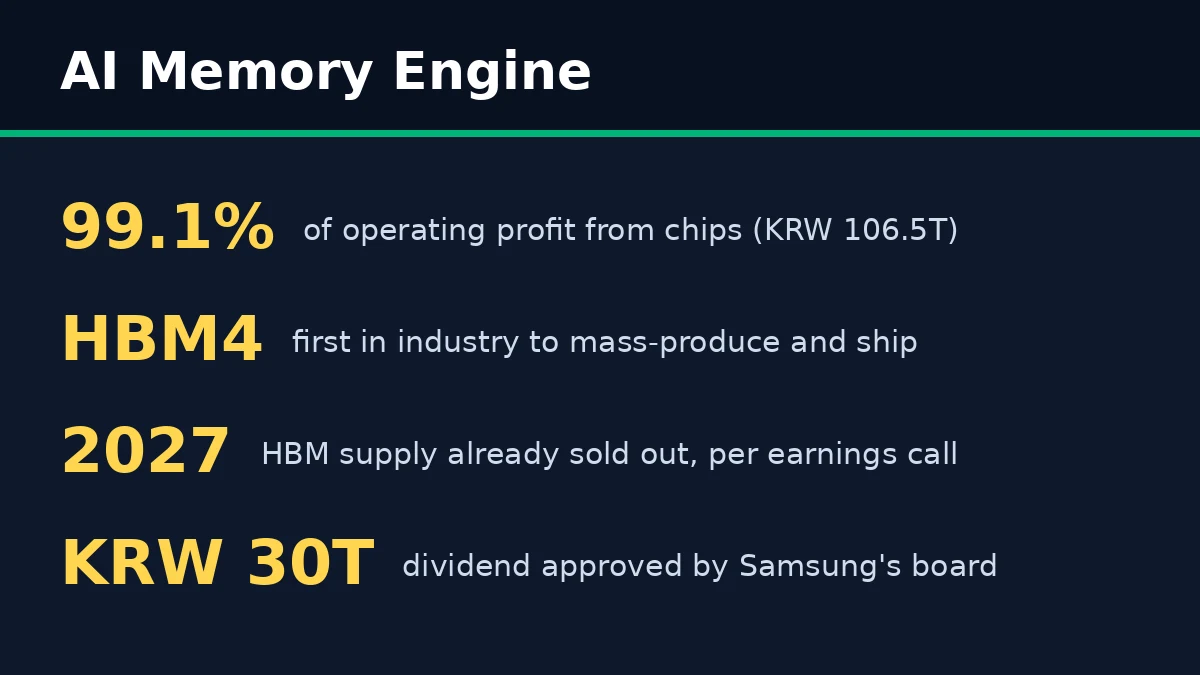
The semiconductor business did almost all of the heavy lifting: the division posted an operating profit of 106.5 trillion won, accounting for 99.1% of the company’s total, Yonhap reported. The Samsung record profit also confirmed the preliminary guidance the company issued on October 8, when it became the first Korean company to project quarterly operating profit above the 100 trillion won mark.
AI Memory Sold Out Into 2027
Samsung said it expanded sales of sixth-generation high-bandwidth memory (HBM4) chips and responded proactively to AI server demand, and it was the first in the industry to begin mass production and shipments of HBM4, per Yonhap. On the earnings call, the company’s memory sales executive said its 2027 HBM supply is already sold out, according to coverage of the call.
Capital expenditure reached 29 trillion won in the quarter, including 27.2 trillion won in the Device Solutions division, as Samsung prepares for sustained AI infrastructure demand. The company expects demand for memory chips to keep growing in the fourth quarter, supported by continued AI investment, and Reuters reported Samsung believes the chip supply shortage will deepen next year.
Dividends, Devices and Market Doubts
In a separate filing, Samsung’s board approved a 30 trillion won cash dividend, payable November 27, part of a shareholder return plan of 90 trillion to 110 trillion won announced in August, the Korea Herald reported.
The AI boom is not lifting every part of Samsung equally. The Device Experience division, which includes phones, TVs and appliances, posted an operating loss, showing that the record performance is concentrated in chips.
Investors remain wary about the durability of AI spending. Samsung shares traded 5.48% lower in Seoul on Thursday morning, even as the results landed, with Reuters noting concern that AI-driven chip earnings could lose momentum. Cross-town rival SK Hynix reported strong earnings on Wednesday with an upbeat outlook, which helped ease some of those market fears.