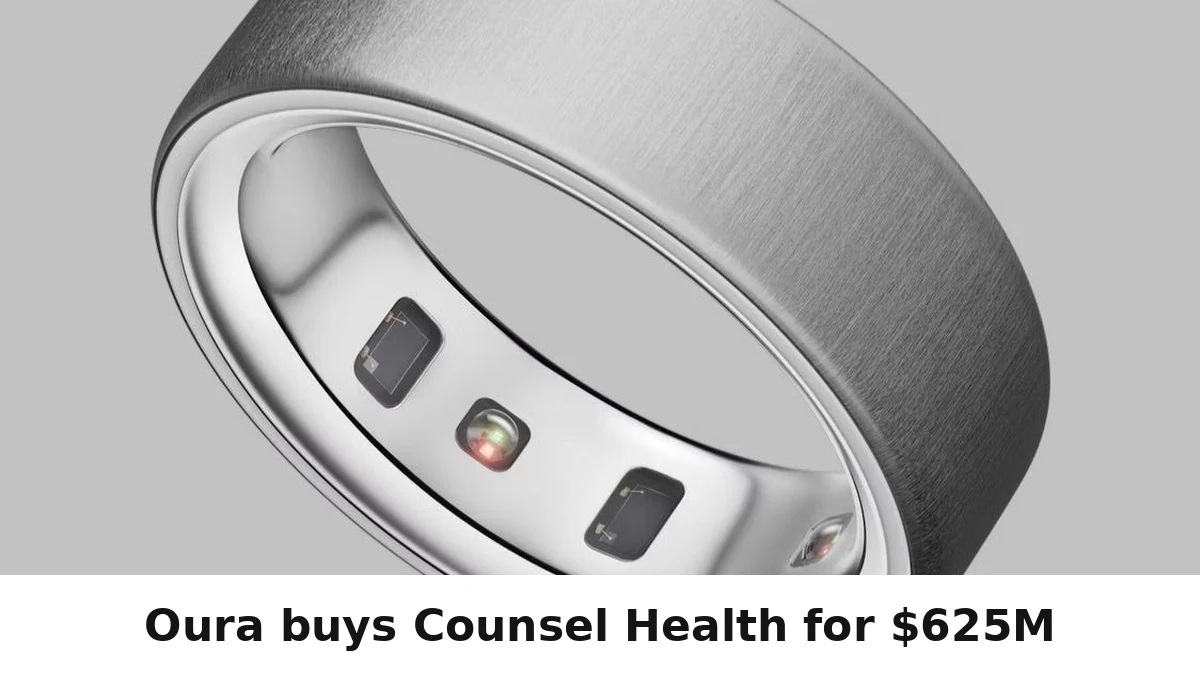
Oura, the maker of the Oura Ring, has agreed to acquire Counsel Health, an AI-native primary care company, for $625 million in cash, the company announced on Tuesday, November 10. The deal turns the smart ring maker into a healthcare provider, pairing continuous biometric data from the ring with medical AI and on-demand doctors inside the Oura app.
The acquisition was announced alongside record results for Oura. For its fiscal fourth quarter ended September 30, 2026, revenue grew 153 percent year over year to $533 million, and for fiscal 2026 the company generated revenue of approximately $1.75 billion, up 92 percent. The transaction is expected to close before the end of the calendar year, subject to customary closing conditions.
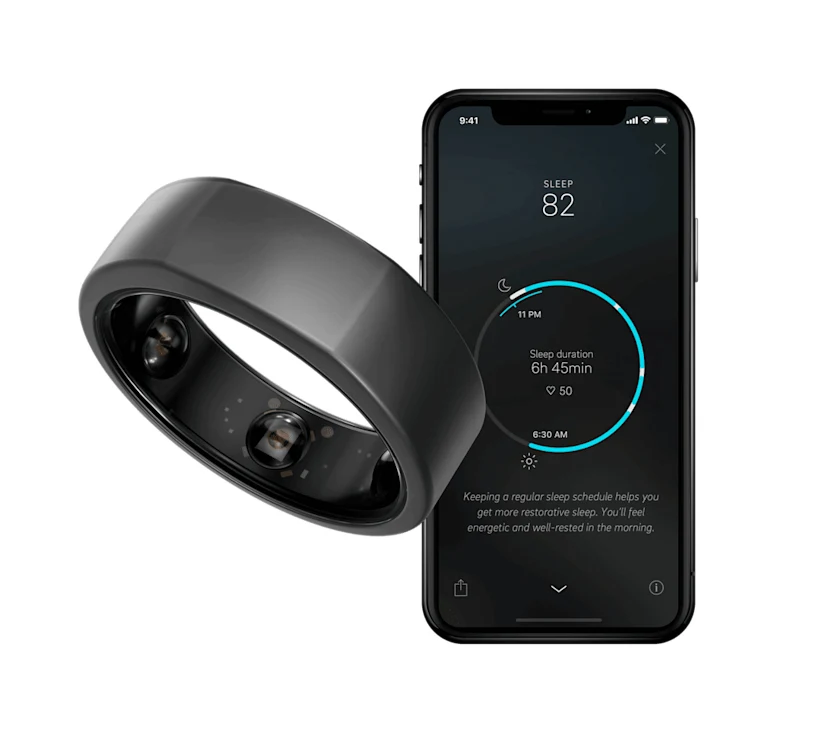
From Tracking Health to Treating It
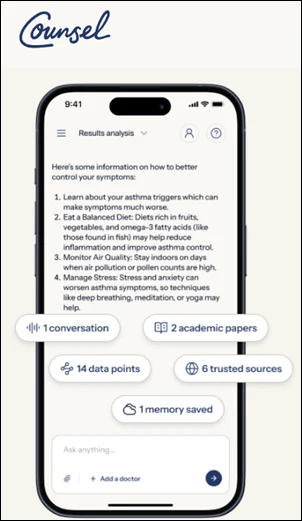
Counsel Health was founded by physicians and AI researchers. Its platform combines medical AI with in-house physicians: members can start by chatting with Counsel’s medical AI for personalized guidance, then escalate to a board-certified physician within minutes when needed, all within the Oura app. At the core of the platform is a clinical AI system that uses specialized agents for tasks such as medical history-taking, guideline retrieval, records review and emergency detection, with physicians kept in the loop for clinical decisions.
On the clinician side, Counsel’s doctors use an AI-native interface called Clinician Cockpit, which synthesizes a patient’s medical record and long-term health trend to suggest context-aware care. After the deal closes, Counsel will keep serving its existing enterprise partners, including health plans, health systems and employers, with the goal of bringing its AI-native care model to millions of patients beyond Oura’s member base.
The two companies already work together, and Oura said the early results support the combination. Among members using Counsel, more than 90 percent of those surveyed said their Oura data helped them get better care, and members who saw a Counsel physician rated their care experience 4.6 out of 5.
What Oura’s Leaders Said
“Oura helps members understand their physiology and, with Counsel, they can take action on their health across a range of needs, from quick questions and prescriptions to lab results, chronic care, and referrals,” said Tom Hale, Oura’s chief executive officer. “Together, we can create a new model of care that extends the current healthcare paradigm by delivering an experience that’s more immediate, personalized, and proactive. This is a massive step in our mission to empower people to live healthier, longer, by delivering on the promise of a 24-7 doctor in your pocket.”
“Continuous health context makes medical AI more useful and relevant by delivering guidance that is personalized to each person’s health,” said Muthu Alagappan, MD, founder and chief executive officer of Counsel Health. “At Counsel, we’ve built medical AI around trust, safety and responsibility, keeping physicians in the loop for clinical decisions.”
David Shuman, Oura’s executive chairman, pointed to the company’s scale as the reason it can fund the deal. “Oura’s record growth of 153 percent this quarter and our over six million members provides us the confidence to invest $625 million cash to acquire Counsel Health,” Shuman said. “Oura tells members what’s happening in their bodies, and Counsel helps them act on it.”
Why It Matters
The Oura Counsel Health deal is Oura’s biggest move yet beyond wearables, and it comes just over a month after the company delayed plans to go public over market uncertainty, according to STAT. Oura was valued at about $11 billion in a late-stage funding round last year, Reuters reported, and had filed paperwork in September for a planned public debut.
For the wearable industry, the acquisition sets a new template: a device company buying its way into care delivery rather than just selling sensors. Oura’s ring already tracks more than 50 health metrics continuously, and Counsel gives those readings a clinical endpoint, from preventive care and acute concerns to specialty and chronic care such as reproductive health, aging and cardiometabolic health. The test will be whether an AI-first care model can scale safely, and whether regulators and patients trust a ring maker as a doctor. Oura noted that the Oura Ring itself is not a medical device and is not intended to diagnose, treat, cure, monitor or prevent medical conditions.