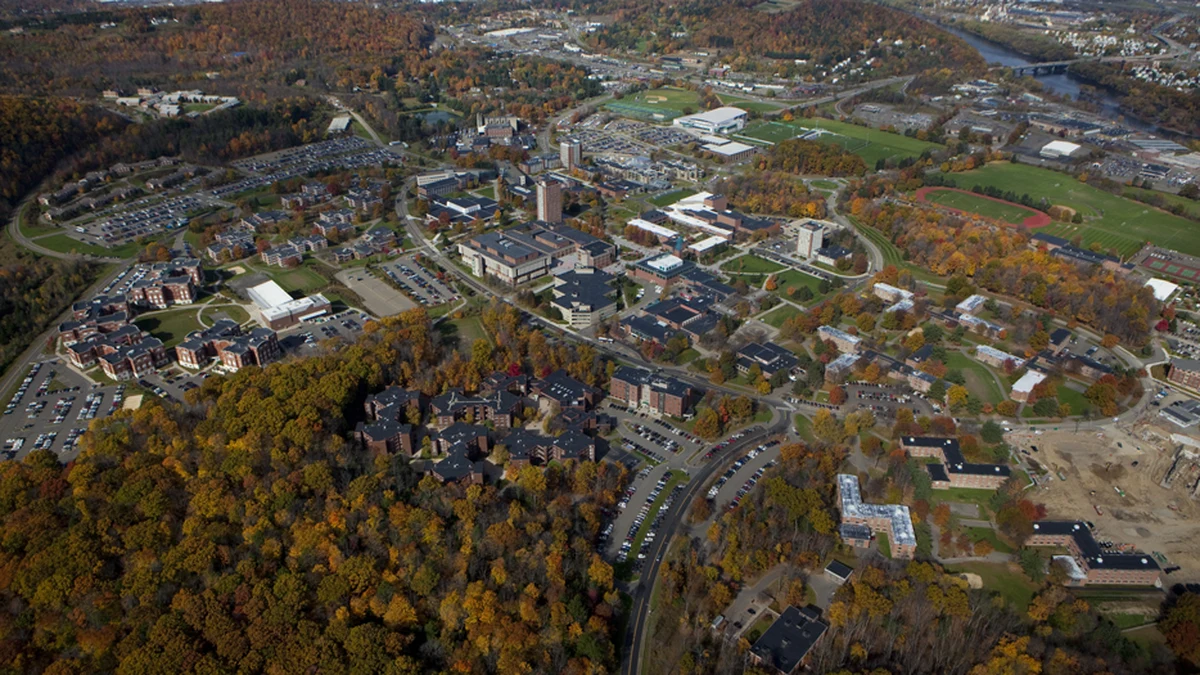
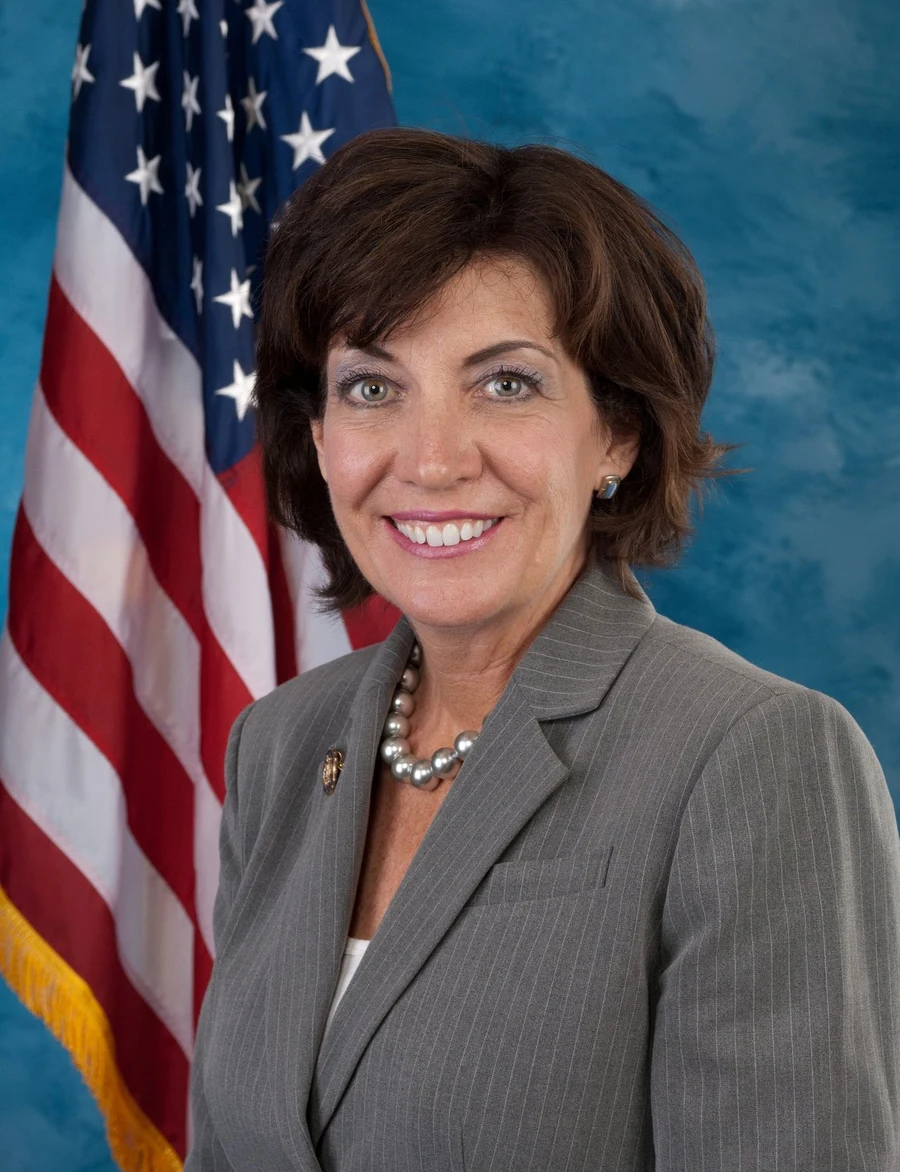
New York Governor Kathy Hochul on November 10 launched the nation’s first independent AI research center at a public university, a new Center for AI Responsibility and Research at the State University of New York at Binghamton. The New York AI Research Center will independently test AI systems, measure how they perform and explain how advanced models behave in real-world settings, and it will train the safety experts New York says it needs as its AI rules take effect.
The launch is backed by a $30 million philanthropic gift from a group of donors led by Tom Secunda, a Binghamton University alumnus and co-founder of Bloomberg LP, coupled with a $25 million research capital investment from SUNY. The governor’s office called the gift the largest academic gift in the history of SUNY Binghamton.
“Artificial intelligence is advancing rapidly, and as the technology increasingly influences everything we do, we need to be just as nimble in making sure AI works for New Yorkers safely and responsibly,” Governor Hochul said. “The Center for AI Responsibility and Research will be an independent arm of research that gives New Yorkers transparency and confidence that AI is being developed and deployed in ways that serve the public good, particularly in public sector applications.”
What the Center Will Do
The center will be the nation’s only public academic center for foundational technical research into the safety, security and transparency of AI models and systems, according to the governor’s office. Its work is meant to create the tools, standards and talent pipeline the country needs so AI is not only powerful, but also secure, transparent and worthy of public confidence.
That independence is the point. The center is meant to sit apart from the companies building the models, testing systems rigorously and publishing findings in the open, at a public university, for the benefit of all New Yorkers. SUNY and Binghamton University will begin an immediate national search for center leadership and affiliated faculty to build the team.
Built on Empire AI
The center builds on the Empire AI Consortium, Governor Hochul’s initiative to give New York’s leading public and private research universities access to state-of-the-art AI computing resources. Binghamton University is a founding member of the consortium, which also includes Columbia University, Cornell University, CUNY, the Icahn School of Medicine at Mount Sinai, New York University, Rensselaer Polytechnic Institute, the University of Rochester, Rochester Institute of Technology, SUNY and the Flatiron Institute, with philanthropic backing from Secunda and the Simons Foundation. Empire AI’s computing center is housed at SUNY’s University at Buffalo.
Secunda, who also serves as the independent chair of the Empire AI consortium’s board, said the center will help build trust in AI through independent, rigorous research. “To capture those benefits at full scale, we also need to build trust the right way: through independent, rigorous research that can test systems, measure performance, and explain how advanced models behave in real-world settings,” Secunda said. “Paired with Empire AI’s shared computing infrastructure, Binghamton University can help lead a national effort to make sure the next generation of AI advances strengthens communities and expands what’s possible.”

New York’s AI Rules Are Taking Effect
The center arrives as New York’s AI safety law, the RAISE Act, moves from paper to enforcement. Hochul signed the act in December 2025, creating some of the strongest restrictions in the United States on large AI companies such as OpenAI and Anthropic, and a new state office to monitor compliance. Developers must register with the state in November, and compliance enforcement begins in January, with companies required to report critical safety incidents and publish their safety protocols.
The testing center and the law are meant to reinforce each other: the state sets the rules and the deadlines, and the center supplies the independent science to judge whether the systems meet them. SUNY Chancellor John B. King Jr. framed the investment as part of the governor’s commitment to double research at SUNY and keep the state at the cutting edge of emerging technologies, including AI.
Why It Matters
States, not Washington, have become the main arena for AI safety rules in the United States, and New York is now trying to lead on the science as well as the law. California passed its own AI safety legislation, but New York is the first state to fund an independent, public-university center whose job is to test the systems itself rather than rely on company disclosures.
The model will be watched closely. If the Binghamton center produces credible, independent evaluations of frontier models, other states and universities are likely to copy it, and the AI companies themselves will face a new, public source of evidence about how their systems actually behave. The New York AI Research Center gives the state something California’s law does not: its own laboratory for testing the systems it regulates. The open question is staffing and speed: the center is only now beginning its search for leadership, and its first findings are still some way off.
Sources
- Office of the Governor of New York: Governor Hochul Launches the Nation’s First Independent AI Research Center at a Public University
- Insurance Journal: Gov. Hochul Says New York’s New AI Compliance Office Could Explore ‘Kill Switch’
- Politico: New York launches first effort to independently test AI systems (via Techmeme)