OpenAI told investors on Tuesday that its revenue passed $10 billion in the third quarter, up about 50% from the second quarter, The Information reported, citing people familiar with the matter. The disclosure, made at an investor meeting on November 10, marks a sharp acceleration from the 17% growth OpenAI recorded in the second quarter.
The numbers put a dollar figure on a turnaround OpenAI executives have been describing for weeks. At the WSJ Tech Live conference on November 4, president Greg Brockman said the company’s annualized revenue rose 70% in the third quarter and its enterprise revenue doubled, with business customers accounting for more than half of total revenue for the first time.
What the numbers show
The Information’s reporting also puts OpenAI’s revenue run rate at about $50 billion, up from an estimated $29 billion at the start of the quarter. The run rate is an annualized pace based on recent billing, not the same as quarterly revenue, and it helps explain why the two growth figures circulating this week look different: actual third quarter revenue rose about 50% from the second quarter, while the annualized pace rose roughly 70%.
The figures line up with what OpenAI told investors in October, when the Financial Times reported the company’s annualized revenue was approaching $50 billion at the end of September. Bloomberg reported in October that OpenAI expects that annualized figure to reach or exceed $70 billion by the end of 2026, driven mostly by enterprise sales.
 Image: OpenAI
Enterprise is now the engine
Brockman credited the acceleration to business customers. In April, OpenAI said business customers accounted for more than 40% of its revenue. By the third quarter, that share had passed 50%, he said, helped by the launch of GPT-5.6 Sol and ChatGPT Work, the company’s workplace bundle. He also disclosed a previously unannounced partnership with JPMorgan Chase, which is using Codex for internal coding work.
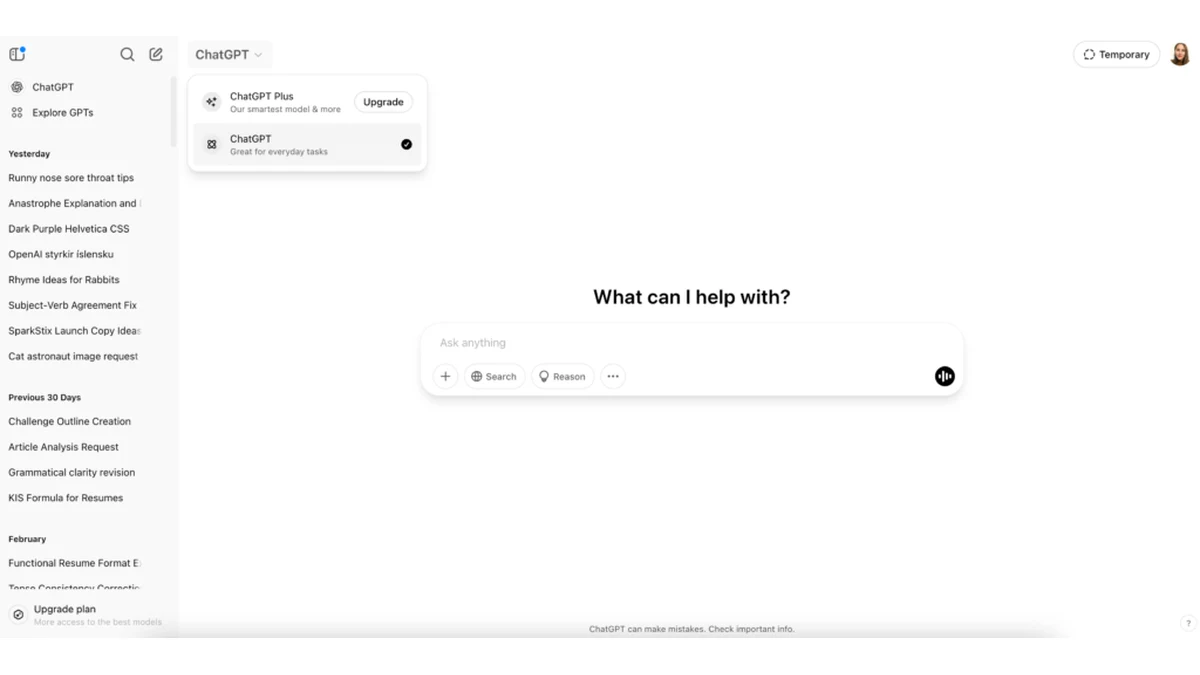
The shift matters because enterprise contracts tend to be larger and stickier than consumer subscriptions. OpenAI now counts more than 1 million business customers, and ChatGPT reaches more than 800 million people a week, according to the company. On November 10, the same day as the investor briefing, OpenAI launched Businesses in ChatGPT, a beta program that lets companies claim verified profiles and chat with customers through Business Agents, a move that could open a new commercial channel inside the chatbot.
 ChatGPT interface. Image: OpenAI
Growth comes with heavy losses
The revenue surge has not closed the gap with spending. The Information has previously reported that OpenAI’s operating loss, including stock based compensation, reached $12.3 billion in the second quarter, or $1.84 for every dollar of revenue, and that first half operating losses of $21.6 billion already exceeded the $20.9 billion recorded across all of 2025. Those figures are reported, not disclosed in audited financials, and OpenAI has not commented publicly on them.
The company is raising money to fund that gap. Bloomberg reported on November 6 that OpenAI had received about $11 billion in new funding at a $1.25 trillion valuation, with the round expected to reach as much as $20 billion. Chief financial officer Sarah Friar confirmed the $1.25 trillion figure on CNBC the same day, calling it almost a 50% lift from the $852 billion valuation in the March round.
A different $10 billion to keep straight
Readers should not confuse OpenAI’s quarterly revenue with a separate $10 billion figure reported in late October. Microsoft disclosed in a regulatory filing that it recorded about $10 billion in revenue from its commercial arrangements with OpenAI in the quarter ended September 30, covering revenue sharing payments and OpenAI’s use of Azure. That is Microsoft’s revenue from OpenAI, not OpenAI’s own revenue, and Microsoft has not said how the total splits between the two.
Why it matters
The third quarter figures give investors the clearest picture yet of OpenAI’s business as it prepares for a possible public listing in 2027, a timeline Brockman raised at the WSJ conference. Revenue growth of 50% in a single quarter, after a first half Brockman described as “pretty rough” as Anthropic gained ground in enterprise coding, suggests the company’s workplace push is paying off. The open question is whether growth can keep outpacing the enormous cost of training and running its models. OpenAI did not immediately respond to a request for comment from Seeking Alpha.