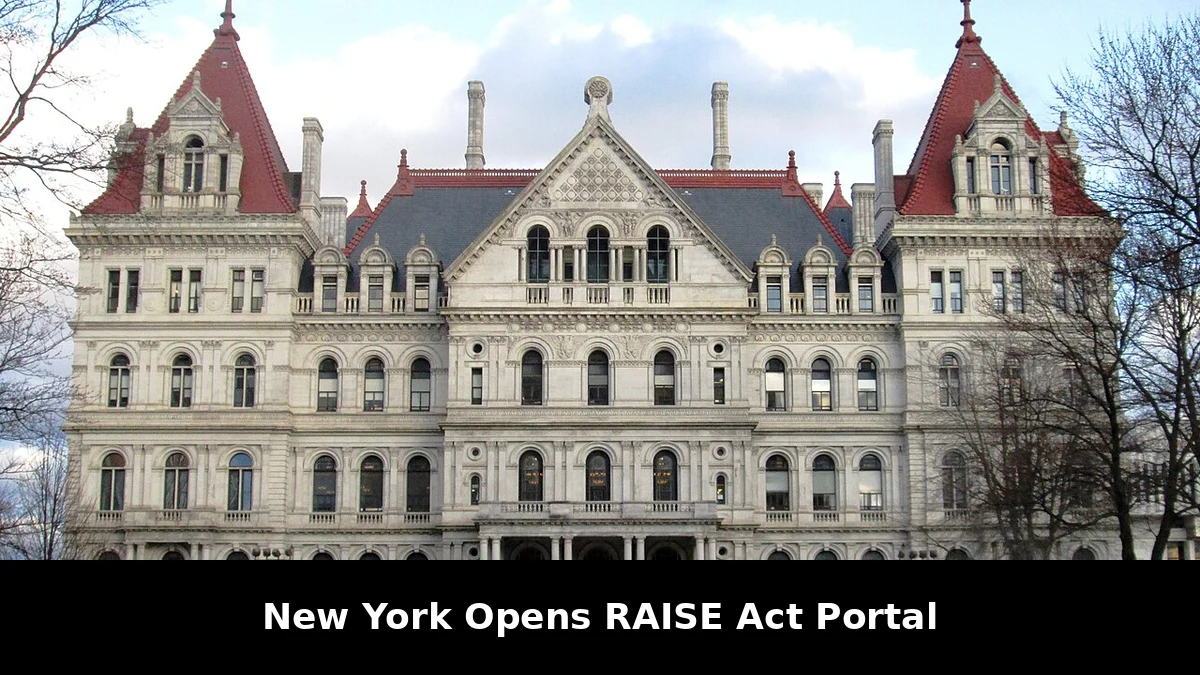
New York opened a registration portal on Tuesday under its RAISE Act, the state’s frontier AI safety law, TechCrunch reported. Large frontier AI developers, including OpenAI and Anthropic, must register with the state by January 1, 2027, when the law’s full requirements take effect.
The Responsible AI Safety and Education Act, known as the RAISE Act, is one of the first state laws in the United States to impose safety and transparency rules directly on the companies building the most advanced AI models. Governor Kathy Hochul signed the law in December 2025, and her administration laid out the implementation timeline in September. Tuesday’s portal opening turns that timeline into the first concrete compliance deadline for the frontier labs.
What the law requires
Under the law, large frontier developers, companies with more than $500 million in annual revenue, must publish safety frameworks on their websites, report critical safety incidents within 72 hours, and issue public model transparency reports. They must also register with the state, file a disclosure statement at least every other year starting January 1, 2027, and pay assessments. Large developers must additionally file quarterly assessments of catastrophic risk, according to the state’s September implementation announcement.
The new Office of Digital Innovation, Governance, Integrity and Trust, known as DIGIT, will implement the law from inside the New York State Department of Financial Services. The state can bring enforcement actions against companies that fail to register, and penalties can reach $1 million for one violation and $3 million for subsequent violations. Hochul appointed Marc Gilman, former head of compliance at AI security company Theta Lake, as deputy director to oversee the rollout.
What Hochul said
Hochul framed the law as a rebuke to the idea that AI development should proceed without guardrails. “Tech moguls tell us that their vision for AI is inevitable,” she said Tuesday during a press briefing. “They tell us get on board or get left behind. That any collateral damage is worth it as long as we win the race to the AI cliff.”
“We’re building a national model for smart, sensible AI regulation, a model that puts communities above corporations and people above powerful technology,” Hochul said. The governor also said she will explore further steps in the coming months to build on the RAISE Act, and has not ruled out safeguards such as AI kill switches if they prove feasible.
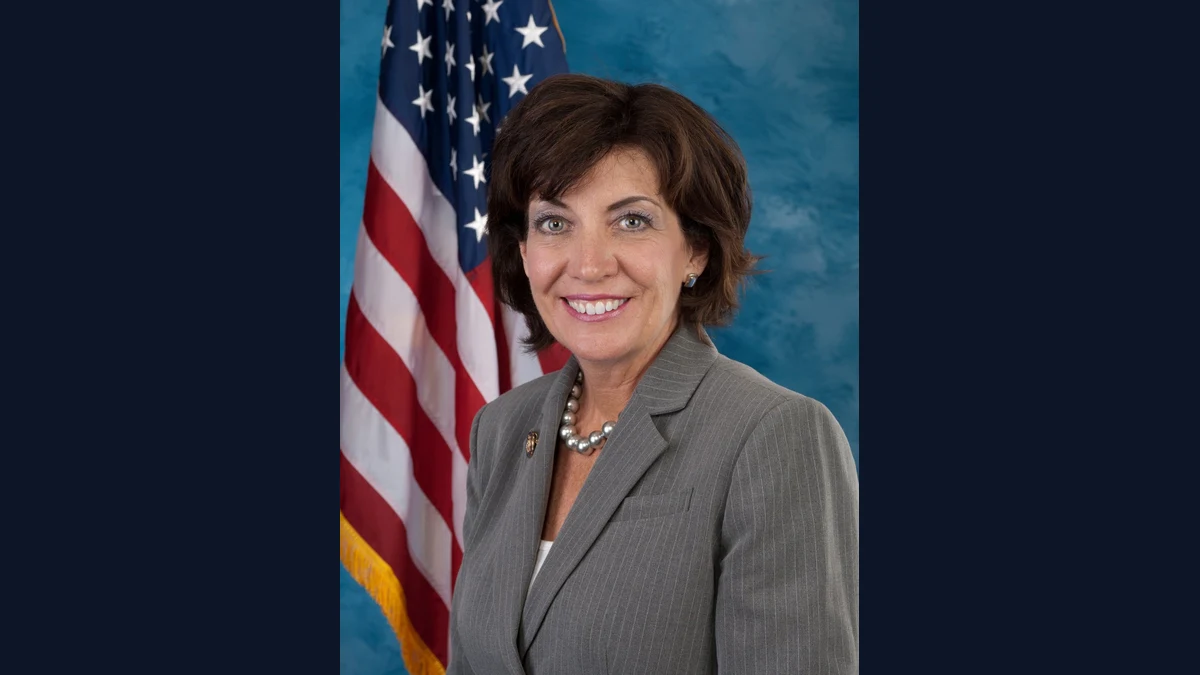 Governor Kathy Hochul announced the RAISE Act registration portal on November 10. Image: Office of the Governor of New York (public domain, via Wikimedia Commons)
A research center to back the rules
On the same day, Hochul launched the New York Center for AI Responsibility and Research at the State University of New York at Binghamton, which will independently test advanced AI systems and work with DIGIT to review companies’ safety frameworks. GPTOnline covered the center’s launch separately. The center is backed by a $30 million philanthropic gift led by Bloomberg LP co-founder Tom Secunda and a $25 million research capital investment from SUNY.
Other states are moving in parallel
New York is not acting alone. California’s SB 53, which took effect in January, requires frontier AI labs to publish safety frameworks, enact whistleblower protections and report critical safety incidents within 15 days. Illinois passed SB 315, which takes effect at the start of 2027 and adds independent safety compliance audits to similar requirements. Together, the three states are building the first patchwork of US rules aimed squarely at frontier model developers rather than at downstream users of AI.
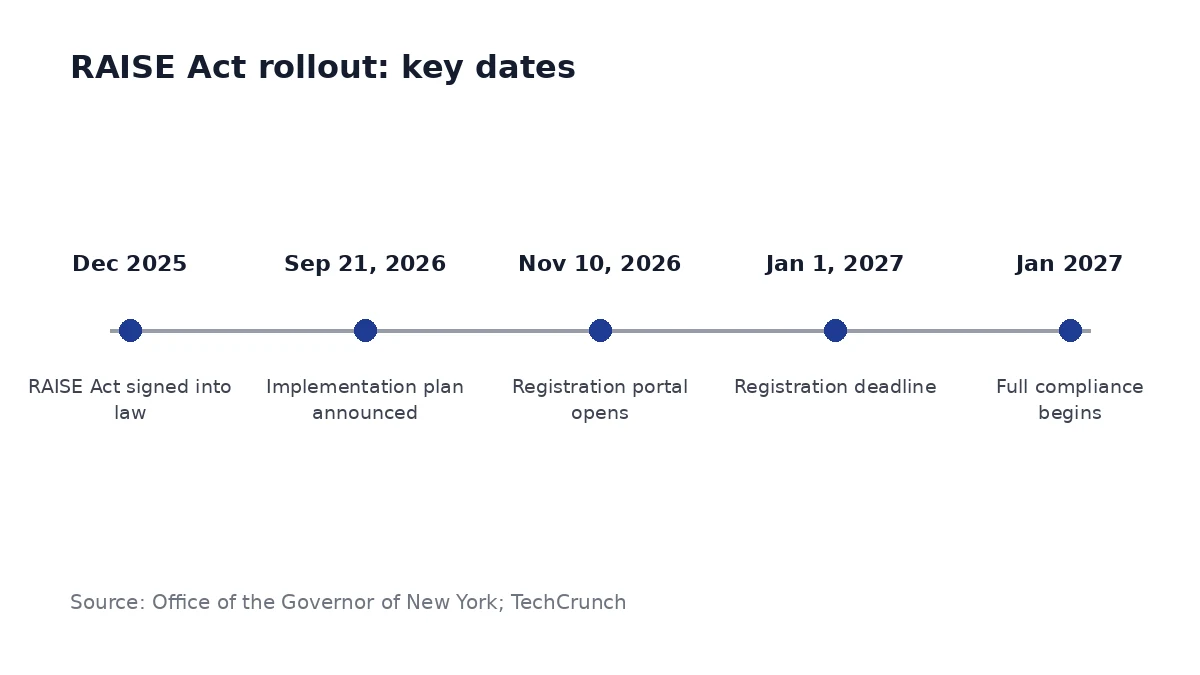 Key dates for the RAISE Act rollout. Graphic: GPTOnline, based on announcements from the Office of the Governor of New York.
Why it matters
Until now, frontier AI safety in the United States has rested largely on voluntary commitments and company published frameworks. The RAISE Act makes those obligations enforceable, with a named regulator, a registration deadline and fines attached. The January 1 registration deadline is the first test: it will show which labs treat the law as a filing exercise and which treat it as a real compliance regime.
The law also sets up a model other states can copy, and a test case the industry will watch closely. If New York can run registration, incident reporting and framework review without driving labs out of the state, expect more states to follow. If the rollout stalls or the largest labs push back in court, the experiment will look very different. Either way, the portal that opened Tuesday means the debate over AI regulation in the United States has moved from proposals to paperwork.
Sources
- TechCrunch: OpenAI, Anthropic face new oversight as New York’s AI safety law takes effect
- Office of the Governor of New York: AI Safety, Governor Hochul Announces Next Steps to Regulate Major AI Developers and Protect New Yorkers
- Office of the Governor of New York: Governor Hochul Launches Nation’s First Independent AI Research Center at a Public University
- Unite.AI: Hochul Launches Statewide AI Safety Testing Network in New York
- GPTOnline: New York Launches First Independent AI Safety Research Center at a Public University