Meta Muse UK is live. Meta launched its personal AI agent in the United Kingdom on November 24, opening Muse to adults aged 18 and over on iOS, Android, muse.ai and WhatsApp, with support for Meta’s AI glasses to follow. The launch makes the UK the latest market for an agent Meta pitches as a doer rather than a chatbot: software that carries out multi-step tasks on a user’s behalf instead of only answering questions. Meta announced the launch in its Newsroom on November 24.
What Muse does
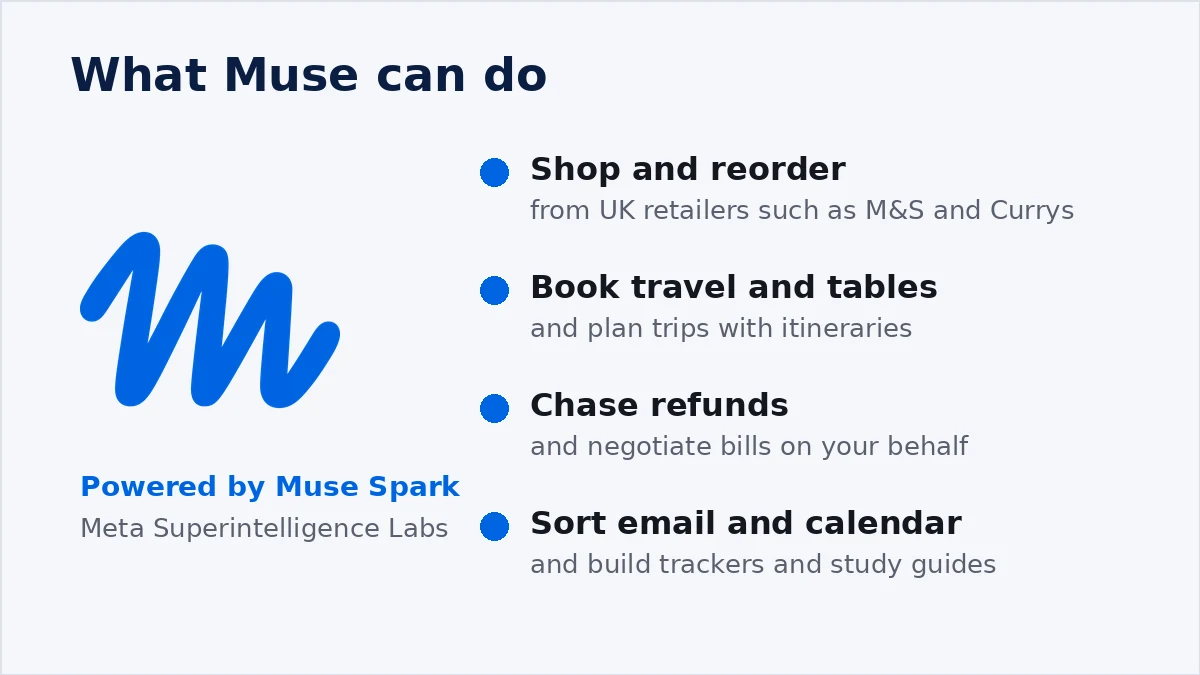
Muse is built to take a request, turn it into a plan and then work through the steps, including opening a browser, filling in forms and coordinating across apps and websites. In the UK it can handle everyday jobs such as sending emails, booking travel, chasing a refund, renewing car insurance or keeping on top of a school calendar. It also builds tools such as trackers, itineraries and study guides, and it keeps working on a task even after the app is closed, asking for approval when needed. Users can personalize its name, appearance and personality, organize tasks in side chats and choose from voice options that include British accents. Muse runs on Muse Spark, the first model family from Meta Superintelligence Labs.
Meta is framing control as the product’s core feature. “Handing tasks to an AI agent is new for most of us, and we know it’s an act of trust,” the company said in its announcement. Before Muse sends an email or buys something, it shows exactly what it is about to do and waits for the user’s go-ahead, while a separate security agent checks its actions against the permissions granted. Users decide what Muse can access and for how long, and each Muse runs on its own dedicated virtual computer in the cloud.
Graphic: GPTOnline, using the official Muse icon.
UK retail partners on board
The UK launch comes with local retail partners so Muse can shop and reorder on British sites. Named partners include Marks & Spencer, Currys, ASOS, Ocado Retail, Trainline and easyJet, alongside global connectors such as Spotify and OpenTable, with PayPal named as a future partner. The partner list was reported in the November 24 AI Daily Brief, and the UK brands were also named in launch coverage. For transactions Muse can use Stripe’s Link or Shopify’s Shop Pay, and purchases need the user’s approval every time.
Privacy: what Meta does with Muse data
Meta says conversations with Muse and the information it keeps are not shared with Meta’s advertising systems. Users choose whether their interactions are used to develop and improve Meta’s AI, a setting that is on when they start and can be turned off at any time under Data controls. Credentials such as usernames and passwords are stored in a secure credentials store, and Muse ignores one-time codes and password-reset links when it has email access. “Muse remembers what matters to you, so you don’t have to repeat yourself,” Meta said, adding that users can see and edit what it remembers, ask it to forget a topic or a person, or reset Muse to delete all Muse data and start again.
Meta also said it has “engaged constructively with the appropriate regulatory authorities and will continue to do so,” a notable line given the scrutiny facing autonomous shopping agents in the UK. Most Muse features are free, with paid plans for heavier use.
A rollout months in the making
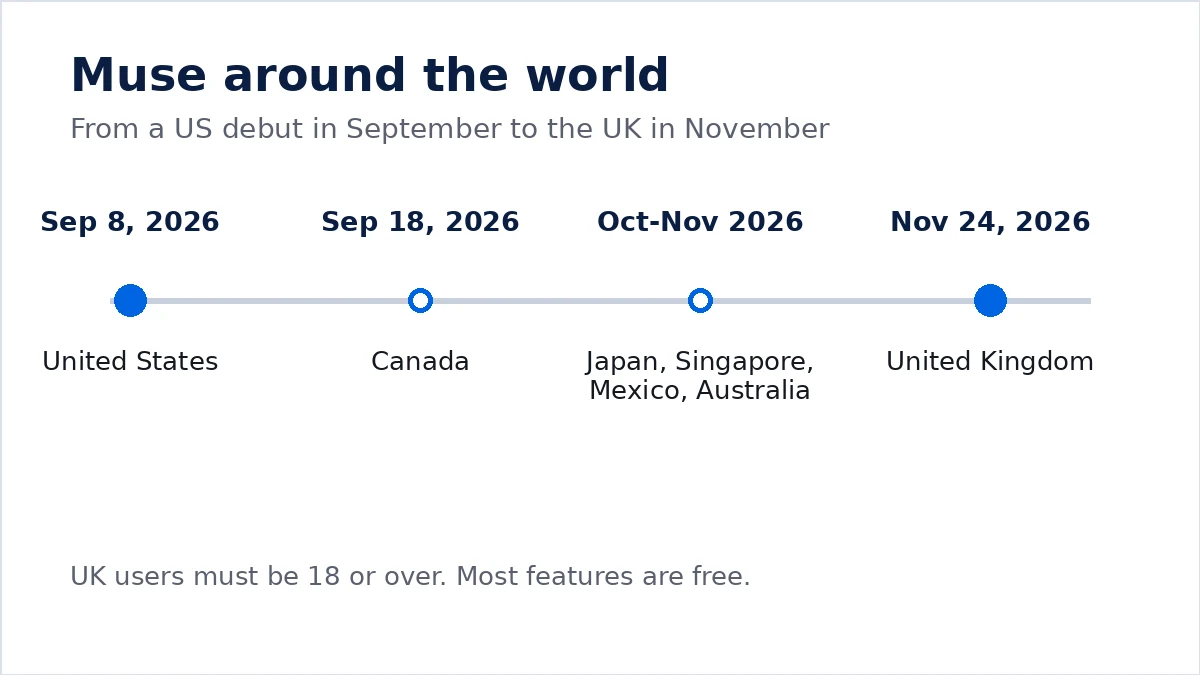
The UK has been the most anticipated Muse expansion since the agent debuted in the United States on September 8, 2026, followed by Canada on September 18 and then Japan, Singapore, Mexico and Australia. The Times reported on November 8 that a UK launch was coming within weeks, with senior Meta executives expected to attend and retail partnerships lined up. Retail Gazette confirmed the same plan the following day. The launch lands just before Black Friday, when shopping help is the feature Meta is most likely to promote.
Graphic: GPTOnline.
Why it matters
Muse arrives in the UK as the agent race heats up. OpenAI’s Dots and Anthropic’s Claude Ship are pushing agents that act inside real workflows, and Meta is betting that a personal agent which shops, books and negotiates will reach mainstream users faster than a chatbot. The UK is a major English-speaking market with strong consumer protection rules, so how Muse handles approvals, refunds and retail partners there will be watched as a test case for the rest of Europe, where Muse has not launched yet. Meta’s Spaces feature, which lets users build custom mini-apps inside Muse, launched earlier this year, and the UK rollout gives that ecosystem a much larger audience.