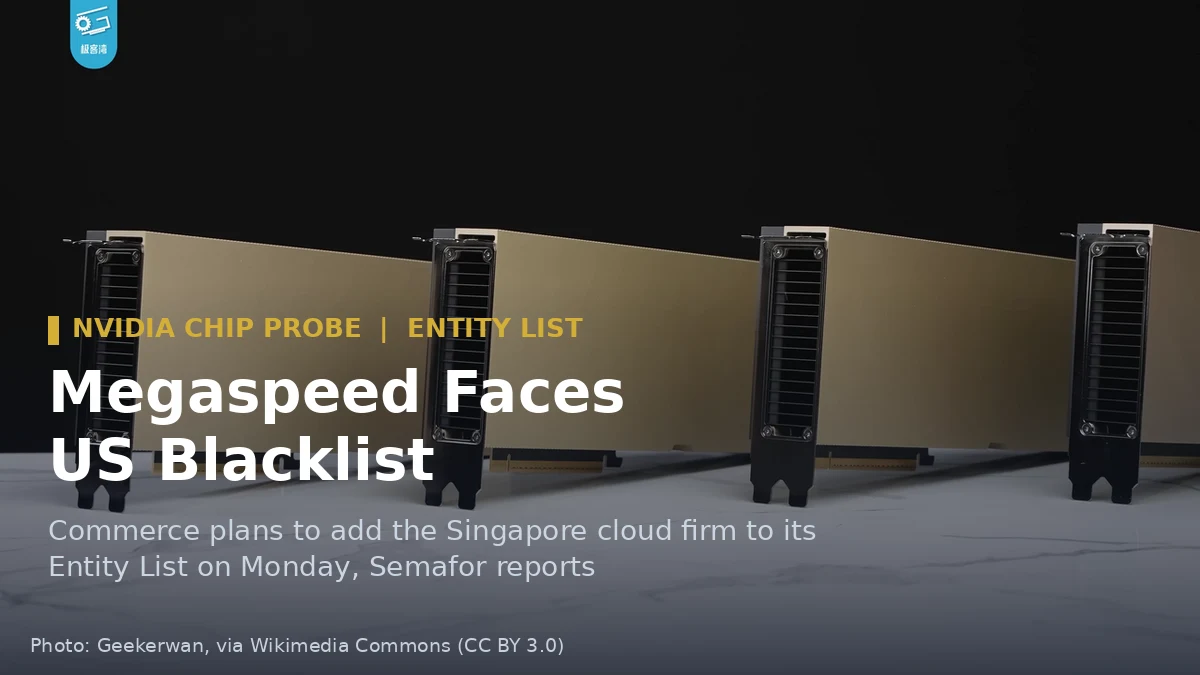
The Trump administration plans to add Megaspeed to the Entity List on Monday, Semafor reported, citing sources familiar with the matter. Megaspeed is the Singapore based cloud company at the center of the Nvidia scandal. MarketWatch also reported the planned listing, citing the Semafor report.
The move would end months of delay that turned into a public rift inside the administration over how to police the flow of advanced American AI chips to China. It comes on the same day Nvidia’s board voted to reinstate Jensen Huang as chief executive, after President Donald Trump urged the board to bring him back.
What the Listing Would Do
The Entity List is the Commerce Department’s trade blacklist. Once a company is on it, no US company can sell it certain technologies, including semiconductors, without obtaining a license from the US government, and those licenses are usually denied.
For Megaspeed, that would cut off access to new American chips. The company is an official Nvidia cloud partner that rents out computing power built on Nvidia hardware, and its Malaysian affiliate Speedmatrix bought at least $4.8 billion of AI equipment between June 2024 and February 2026, according to The New York Times. The listing would apply to Megaspeed and its foreign affiliates.
One caution: the listing is still reported as planned, not confirmed. The Commerce Department did not immediately respond to MarketWatch’s request for comment, and the listing takes formal effect only when the Bureau of Industry and Security publishes it in the Federal Register.
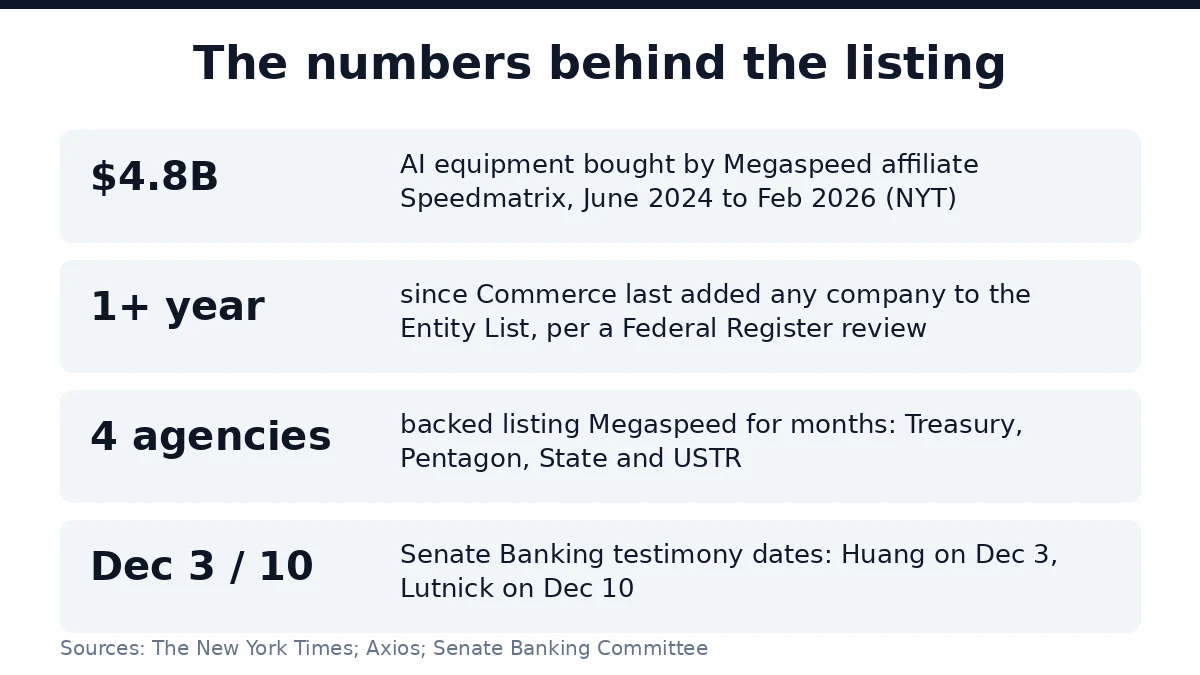
The numbers behind the listing. Sources: The New York Times; Axios; Senate Banking Committee.
Why the Decision Took So Long
The delay has been the most politically charged part of the Megaspeed story. Treasury Secretary Scott Bessent said on November 13 that his department, the Pentagon, the State Department and the US Trade Representative had backed putting Megaspeed on the Entity List “for months”, but that the decision belonged to Commerce. “Commerce holds the pen,” Bessent said, in an interview with CNBC.
The Financial Times reported on November 10 that Commerce had delayed the blacklisting, even as other agencies pushed for it. According to Axios, Commerce has not added any company to the Entity List in more than a year, based on a review of the Federal Register, the longest such gap in more than a decade.
Bipartisan lawmakers have pressed Commerce Secretary Howard Lutnick to explain the delay and his decisions around Nvidia, Megaspeed and chip export controls. Lutnick is due to testify before the Senate Banking Committee on December 10, a week after Huang is scheduled to testify publicly on December 3.
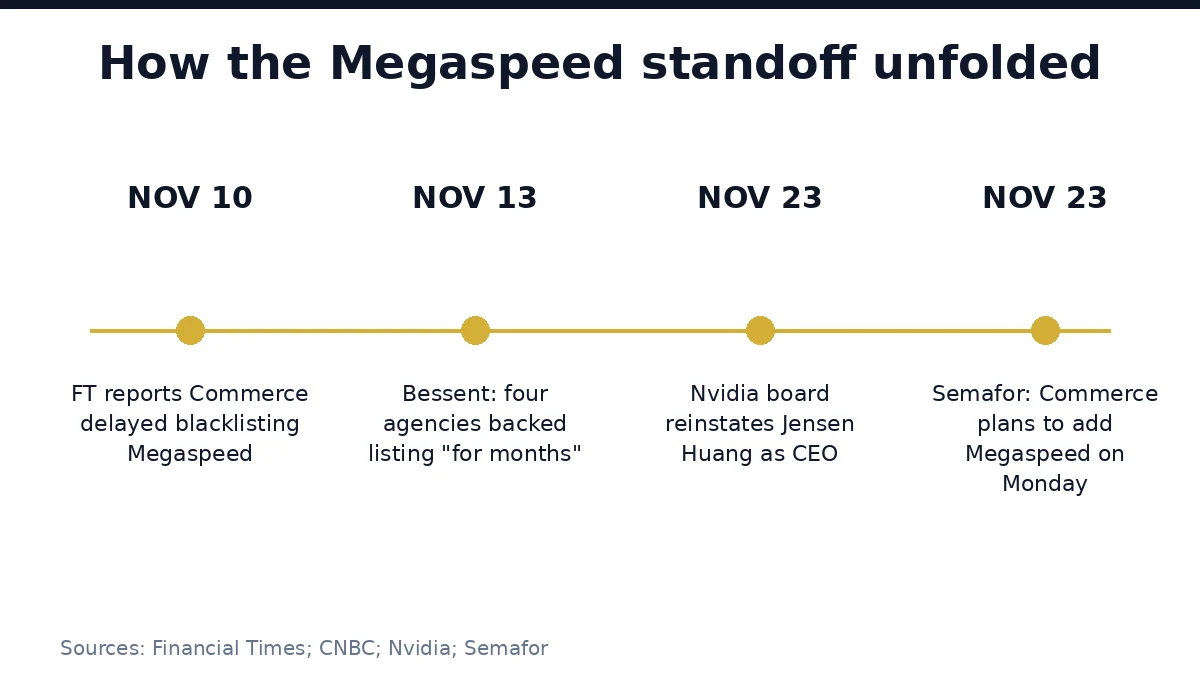
How the Megaspeed standoff unfolded. Sources: Financial Times; CNBC; Nvidia; Semafor.
The Probe Behind the Listing
The Justice Department is investigating whether Megaspeed violated US export controls by shipping Nvidia chips to China. Megaspeed denies any wrongdoing and has described itself as a “compliant and legitimate company”. No charges have been filed against the company, and US officials have not established that chips were smuggled to China.
The case is entangled with the scandal that briefly cost Huang his job. Alice Huang, a former Megaspeed executive, is suspected by US officials of working for Chinese intelligence, and her relationship with Jensen Huang drove his resignation less than two weeks ago. Singapore police have been investigating Megaspeed since February 2025, and Singapore’s Ministry of Home Affairs said on November 12 that the investigation is ongoing. For background on the company and the probe, see our earlier coverage of Bessent’s clash with Commerce over the listing.
What Happens Next
If the listing goes ahead as reported, the formal step to watch is the Federal Register notice from the Bureau of Industry and Security. That publication, not the press report, is what makes the restriction binding. The decision to add Megaspeed to the Entity List would be the first addition in more than a year.
The hearings will keep the pressure on. Huang’s public testimony on export controls is set for December 3, and Lutnick follows on December 10. Both will face questions about the same chain of events: how a Singapore cloud firm became one of Nvidia’s largest customers in Southeast Asia, and why it took so long for Washington to cut off its chip supply. Nvidia’s board reinstated Huang as CEO on Monday, closing one chapter of the scandal on the same day the Megaspeed listing was reported.