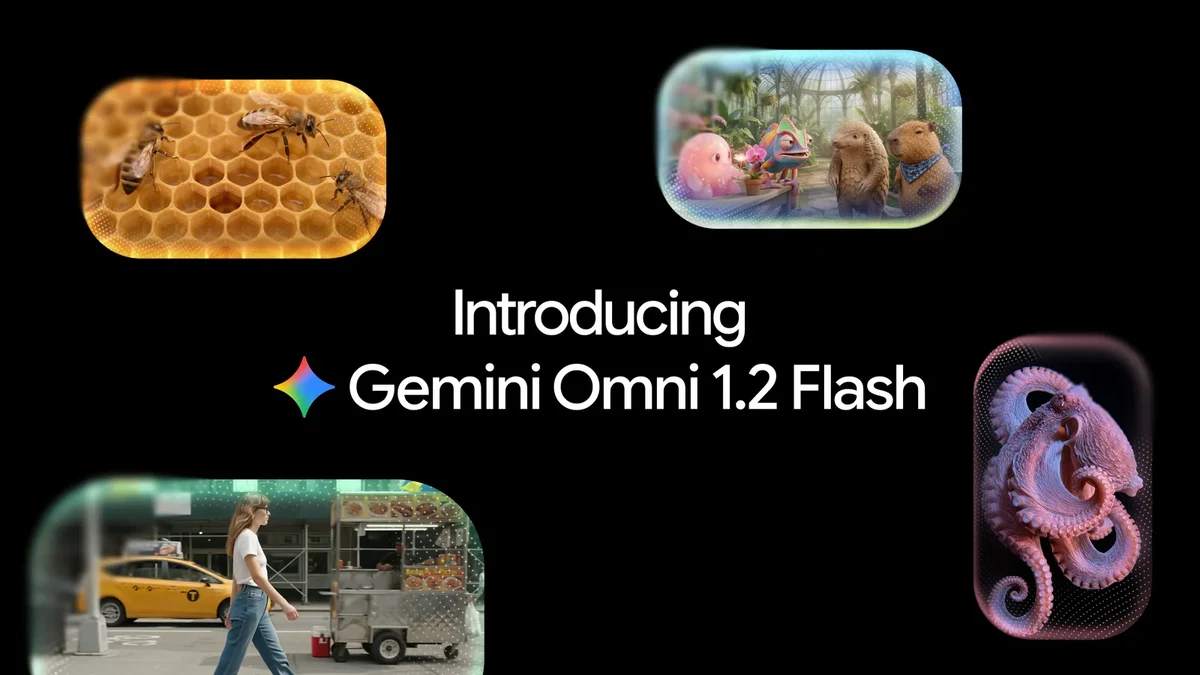
Google has made Gemini Omni 1.2 Flash generally available, turning its video generation and editing model into a production tool for developers and businesses. The update, announced on November 5, 2026, raises native clip length from 10 seconds to 15 seconds and cuts the price of 720p video by 30%, to $0.07 per second.
“Today, we’re rolling out Gemini Omni 1.2 Flash, and making it generally available across the Gemini API and Gemini for business,” Google said in its announcement. “Gemini Omni 1.2 Flash introduces native 15-second video creation, multi-turn conversational editing capabilities, and enhanced reference following.”
The release matters because it is the first time a Gemini Omni model has reached general availability, backed by Google Cloud infrastructure, with Provisioned Throughput for production workloads. Every output carries an imperceptible SynthID watermark.
What Was Announced?
Gemini Omni 1.2 Flash is Google’s video model for generating and editing clips from text, images, and short reference media. The new version extends native generation and editing to 15 seconds, up from 10 seconds in Omni 1.1 Flash, with duration selectable in one-second increments from 3 to 15 seconds. That is long enough for a complete product explainer or a full social ad spot in a single generation, without stitching shorter clips together.
The model also adds multi-turn conversational editing across full 15-second clips. Users can refine the same clip turn by turn, swapping a product or background, changing the lighting or weather, or switching the aspect ratio, instead of starting over from scratch. Google says the same approach makes it easy to produce ad variants for different audiences and placements without re-briefing or re-generating.
Stronger Reference Following and Consistency
Reference following is one of the headline improvements. Users can guide generation by combining character, product, or style images, short motion clips of up to three seconds, and audio cues, and the model holds onto those details from start to finish. Faces, garments, packaging typography, and brand colors stay consistent across camera angles, which Google pitches for virtual try-on clips, catalog spins, and branded video ads. In one example cited by Google, a single model photo plus front-and-back shots of three outfits produces a 15-second virtual try-on sequence across 360-degree turns and match cuts.
Google also claims stronger character, object, and scene consistency from the first frame to the last, with less visual drift or morphing across motion and camera transitions. The model can interpolate between a first and last keyframe, or extend a clip to build a longer sequence, while keeping products, characters, props, and environments consistent from shot to shot.
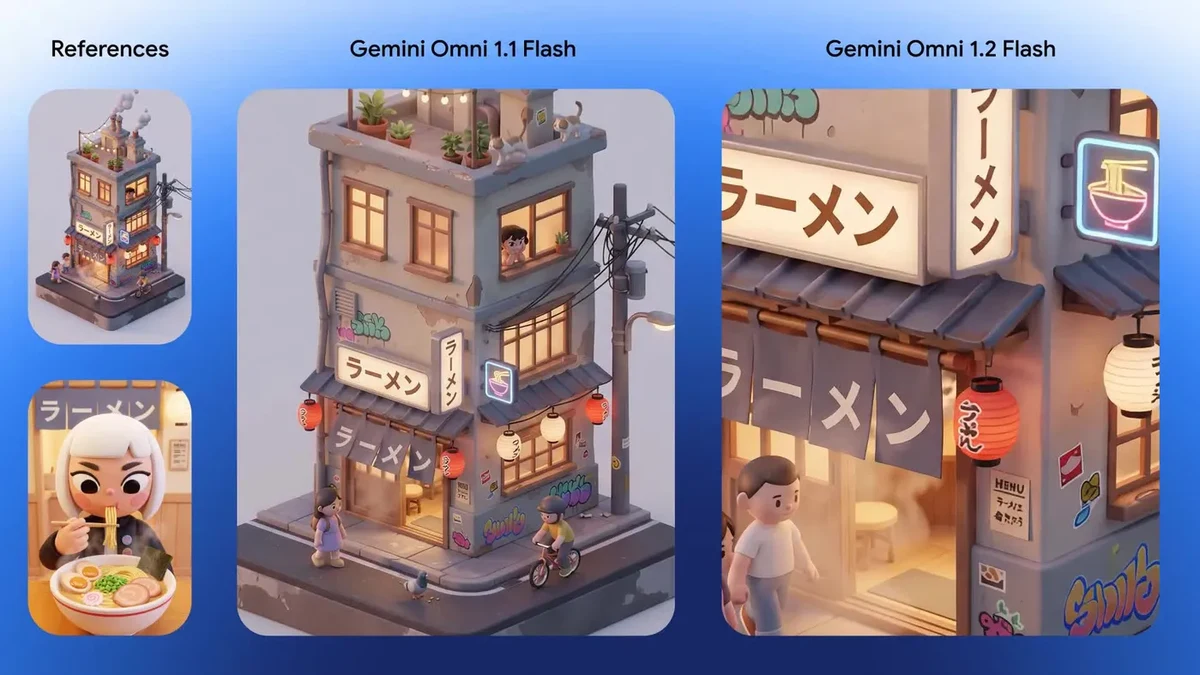
Google’s comparison shows Omni 1.2 Flash holding reference details more closely than Omni 1.1 Flash in the same ramen bar scene. Image: Google
More Natural Speech and Cinematic Camera Moves
Omni 1.2 Flash generates scenes with more fluid, natural-sounding dialogue, clearer lip-sync, and distinct multi-speaker conditioning, according to Google. The improvements apply whether users are directing multi-character dialogue in Flow, creating video explainers in Gemini for business, or producing polished videos with avatars, music, and narration in Google Vids.
Camera control gets more ambitious too. Google says the model can direct complex, continuous camera movements, such as sweeping FPV flythroughs, dramatic zoom-outs, and orbits, with significantly fewer unwanted jump cuts, steadier scale, and a more polished, cinematic look. One demo guides a single continuous FPV drone flight across a piazza, through the bronze doors of the Pantheon, and up through its coffered dome to the oculus, with zero jump cuts.
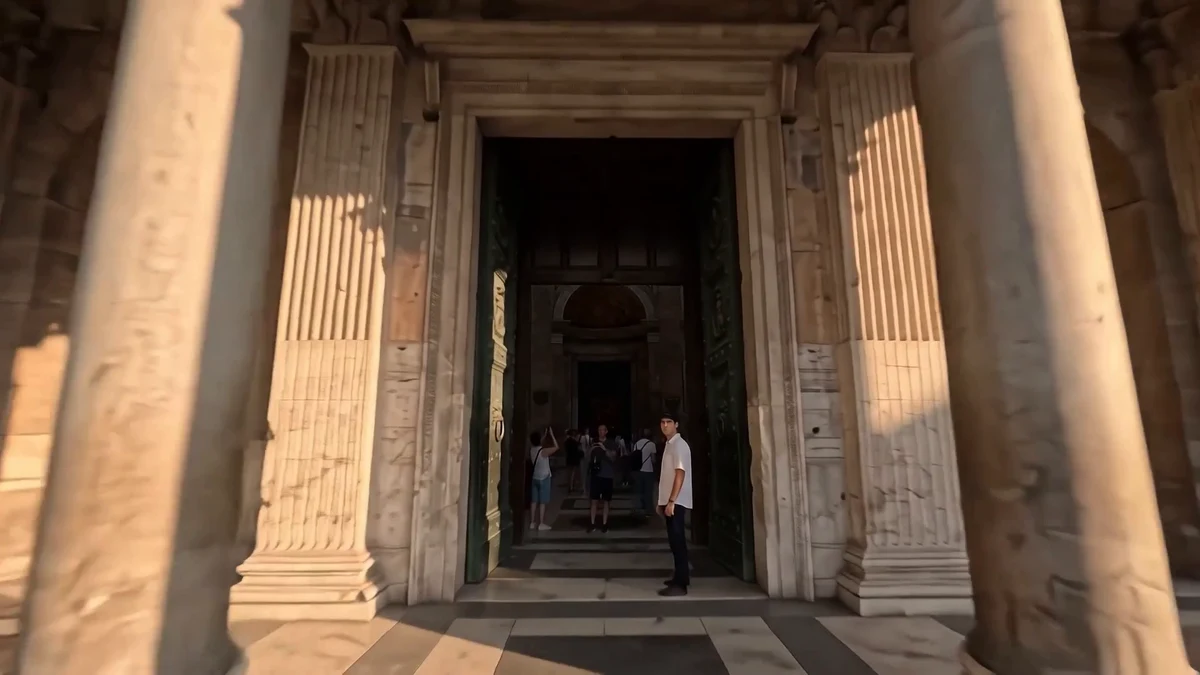
A frame from Google’s Pantheon demo, a single continuous FPV flight generated by Gemini Omni 1.2 Flash. Image: Google
Pricing and Availability
On the paid Gemini API, 720p video now costs $0.07 per generated second, a 30% reduction from Omni 1.1 Flash. At that rate, a full 15-second clip costs about $1.05. The workflow is designed to keep costs down further: users can draft fast at 360p or 720p, fix a detail with a follow-up edit instead of re-generating the entire clip, and then upscale only the best output to 1080p or 4K.
According to Unite.AI, API pricing is also metered at $12 per million video-output tokens, and Omni 1.1 Flash will remain available during a four-week transition. From December 3, 2026, API requests to version 1.1 will automatically route to 1.2 at the lower rates.
The model is available to developers through the Gemini API and Google Cloud console, with prototyping in Google AI Studio. For everyday users, it rolls out in Flow for scene direction and multi-turn edits, in Google Vids for 15-second clips at no additional cost with a Google account or Google Workspace subscription, in the Gemini app for Google AI Ultra subscribers, and in Google Ads for campaign production. The model is not available on the free API tier, according to Unite.AI.
Why It Matters
The 15-second ceiling and the price cut arrive as AI video generation becomes a core battleground for Google, OpenAI, and a wave of startups. Longer native clips reduce the editing work needed to turn generated video into usable ads, explainers, and social content, while conversational editing and stronger reference following target the consistency problems that have kept generated video out of brand work.
Google is candid that the model is not finished. The company says development is ongoing for fast sports action, rapid script changes, and complex physics. For now, Gemini Omni 1.2 Flash is positioned for businesses, developers, and creators producing videos at scale, with the general availability label signaling that Google is ready to support it in production.