
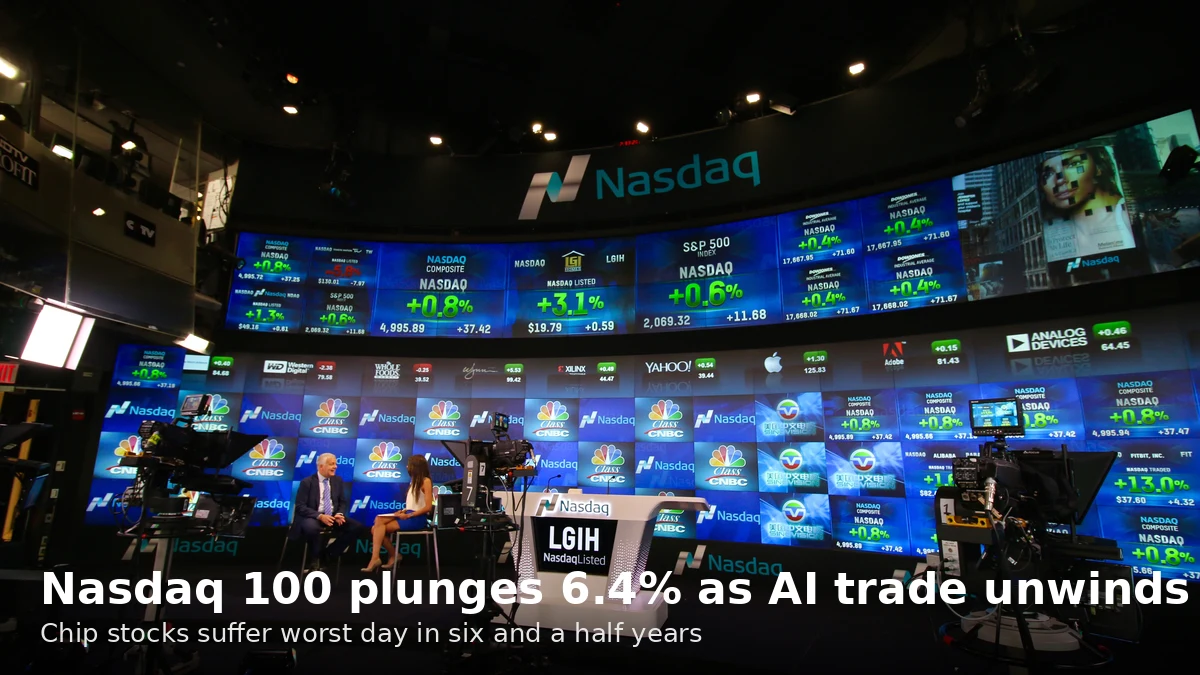
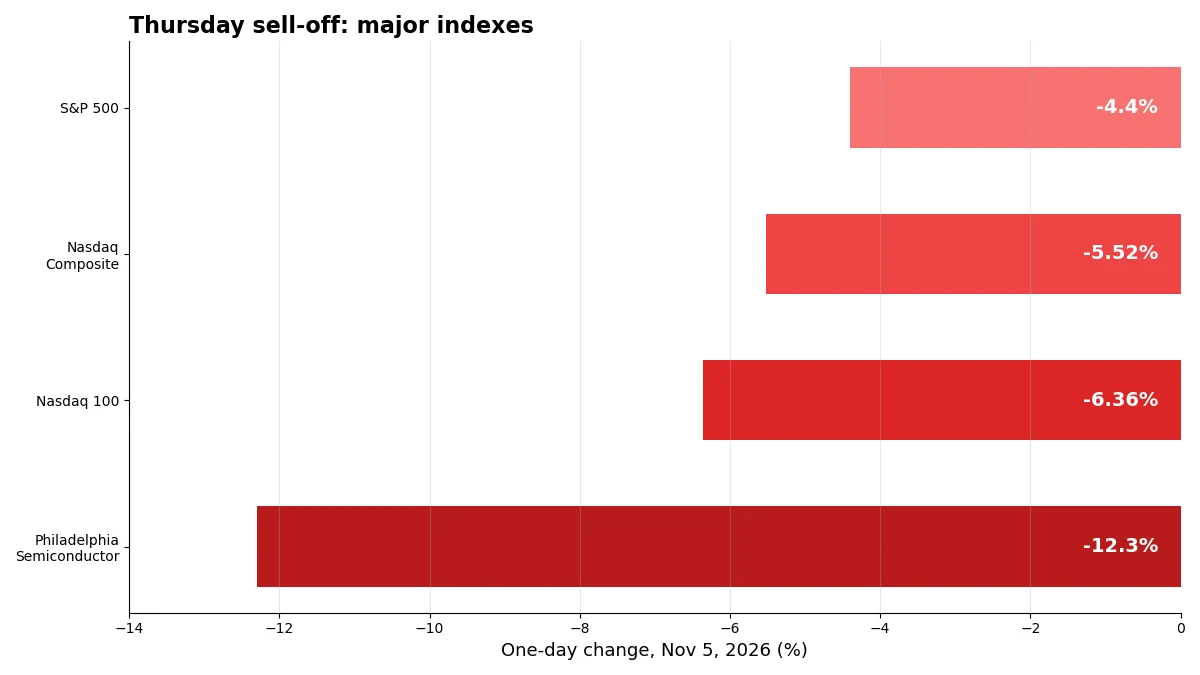
The AI trade suffered its worst day in years on Thursday, November 5. The Nasdaq 100 plunged 6.36%, its worst single-day drop since March 2020, erasing $2.3 trillion in market value, according to Bloomberg. The Nasdaq sell-off was driven by fears that the Democrats’ midterm sweep in Congress will slow the buildout of the data centers powering the artificial intelligence boom.
The broader Nasdaq Composite fell 5.52% and closed in correction territory, trading more than 10% below its record high of October 6, CNN reported. The tech-heavy index suffered its worst day since April 2025, wiping out roughly $2.5 trillion in market value. The S&P 500 dropped 4.4% and the Dow fell 1,833 points, wiping out all of Wednesday’s post-midterm rally gains. All 11 sectors of the S&P 500 closed lower.
Chip Stocks Lead the Rout
Semiconductor stocks took the heaviest damage. The Philadelphia Semiconductor Index dropped 12.3%, its worst day in roughly six and a half years, as investors dumped chipmakers and the companies building AI infrastructure.
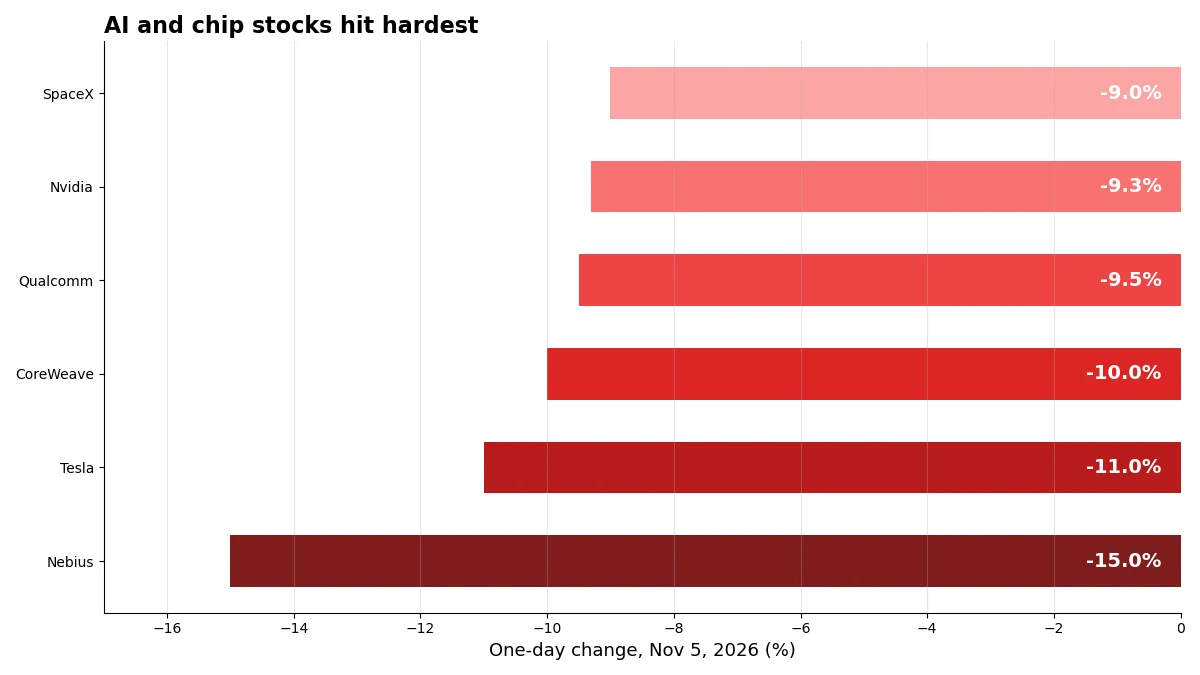
Nvidia shares sank 9.3% on Thursday, erasing their gains for the year. Shares of Elon Musk’s Tesla and SpaceX dropped 11% and 9%, respectively. Qualcomm fell 9.5% after missing estimates and warning that higher memory chip costs are hurting sales. The neoclouds that rent out compute power for the AI boom were hit even harder: CoreWeave plunged roughly 10% and Nebius about 15%. CoreWeave shares are now down 76% from a peak in June 2025, while Nebius is down 58% from its June peak.
Wall Street’s fear gauge told the same story. The VIX, which measures expectations for volatility, surged roughly 70%, its biggest one-day jump in almost two years, hitting its highest level in seven months. Investors fled to safety, pushing the 10-year Treasury yield down to 4.84%, its lowest level in two months.
Why Investors Are Fleeing the AI Trade
The trigger was politics. Investors are betting that Democrats winning Congress and key gubernatorial races could slow construction of the power-hungry data centers behind the AI trade. Texas is at the center of the worry: the state has played a crucial role in accelerating AI development, with Google, Meta, Oracle and OpenAI making massive data center investments there, and Texas Governor-elect Gina Hinojosa campaigned on a temporary data center moratorium and eliminating certain tax incentives for businesses building data centers.
Senator Bernie Sanders of Vermont, who caucuses with Democrats, has called for a national data center moratorium. The selling had already started on Wednesday beneath the surface, even as the major indexes rallied, with chipmaker and data center shares falling while the broader market rose.
Michael O’Rourke of JonesTrading said the slowdown in data center construction amid the political changes was real, and that earnings forecasts underpinning bullish valuations were no longer valid. “Investors did not know how the estimates would be adjusted and were reducing risk until the outlook became clearer,” he said, adding that clarity would not come soon.
Why It Matters
The sell-off is a stress test for the AI investment thesis that has driven markets for two years. Data centers are increasingly essential to powering AI, but the breakneck pace of construction has raised questions about whether companies are overbuilding, committing to more computing capacity than demand will ultimately justify.
Ed Yardeni, president of Yardeni Research, sees a potential silver lining in the pullback. “We want a slowdown in the AI buildout. It was too frenzied and speculative,” Yardeni told CNN. “Now we are letting air come out of the AI bubble. It’s better to let air come out of the AI bubble than let it burst.”
Not everyone sees the rout as the end of the trade. Keith Lerner, chief investment officer at Truist Advisory Services, called the week’s volatile moves more of a knee-jerk reaction than a real indication of how stocks could fare under Democratic control of Congress. “In our view, the risk-reward is improving for longer-term investors,” he said.
All told, the Nasdaq and the S&P 500 are down roughly 12% and 6%, respectively, from their peaks on October 6, while the Dow is down roughly 5% from its peak on August 5. The Nasdaq had already closed in correction in March, rallied back to record highs in early June, stumbled again in late July, then reclaimed record highs in September and October, before sliding back into correction territory on Thursday.
Sources
- CNN, “Massive tech sell-off wipes $2.5 trillion from the stock market,” November 5, 2026
- Bloomberg via Binance Square, “Nasdaq 100 Erases $2.3 Trillion in Market Value as Index Plunges 6.4%,” November 5, 2026
- Channel News Asia, “Blue tsunami wipes out $2.5 trillion from Nasdaq, as investors fret about AI trade,” November 5, 2026
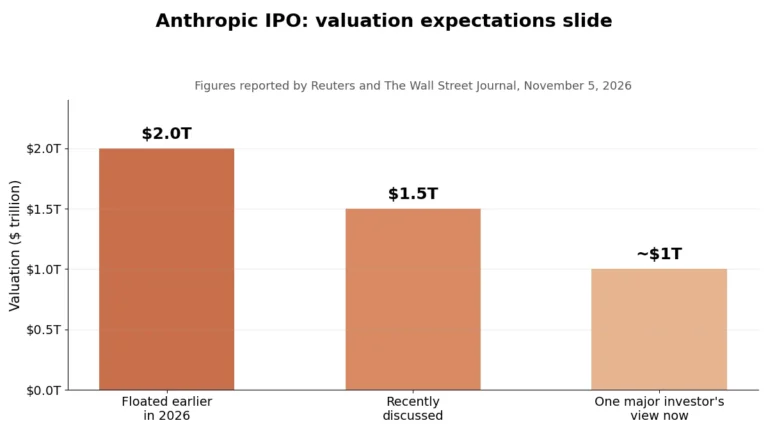



[…] reassessed the AI buildout and the political backlash against data centers (see our earlier report, Nasdaq 100 plunges as AI trade unwinds). Even if the market bounces back, one investor told the Journal, it could be hard to convince […]