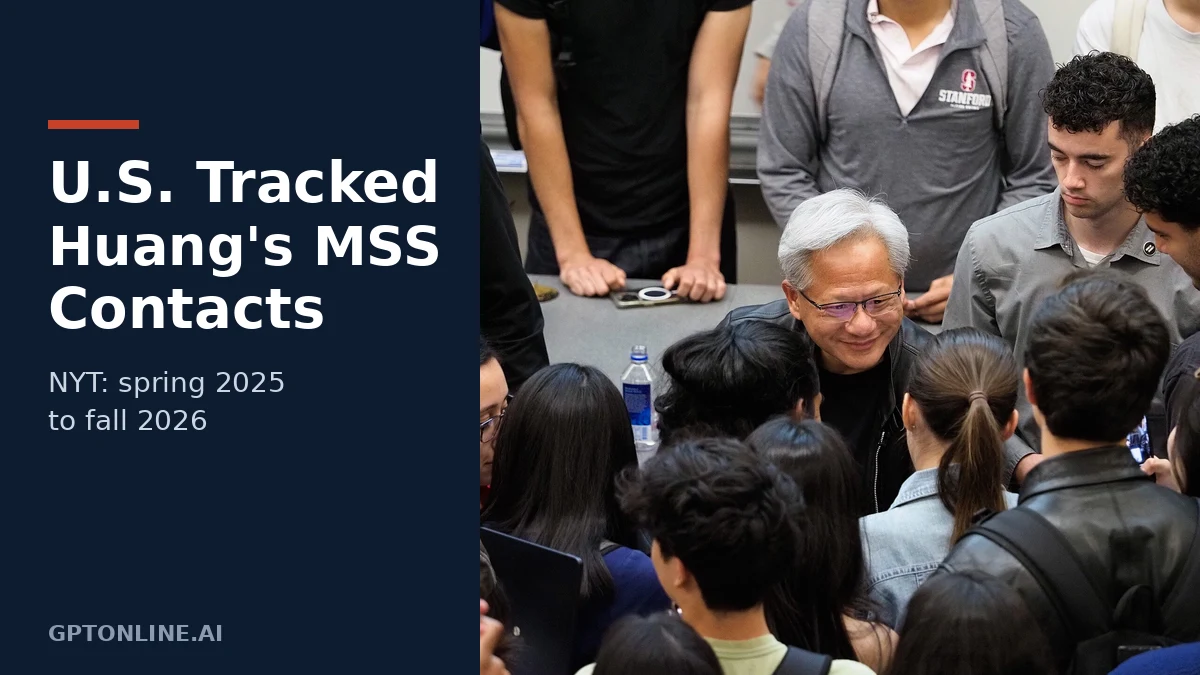
U.S. intelligence agencies tracked Alice Huang’s contacts with an officer of China’s Ministry of State Security for more than a year, from the spring of 2025 until the fall of 2026, The New York Times reported on November 22. The contacts took place while Huang was carrying on a secret affair with Jensen Huang, then the chief executive of Nvidia, the world’s leading maker of advanced artificial intelligence chips.
The report, by Jonathan Swan, Julian E. Barnes and Maggie Haberman, is the latest development in a scandal that has already cost Jensen Huang his job, drawn in the Justice Department, Congress and the Treasury, and put Nvidia’s compliance with U.S. export controls under intense scrutiny.
What the Times reported
According to the Times, which cited people familiar with U.S. intelligence reports, Alice Huang “was in touch with an officer of China’s Ministry of State Security from the spring of 2025 until the fall of this year.” The newspaper said the extent and timing of the contacts had not been reported before.
The Times did not name the officer, and it did not describe the method or the content of the contacts. The account rests on descriptions of intelligence reporting, not on documents the newspaper published or on statements from officials.
The contacts help explain how U.S. officials concluded that Jensen Huang was the target of an intelligence campaign, the Times reported. The two Huangs are not related.
Kang Wei also worked with the agency, report says
U.S. intelligence agencies also gathered evidence that Kang Wei, Alice Huang’s business partner, who was often introduced as her husband, worked with the same Chinese intelligence agency, according to the Times. The newspaper said that finding had also not been reported before.
The Megaspeed connection
The contacts overlapped, at least in part, with a period in which Megaspeed, the Singapore-based data center company where Alice Huang once worked, bought large numbers of advanced Nvidia chips, the Times reported. Some of those chips went to data centers in Southeast Asia serving Chinese technology companies such as Alibaba, while others were suspected of being smuggled into China, according to the report.
U.S. authorities are examining whether Megaspeed helped Chinese firms obtain Nvidia chips in violation of American export controls, and the Justice Department is carrying out a criminal probe, according to earlier reporting. Nvidia has said it investigated the allegations last year and refuted them.
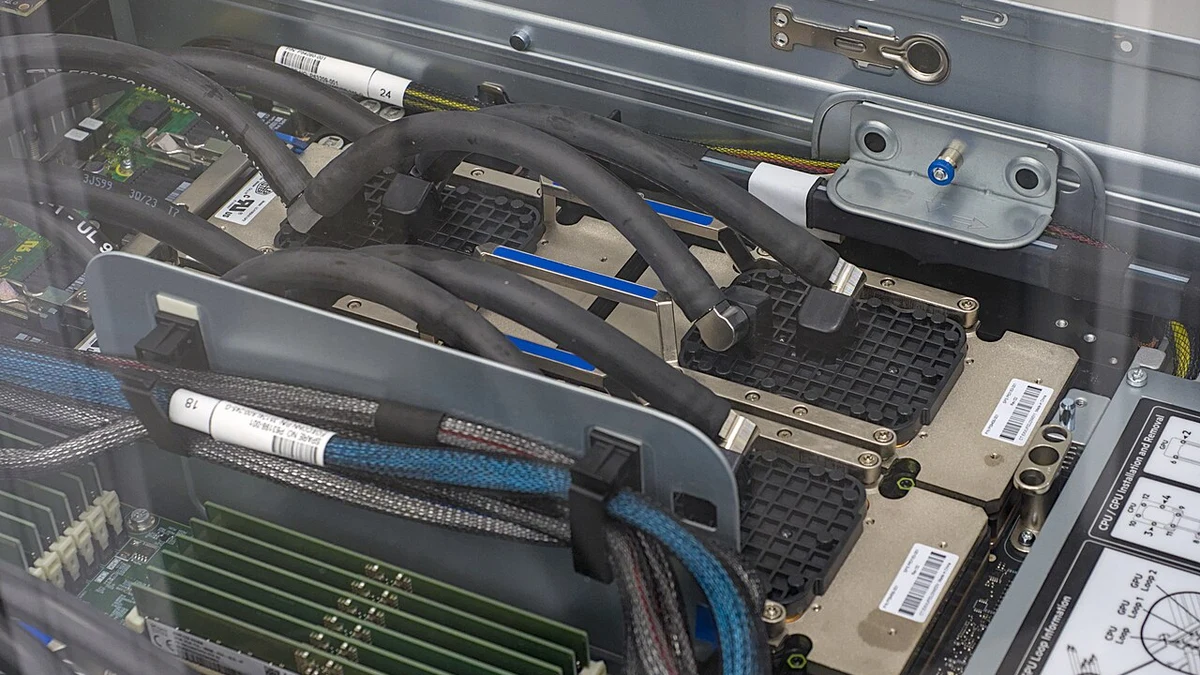
Server hardware inside the TSUBAME 4.0 supercomputer. Image: Wikimedia Commons (CC BY-SA 4.0).
A fast-moving investigation
The Times report follows two other investigations in as many days. On November 21, the Financial Times reported on the network of companies around Huang and the chip trade, and the Times reported that China’s Ministry of State Security has run a campaign to help Chinese companies acquire advanced AI chips. The new report adds the specific timeline of Huang’s contacts and the finding about Kang Wei.
What remains unclear
The Times report does not say that U.S. authorities have charged Alice Huang or anyone else in connection with the contacts, and it contains no direct quotes from Huang, her lawyers, Nvidia or U.S. officials. China has denied the espionage allegations.
The report also leaves open how the contacts were conducted and what, if anything, was passed on. The underlying intelligence material has not been made public.
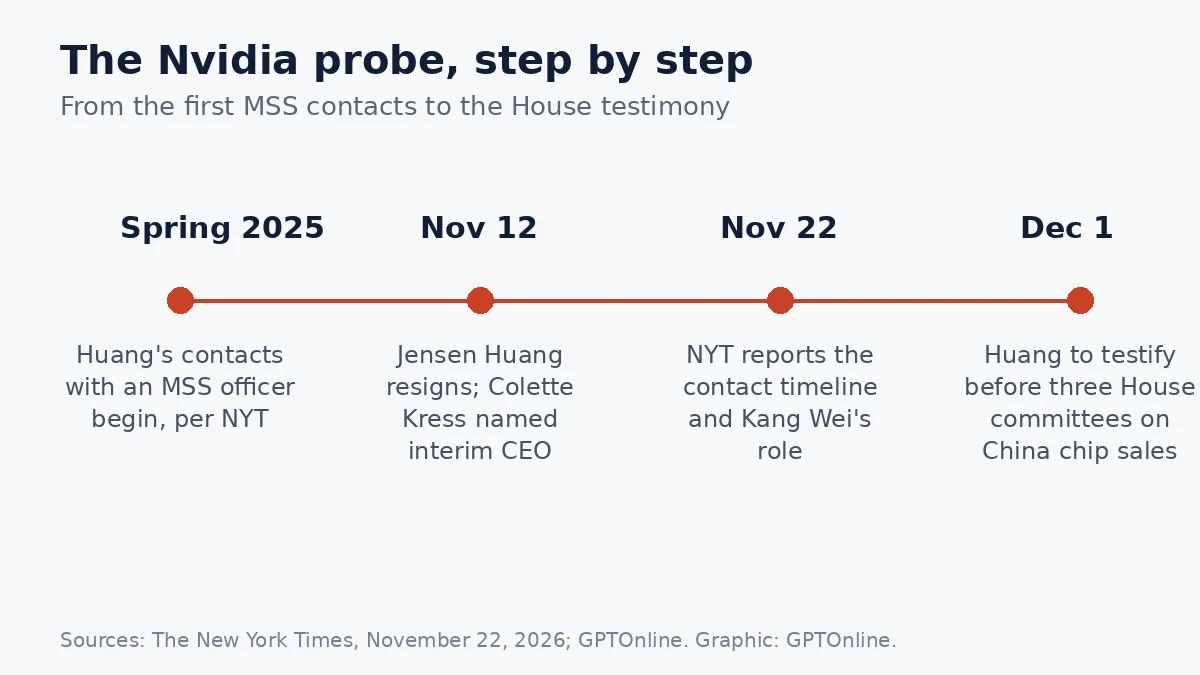
Graphic: GPTOnline.
Why it matters
The new details land as the fallout from the scandal continues to widen. Jensen Huang resigned on November 12 after acknowledging the affair, and the board named Chief Financial Officer Colette Kress as interim chief executive.
On November 22, Treasury Secretary Scott Bessent said on CBS that Washington is pressing Nvidia for answers about its China chip sales and that Huang’s possible return depends on what the investigations find. Huang and other Nvidia officials have agreed to testify before three House committees on December 1.
The episode has also become a test case for U.S. export controls. Nvidia supplies most of the accelerators used to train frontier AI models, so questions about how its chips reached Chinese buyers reach beyond one company and into the wider U.S.-China technology contest.
Sources
- The New York Times: U.S. Tracked Alice Huang’s Contacts With China Spy Agency During Nvidia Affair
- Political Wire: U.S. Tracked Alice Huang’s Contacts with China Spy Agency
- GPTOnline: FT Reports on Alice Huang’s Nvidia Chip Network in China
- GPTOnline: NYT Reports China Spy Agency Campaign to Acquire Advanced AI Chips
- GPTOnline: Bessent Says Huang’s Return Depends on Nvidia Chip Probe Findings
- GPTOnline: Jensen Huang to Testify Before House Committees on December 1