
The 128 countries at a United Nations weapons conference in Geneva have agreed to develop rules for lethal autonomous weapons, the AI-driven systems often called “killer robots”, within two years. The deal, reached at 4:30 a.m. on Saturday, November 21, is the first concrete step after more than a decade of talks, but it stops short of committing to legally binding rules.
Under the agreed text, states will “elaborate” a possible international instrument on lethal autonomous weapons systems, known as LAWS, by 2028. The agreement came at the Seventh Review Conference of the Convention on Certain Conventional Weapons (CCW), which ran in Geneva from November 16 to 20, and it was reported by Al Jazeera and a Reuters wire carried by Nikkei Asia.
What was agreed
The Group of Governmental Experts will now work on recommendations about what the instrument should contain and whether it should take the form of a binding protocol. The process should determine which weapons can be banned under international humanitarian law and which can be permitted but regulated.
The choice of words matters. Conference chair Julien Thoeni, the Swiss ambassador who presided over the talks, said some countries had rejected the word “negotiate”. The final text refers instead to the “elaboration” of an instrument, and it leaves open whether any future rules would be legally binding.
Thoeni still called the outcome a significant step for humanitarian disarmament after more than 10 years of talks. “It shows that even in today’s deeply divided world, multilateral diplomacy can still deliver concrete results,” he told reporters as the meeting wrapped up.

The Council Chamber at the Palais des Nations in Geneva, where the Convention on Certain Conventional Weapons meets. Image: Nacaru / Wikimedia Commons (CC BY-SA 4.0).
The divide that shaped the deal
Nearly 100 nations had pushed for swift adoption of legally binding rules on weapons that can identify and engage targets with varying degrees of autonomy, without a human making the final decision to fire. But the big arms-producing nations, including the United States, Russia and Israel, opposed that push, and decisions under the convention require the agreement of all member states.
Diplomats said Russia’s objections over procedure led to some formal sessions being called off, and talks over the final wording ran through the night. Before the talks, the International Committee of the Red Cross had said it was urgent for legally binding rules to be drafted within a year, a call backed by UN Secretary-General Antonio Guterres and by Pope Leo. The United States, by contrast, proposed a five-year window to discuss nonbinding, optional guidelines.
The outcome also missed a deadline Guterres had set for formal treaty negotiations to start in 2026. Guterres leaves office at the end of the year.
Critics call the mandate ‘watered down’
The Stop Killer Robots coalition, which brings together 300 organisations opposed to autonomous weapons, called the mandate “watered down” and said it offered no clear route to legally binding rules. Its executive director, Nicole van Rooijen, said autonomous weapons were already being deployed in combat, including systems that use artificial intelligence to choose targets.
“Delaying the creation of a legally binding instrument puts civilians and humanity at risk,” she told the AFP news agency.
Verity Coyle, deputy director for arms at Human Rights Watch, called the outcome disappointing. “It does not provide the urgent action needed to agree new rules, but the technology is racing ahead,” she told AFP.
The concern is not abstract. Alarm over lethal autonomous weapons has grown as such systems are used in conflicts including Ukraine, Sudan and the Middle East, according to Reuters.
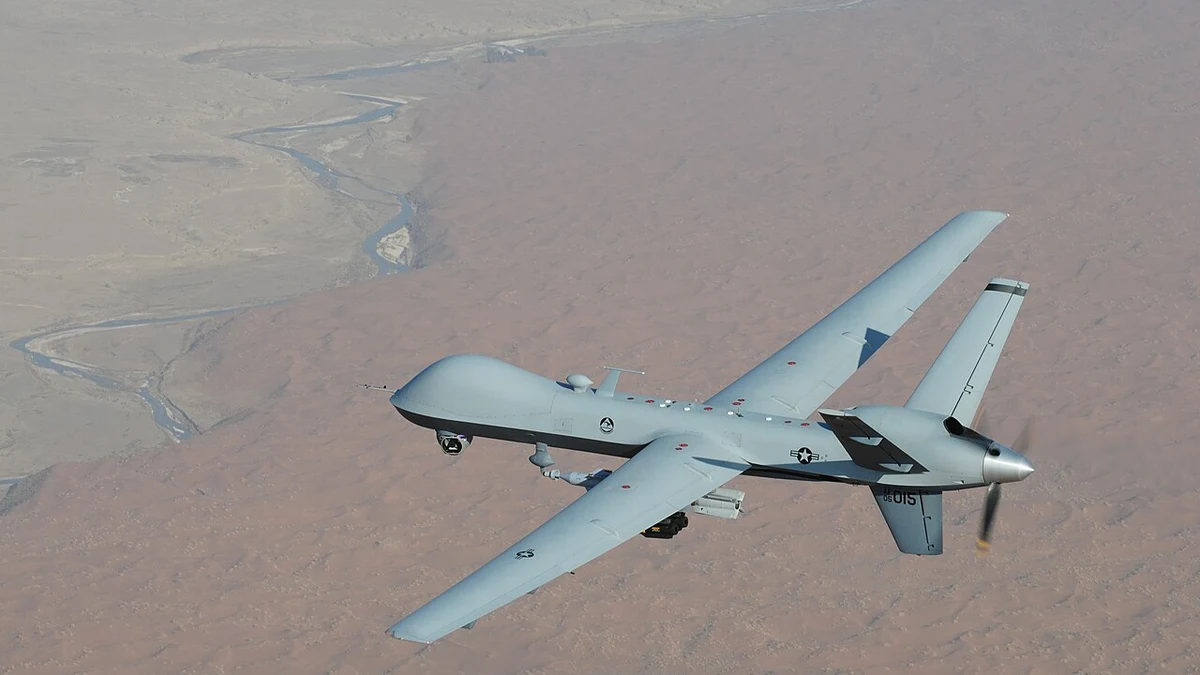
An MQ-9 Reaper drone in flight. Campaigners say AI-enabled targeting systems are already being used in combat, including in Ukraine, Sudan and the Middle East. Image: U.S. Air Force Photo / Lt. Col. Leslie Pratt (public domain).
Why it matters
The Geneva outcome lands one day after the United States and China agreed that humans should always be involved in military decisions using AI, a deal reported after talks in Shenzhen and covered by GPTOnline. The two tracks point in the same direction, but they also show the gap between bilateral assurances and binding multilateral law.
For now, the weapons remain unregulated by any dedicated treaty. What happens next depends on the 2027 and 2028 sessions, when states must turn the elements identified by the expert group into specific prohibitions or restrictions, and decide whether any of them will bind.
Sources
- Al Jazeera: Nations agree to ‘elaborate’ on rules for AI-run ‘killer robots’ by 2028
- Nikkei Asia (Reuters): Countries agree to UN talks aiming to regulate ‘killer robots’ by 2028
- dig.watch: UN agrees to develop autonomous weapons instrument by 2028
- NPR: Killer robots: U.N. talks fall short of hopes for legally binding rules