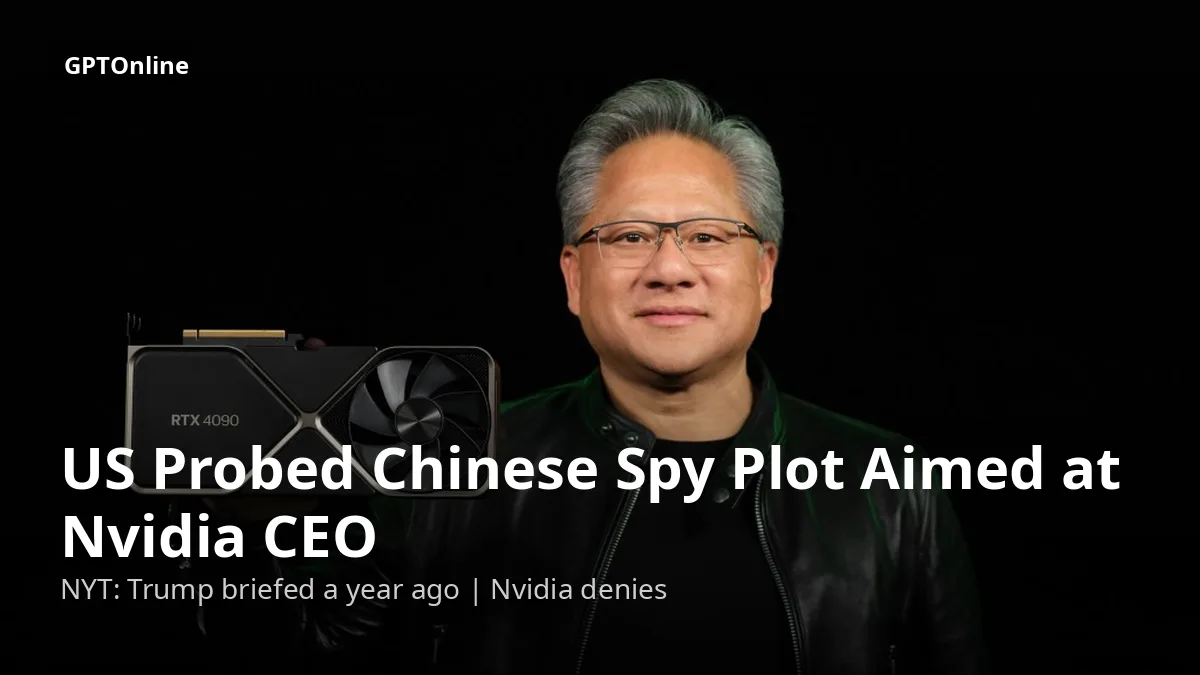
The Nvidia CEO spy plot allegations surfaced on October 29, 2026: U.S. intelligence agencies concluded that a Chinese businesswoman with close access to Nvidia CEO Jensen Huang was a Chinese intelligence asset passing information to Beijing, The New York Times reported, citing anonymous sources. President Donald Trump was briefed on the findings about a year ago and chose not to act. Nvidia denied anything unusual about the relationship.
What the Times Reported
The woman, identified as Alice Huang (also known as Huang Le), a Chinese citizen, is a top executive at Megaspeed, a Singapore-based AI cloud and data center company. U.S. intelligence agencies surveilled her for about a year to learn about her ties with China, the Times reports. Officials concluded she was a Chinese asset transferring information to Beijing.
The concern, according to the sources, was that Alice Huang had grown so close to Jensen Huang, appearing alongside him at business dinners in the Singapore region, that she could have been gathering information about Nvidia’s plans and the CEO’s efforts to convince the Trump administration to allow the company to ship more advanced technology to China. Officials also feared she could gain insight into Trump’s thinking through the Nvidia CEO, who has close ties to the president, ahead of Trump’s planned visit to China next month.
The report did not establish what information she obtained or passed to Beijing. Trump was briefed roughly a year ago but declined to act, reportedly reluctant to disrupt Nvidia’s chip business or further complicate trade relations with China. Jensen Huang has not received a defensive briefing, the warning U.S. agencies sometimes give Americans targeted by foreign spies.

Graphic: GPTOnline
Denials and Context
Nvidia pushed back. “Jensen’s interactions with Ms. Huang are not unusual or unexpected. Meetings with customers are part of a C.E.O.’s job; Jensen talks with thousands of customer executives every year,” a spokesperson said in an emailed statement. The company added that regional cloud customers like Megaspeed receive “ordinary business information, not sensitive NVIDIA trade secrets, and zero information relevant to national security.”
China rejected the allegation. Liu Chang, spokesperson for the Chinese Embassy in Washington, accused the U.S. of running a campaign of baseless smears against Beijing. Megaspeed, in a statement to the Times reported by Gizmodo, said its current leadership takes the matter extremely seriously, has retained outside counsel for an internal investigation, and will cooperate with the U.S. government.
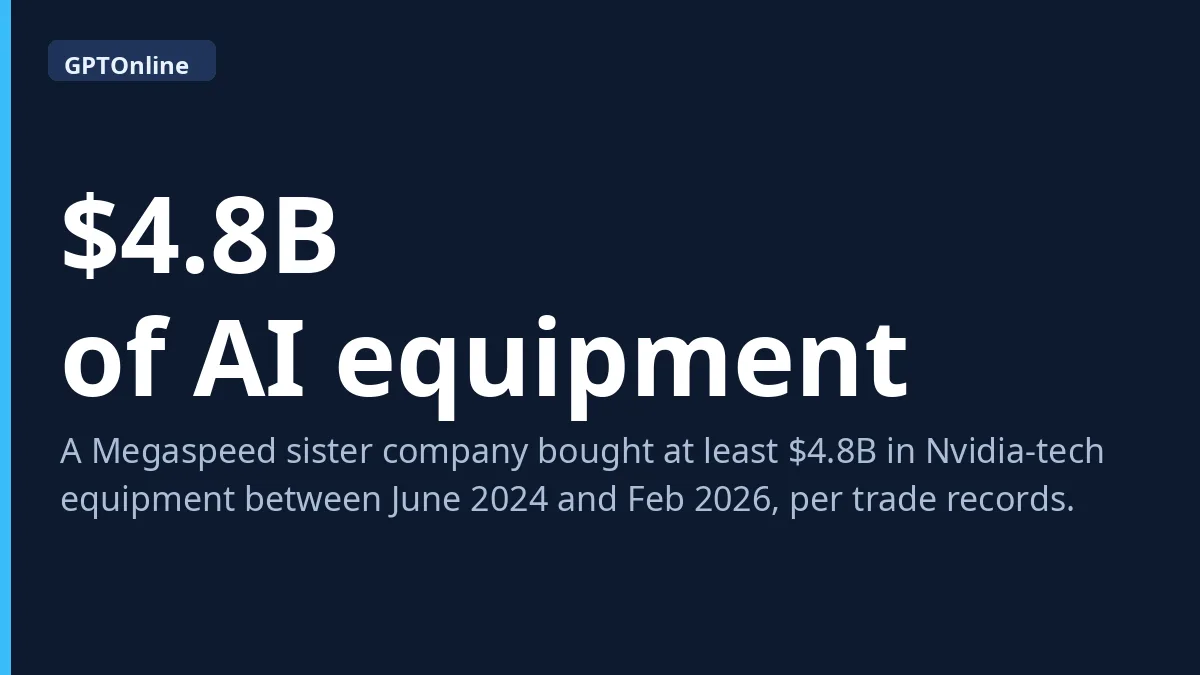
The spy claim sits on top of an existing export-control investigation. In 2025, the Times reported that the Commerce Department had investigated Megaspeed over concerns it was helping Chinese companies sidestep AI chip export regulations by reselling restricted chips. Trade records show a Megaspeed sister company purchased at least $4.8 billion in advanced AI equipment containing Nvidia technology between June 2024 and February 2026, and the investigation was transferred to the Justice Department earlier this year.
Graphic: GPTOnline
Why It Matters
The case lands at the intersection of the AI chip wars and great-power politics: Nvidia’s advanced chips are central to America’s lead in cutting-edge AI, and Jensen Huang has become one of Washington’s most influential industry voices on export policy. An intelligence finding that Beijing had a window into the CEO’s thinking, left unacted for a year, raises questions about how the administration weighs economic and national security interests in AI. The story is developing, and none of the core intelligence claims have been independently confirmed by the companies or governments involved.
Sources
- TechCrunch: “US investigated Chinese spy plot aimed at Nvidia CEO” (reporting on The New York Times)
- The Indian Express: “Nvidia CEO Jensen Huang Targeted in China Spy Plot, NYT Reports”
- The Times of India: “US finds Chinese spy in Nvidia CEO Jensen Huang’s circle”
- Globe TV (via Gizmodo): Megaspeed statement on internal investigation