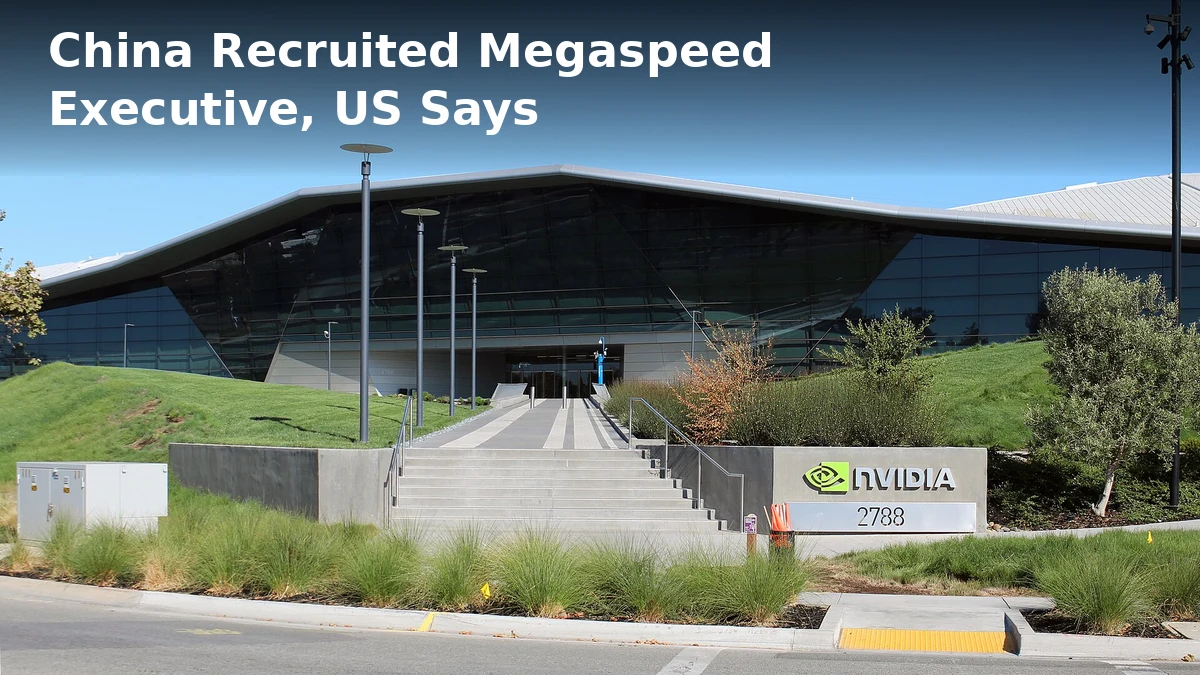
U.S. intelligence agencies have concluded that Alice Huang, the Megaspeed executive who cultivated a close relationship with Nvidia chief executive Jensen Huang, was recruited by China’s Ministry of State Security to collect intelligence on him, The New York Times reported on Friday, November 6. The assessment, which the Times said had not previously been reported, is the sharpest U.S. conclusion yet in a case GPTOnline first covered on October 29.
According to people briefed on U.S. surveillance, Huang was recruited to gather information about Nvidia’s most advanced AI chips and potentially to influence the company to make those chips more available to Chinese firms. The Times reported that U.S. agencies had Huang, a Chinese citizen, under electronic surveillance for at least a year.
What the Times reported
Huang was listed as Megaspeed’s managing director for the company’s first eight months before her name was removed from that role in corporate filings. Megaspeed was formed in 2023 when Chinese gaming company 7Road spun off its overseas operation in Singapore. The two Huangs are not related.
In 2024, around the time the two were photographed together at a bar in Taipei, Megaspeed began a multibillion-dollar purchase of advanced AI microchips. A Megaspeed sister company in Malaysia bought at least $4.8 billion of advanced AI equipment containing Nvidia chips between June 2024 and February 2026, according to trade records from the platform ImportGenius cited by the Times.
Megaspeed has also been building data centers in Southeast Asia and renting their computing power to Alibaba, the Chinese internet giant, giving China a backdoor route to advanced Nvidia chips, the Times reported. U.S. officials have been examining Megaspeed since late 2024, when a Commerce Department official visited its Malaysian data center and found Nvidia equipment still packed in boxes.
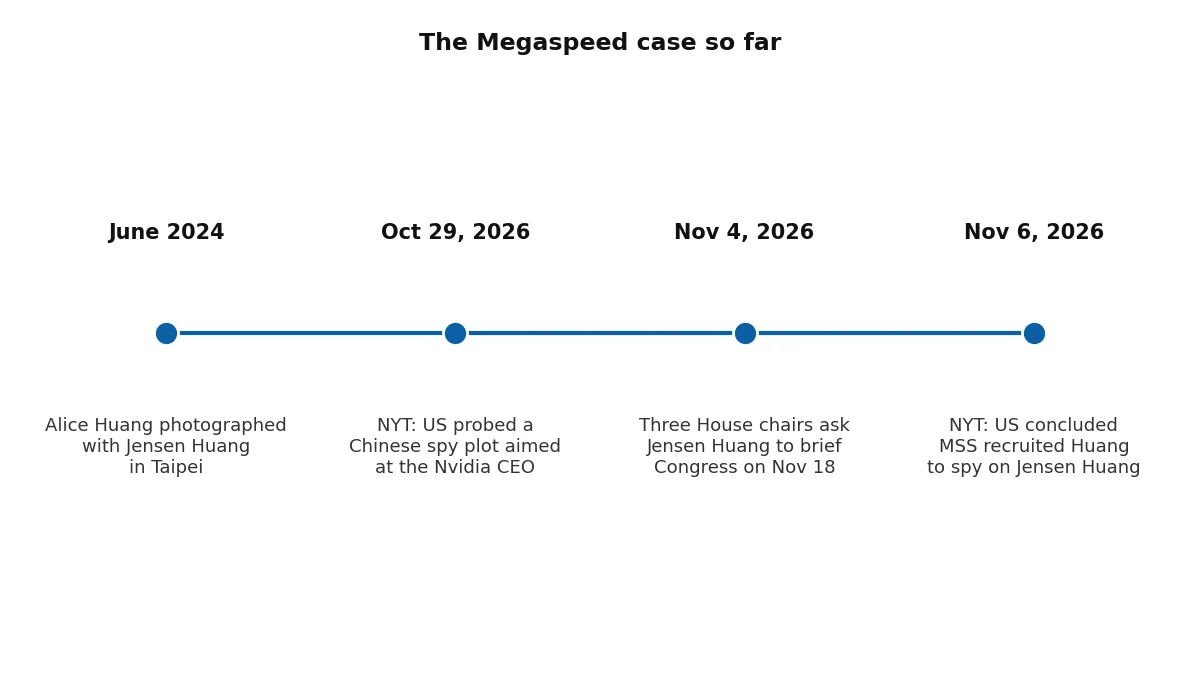
Chart: GPTOnline, based on the reported timeline of the Megaspeed case.
Congress summons Jensen Huang
Three Republican House committee chairs have now pulled the Nvidia chief into the matter directly. In a letter dated November 4, Brian Mast, who chairs the House Foreign Affairs Committee, John Moolenaar, who leads the Select Committee on the Chinese Communist Party, and Rick Crawford, who chairs the House Intelligence Committee, asked Jensen Huang to appear for a closed-door briefing on November 18 about his interactions with Alice Huang and Nvidia’s security protocols against foreign adversary espionage. He has until November 11 to accept the date or propose another.
Nvidia has said Huang’s interactions with Alice Huang were usual business meetings. A company spokesperson said meetings with customers are part of a chief executive’s job and that regional cloud customers like Megaspeed receive ordinary business information, not sensitive Nvidia trade secrets. China has rejected the allegations: Liu Chang, a spokesman for the Chinese Embassy in Washington, called the Times reporting “unsubstantiated” and “nothing but smears against China.”
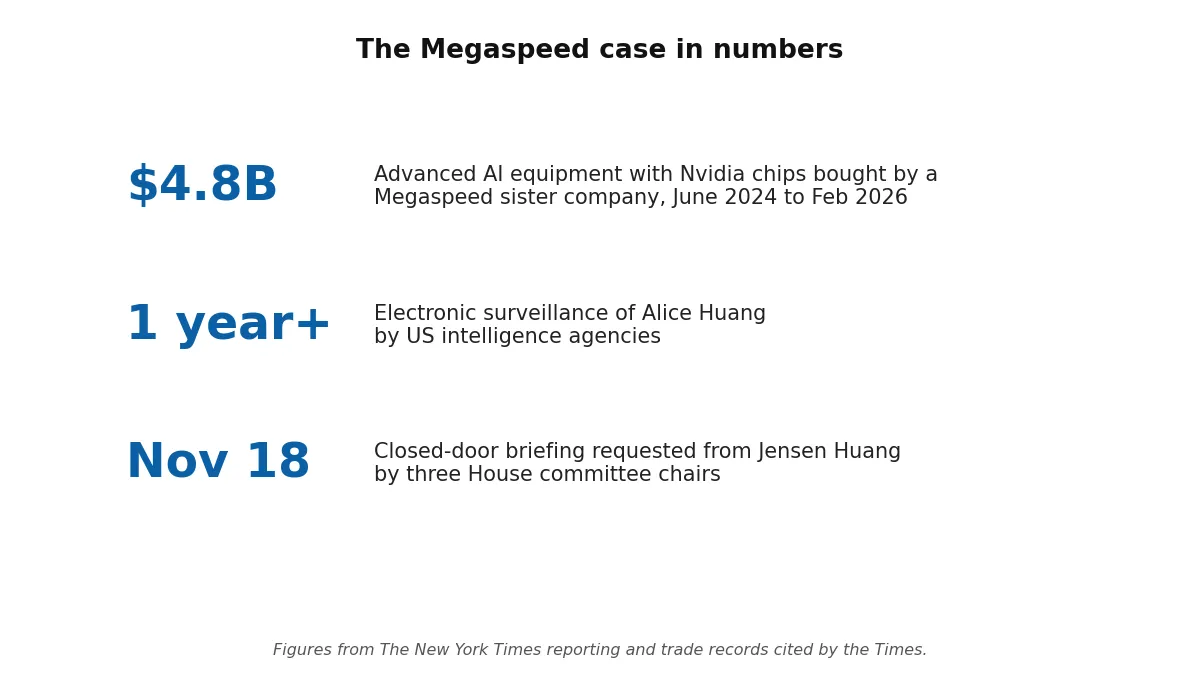
Chart: GPTOnline, based on figures reported by The New York Times.
Why it matters
The new reporting escalates a story that was already one of the most sensitive in the AI chip wars. The first Times report, on October 29, said U.S. intelligence had identified Huang as a Chinese intelligence asset and that President Donald Trump had been briefed about a year ago but chose not to act. The November 6 report goes further, naming the Ministry of State Security as the recruiting agency and tying the operation to a concrete goal: learning about America’s most advanced AI chips and pressing for their release to China.
The congressional briefing request adds a second front. Jensen Huang has become one of Washington’s most influential industry voices on export policy, and lawmakers now want him to explain, behind closed doors, how Nvidia guards against espionage by foreign adversaries. The conclusions rest on people briefed on U.S. surveillance, and neither the intelligence agencies nor the Times have released the underlying evidence. The story is developing, and the November 18 briefing is the next date to watch.
Sources
- The New York Times via DNYUZ: China’s Top Spy Agency Recruited Woman Who Targeted Jensen Huang (November 6, 2026)
- The New York Times via Oossa: China’s spy agency allegedly enlisted Nvidia partner to gather AI chip intel (November 6, 2026)
- Nikkei Asia (Reuters): Key Republicans seek briefing from Nvidia CEO over Chinese spy allegations (November 6, 2026)
- The Times of India: Nvidia CEO Jensen Huang asked to explain Megaspeed ties (November 6, 2026)
- GPTOnline: US Investigated Chinese Spy Plot Aimed at Nvidia CEO, NYT Reports (October 29, 2026)