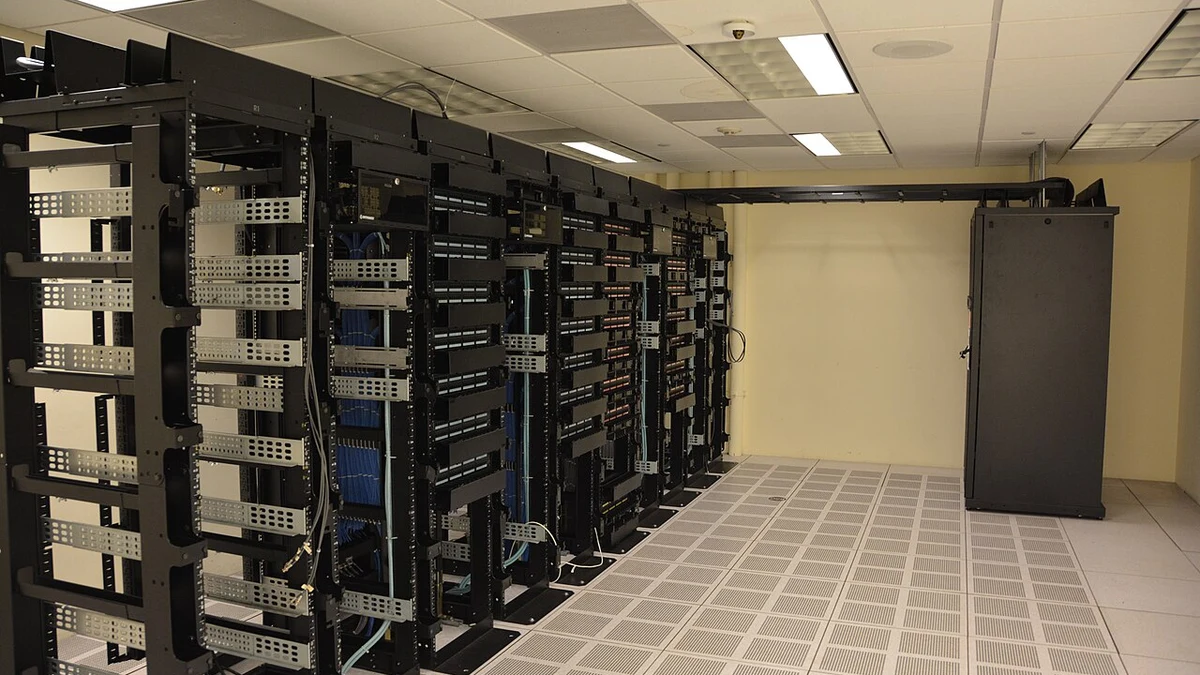
Moonshot AI, the Chinese lab behind the Kimi models, signed a contract in August to rent 32 Super Micro servers equipped with Nvidia B300 GPUs, according to documents reviewed by Bloomberg News. The Moonshot B300 rental, valued at 432 million yuan ($64.8 million), put Nvidia’s most powerful AI accelerators in China, indicating a possible breach of US export rules that forbid sales to the country without an explicit license.
Bloomberg News was unable to determine whether a license was obtained. Moonshot disputed the accuracy of the documents, and after Bloomberg contacted the company on November 3, the filings no longer mentioned Moonshot by name.
What the Moonshot B300 Documents Show
The documents reviewed by Bloomberg consist of two financing contracts signed on August 4 by Lingmeixin (Beijing) Technology Co., the owner of the servers, and Beijing Zhongguancun Bank Co., the financier of the purchase. Chinese companies must file certain details of financing contracts with a database run by the credit agency of the People’s Bank of China, and the bank submitted the documents on August 6, two days after they were signed.
Under the agreements, Lingmeixin provided dual collateral for a 200 million yuan ($30 million) loan from Beijing Zhongguancun Bank. The physical collateral was the servers themselves, and the financial collateral was earnings of 345.6 million yuan derived from a service contract signed with Beijing Dark Side of the Moon Technology Co., Moonshot’s main entity. A statement attached to the contracts said the hardware was designated for fulfilling a service contract with Moonshot, and that “Moonshot AI only has right to use the compute service, with no ownership of the equipment.”
The contracts implied each server was worth 13.5 million yuan ($2 million), about a 350% markup from the going rate in the United States. Bloomberg noted that the premium likely hints at a black market where tight demand is hardly satisfied by limited supply under US export controls. Research firm SemiAnalysis has estimated that hundreds of thousands of AI chips have slipped into China, based on supply chain checks and comparisons of production and installation data.
The servers are stored in Qingyang, a city in China’s western Gansu province and one of eight designated national computing hubs, according to the contracts. China is moving computing power from its crowded eastern megacities to western regions with space and inexpensive green energy, and BloombergNEF expects Gansu and Inner Mongolia to become top computing hubs by 2028.
Moonshot, Nvidia and Super Micro Respond
Moonshot denied any connection to the deal. “We currently have no business relationship with Lingmeixin,” a Moonshot spokesperson said in an emailed statement. “We neither participated in nor authorized the related financing or guarantee arrangements, and had no knowledge of them.”
Nvidia said the entities involved in the August purchase “are not Nvidia customers,” adding that “we do not provide replacement products, service, or support to them.” A spokesperson for Super Micro said the company “does not conduct business with these entities,” and that it is “committed to complying with all applicable US export and re-export control laws and regulations.”
The documents did not say how the servers reached China. They specified that Lingmeixin bought the servers from a recently established subsidiary of Beijing Chunju Technology Co., a company that runs an e-commerce business selling alcoholic drinks including Maotai liquor and has expanded into AI, according to its mid-year earnings report. Lingmeixin itself is a drone distributor selling DJI products, and its website lists partners including China Aerospace Science and Industry Corporation and China Aerospace Science and Technology Corporation, both heavily involved in China’s missile program and under US export controls and financial sanctions. Lingmeixin and Beijing Zhongguancun Bank did not respond to requests for comment.
Why It Matters
The report lands as Washington intensifies scrutiny of how Chinese AI companies obtain restricted Nvidia hardware. The US has accused Moonshot of training some of China’s most cutting edge frontier models with restricted Blackwell chips. Bloomberg reported in July that the firm has a channel for accessing the processors, and after the release of Kimi K3 over the summer, a White House official said the startup had accessed restricted Nvidia hardware.
Moonshot is one of China’s most prominent AI labs. Its Kimi K3 model ranked near world leading offerings from Anthropic and OpenAI, and the company recently unveiled the model’s first major upgrade while developing a follow-up. Moonshot is also heading toward a debut in Hong Kong early next year, which makes any finding of export control violations a risk for investors as well as for the company.
The disclosure adds to a difficult week for Nvidia. The chipmaker is already at the center of a US probe into whether Megaspeed, a Singapore cloud company, helped Chinese customers obtain advanced Nvidia chips, and Nvidia’s board has opened an independent investigation after CEO Jensen Huang admitted he was targeted by a foreign intelligence operation. The Financial Times reported on November 3 that Nvidia told its data center partners to direct at least 51% of their services to non-Chinese customers on new contracts, a rule Nvidia has neither confirmed nor denied.
For now, the documents establish a possible breach, not a proven one. Whether a license covered the August purchase remains unknown, and Moonshot says it had no knowledge of the financing arrangements. What is clear is that the most powerful AI chips on the market continue to reach China through channels Washington has not closed, and each new disclosure puts more pressure on the export control system to explain how.
Sources
- Moonshot AI rents Nvidia’s top AI chips in China, documents show (Bloomberg News via The Economic Times, November 10, 2026)
- Alice Huang, Chinese businesswoman tied to Nvidia CEO, went from finance to chips (Reuters, November 10, 2026)