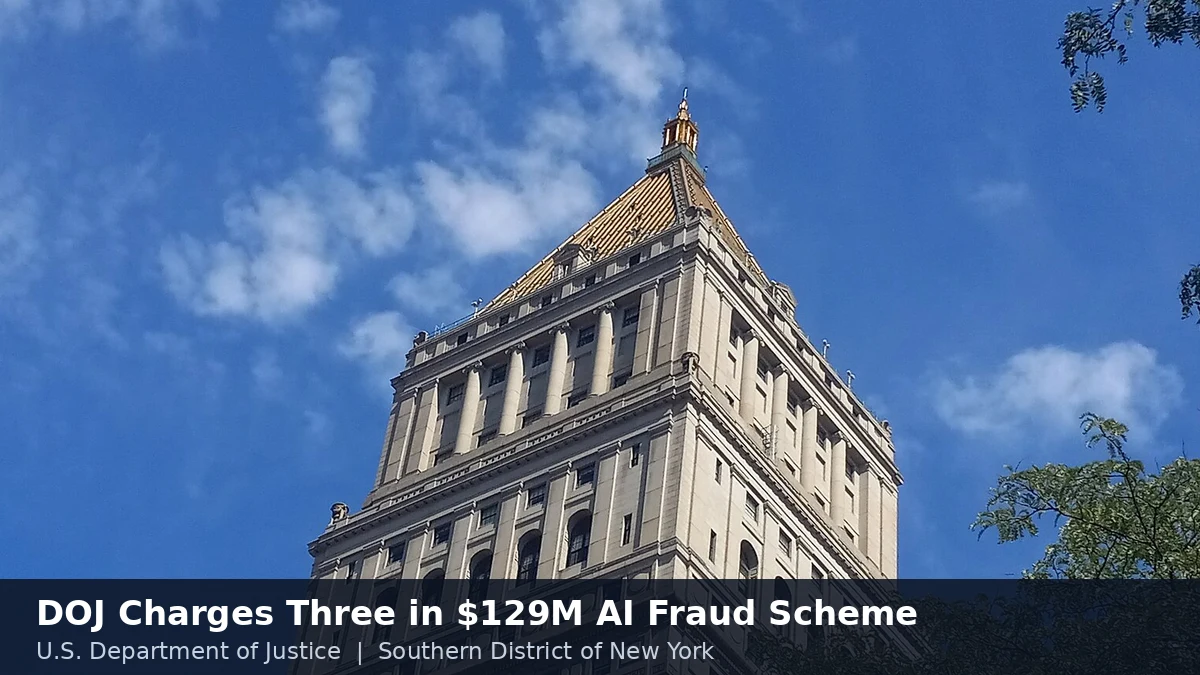
Federal prosecutors in Manhattan on Thursday, November 5, unsealed an indictment in a $129 million AI impersonation fraud case, charging three men with using artificial intelligence to impersonate chief executives and attorneys at major companies and law firms. The case is one of the largest AI enabled fraud schemes ever charged in the United States, and prosecutors say it ran for about 18 months and targeted thousands of companies around the world.
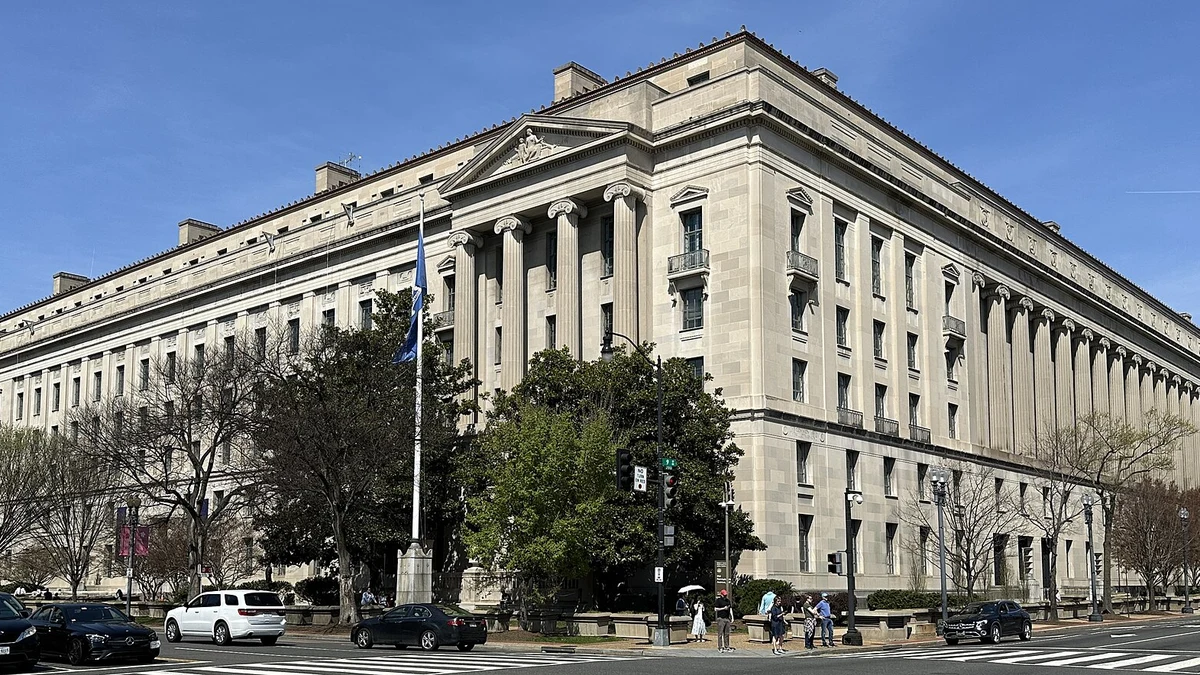
The U.S. Department of Justice announced the charges in the Southern District of New York. The three defendants, Jacob Soall, Sharon Hazan and Guy Sheetrit, were arrested in Europe between June and September 2026 and are awaiting extradition to the United States.
What the indictment alleges
According to the indictment, the defendants and their co-conspirators used what the Justice Department calls “super intelligence,” or SI, to impersonate the voices and images of corporate executives at numerous companies and attorneys at major law firms. Their goal was to trick employees into sending large payments to accounts the conspiracy controlled.
Prosecutors say the scheme operated between 2024 and 2026 and ultimately stole more than $129 million from victim companies in the United States and around the world. The charges are allegations, and the defendants are presumed innocent unless and until proven guilty.
“SI technology offers tremendous potential. But the public should recognize that there are some who seek to use this emerging technology to pursue criminal goals,” said U.S. Attorney Jamie McDonald. “As alleged, Jacob Soall, Sharon Hazan, and Guy Sheetrit abused groundbreaking super intelligence technology to impersonate real people and deceive corporate executives into sending them and their co-conspirators approximately $129 million.”
How the scheme worked
The fraud followed a familiar business email compromise playbook, upgraded with AI cloning. Prosecutors say the conspirators typically began by contacting an employee at a target company while pretending to be its chief executive. They claimed they needed help with a confidential financial transaction, then used AI to mimic the CEO’s voice and image during calls with the employee.
While posing as the CEO, they directed the employee to speak with lawyers at large international law firms who were supposedly also working on the transaction. The conspirators then impersonated those lawyers as well, adding a second layer of apparent legitimacy before a fake attorney directed the employee to wire a large sum to an account the group controlled.
One detail in the indictment shows how carefully the roles were rehearsed. Soall, who prosecutors say primarily impersonated attorneys from the United Kingdom, kept a handwritten script titled “Lawyer Call” that he used to sound like a real attorney, including language designed to convince victim employees not to discuss the calls with fellow employees.
The victims and the money trail
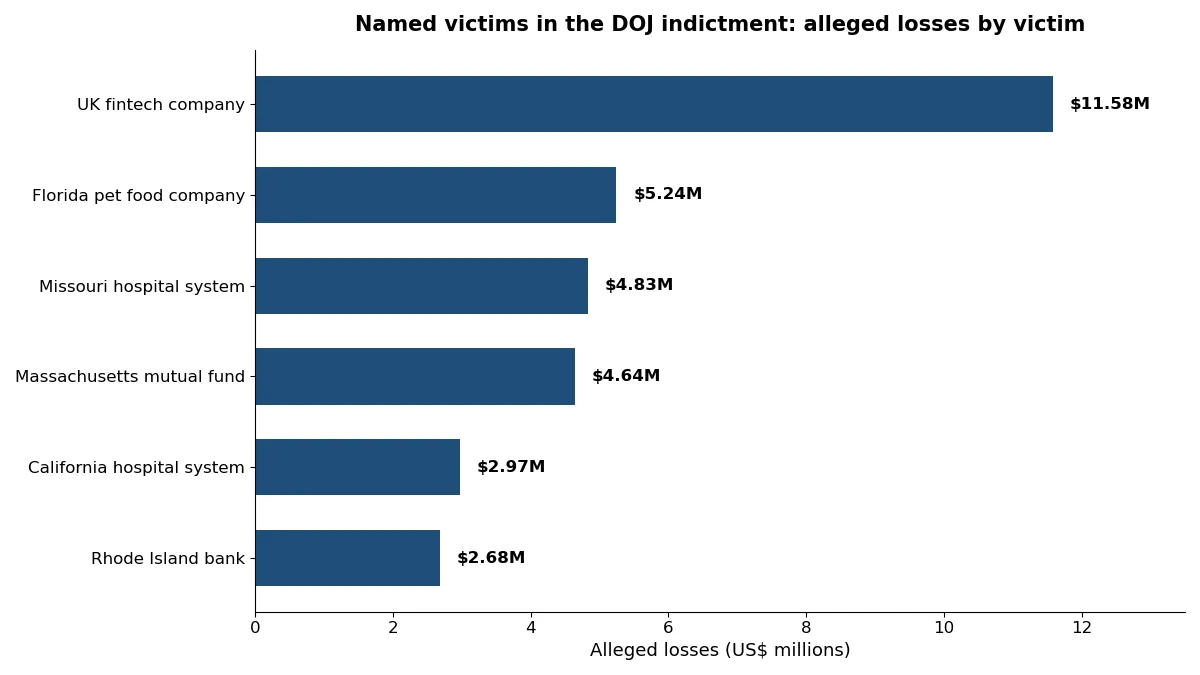
The indictment names six victims and the sums prosecutors say each lost. A financial technology company headquartered in the United Kingdom lost the most, at $11,578,474, followed by a pet food company in Florida at $5,242,747 and a hospital system in Missouri at $4,829,580. A mutual fund company in Massachusetts lost $4,639,918, a hospital system in California lost $2,968,497 and a bank in Rhode Island lost $2,684,580.
Once a payment arrived, prosecutors say the group moved the money through bank accounts in the United States, Spain, Portugal, Greece, the United Arab Emirates, Singapore, Austria, Slovakia and China, then converted it into cryptocurrency to hide its source, ownership and control before distributing it among the conspirators.
Hazan, who prosecutors say handled much of the laundering, boasted that he had been laundering money since 1994, that he had laundered over $400 million in just the past three years and that he was “number one all over the world” among professional money launderers. Hazan was previously convicted in the Southern District of New York of conspiracy to commit bank fraud in 2008.
Charges and arrests
Soall, 41, of Marbella, Spain, and the United Kingdom, was arrested in Spain on June 17, 2026. Hazan, 54, of Israel, was arrested in Spain on August 5, 2026. Sheetrit, 42, of Israel and the United Arab Emirates, was arrested in the United Kingdom on September 7, 2026. Extradition requests for all three are pending.
Each defendant faces seven counts: conspiracy to commit wire fraud, wire fraud, two counts of aggravated identity theft, conspiracy to commit money laundering and two counts of money laundering. The wire fraud and money laundering counts each carry a maximum sentence of 20 years in prison, while each aggravated identity theft count carries a maximum of two years.
“The alleged scheme orchestrated by Soall, Hazan, and Sheetrit demonstrates how the use of advanced technology can be exploited to commit large scale fraud,” said James C. Barnacle, Jr., Assistant Director in Charge of the FBI’s New York Field Office. “As criminals continue to weaponize emerging technologies, the FBI remains committed to rapidly adapting our capabilities to identify, investigate, and disrupt those who seek to harm New Yorkers and businesses operating in our communities.”
Why it matters
The case turns a warning the security industry has repeated for years into a concrete, nine figure example. Voice and video cloning tools have become good enough to pass on a live call, and the people running this scheme allegedly used them not against consumers but against finance staff at hospitals, banks and public companies, the employees authorized to move millions on a single instruction from the boss.
It also shows how AI fraud blends several older crimes into one operation. The impersonation got the money moving, the fake lawyer closed the deal, and cryptocurrency laundering through accounts in at least nine countries made the trail harder to follow.
For companies, the lesson prosecutors highlighted is verification. U.S. Attorney McDonald urged businesses to consider how best to protect themselves from what she called “the emerging threat of SI-enabled crime.” The Justice Department said anyone who believes they may be a victim can report it through the FBI’s online tips page at tips.fbi.gov.
Sources
- U.S. Department of Justice, Southern District of New York: Three Foreign Nationals Arrested And Charged With Scheme To Use Super Intelligence To Defraud Companies Of $129 Million
- The Manila Times (AP): 3 charged in scheme to use AI to impersonate CEOs and attorneys to steal $129 million
- The Times of Israel: 3 charged in NY, including 2 Israelis, for using AI impersonations to steal $129 million