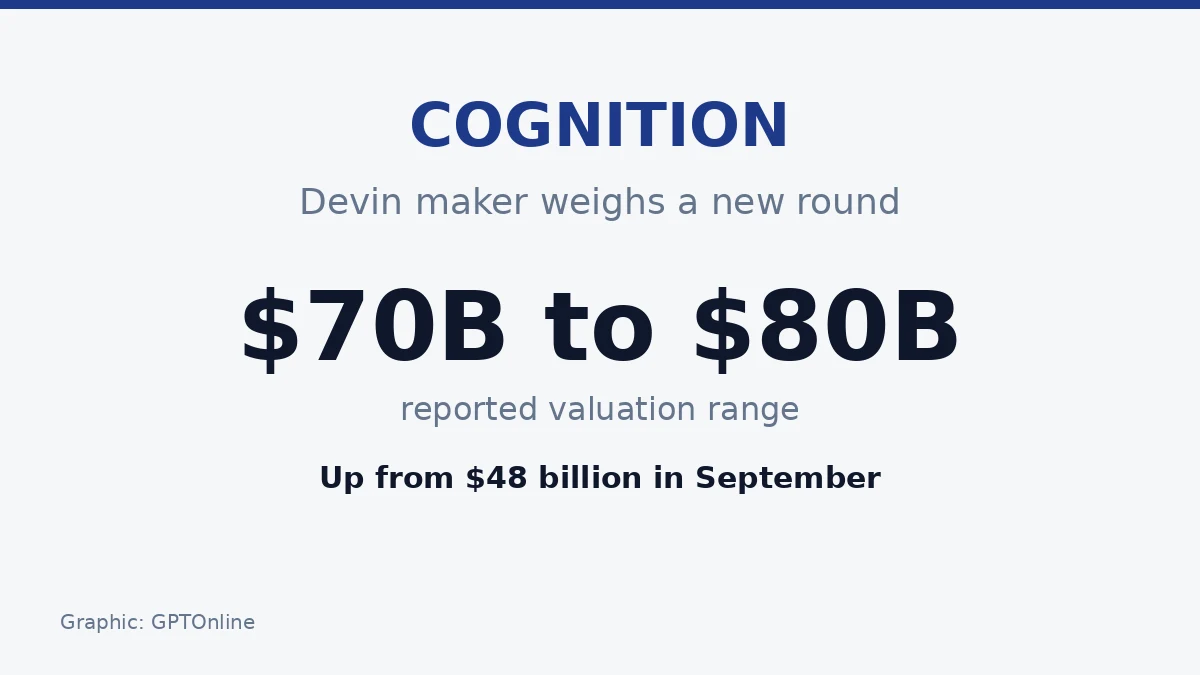
Cognition, the startup behind the Devin coding agent, is weighing a new funding round that could value the company at $70 billion to $80 billion, according to a Business Insider report published on October 28, 2026. The report, citing people familiar with the matter, says Cognition has received investor offers at that valuation range and is seriously considering a Cognition funding round before the end of the year. If it closes at that level, it would be one of the largest private valuations ever assigned to an AI coding company, and it would arrive only weeks after Cognition closed a major round at a far lower price.
The key caveat is in the report itself. Business Insider says that “the talks around the financing are still early, and valuation targets could still change.” No round has been announced, no lead investor has been named, and Cognition has not confirmed the talks. The story, in other words, is about investor appetite and a possible round, not a completed deal. That distinction matters, because valuations discussed in early talks often move before any paperwork is signed.
What Was Reported
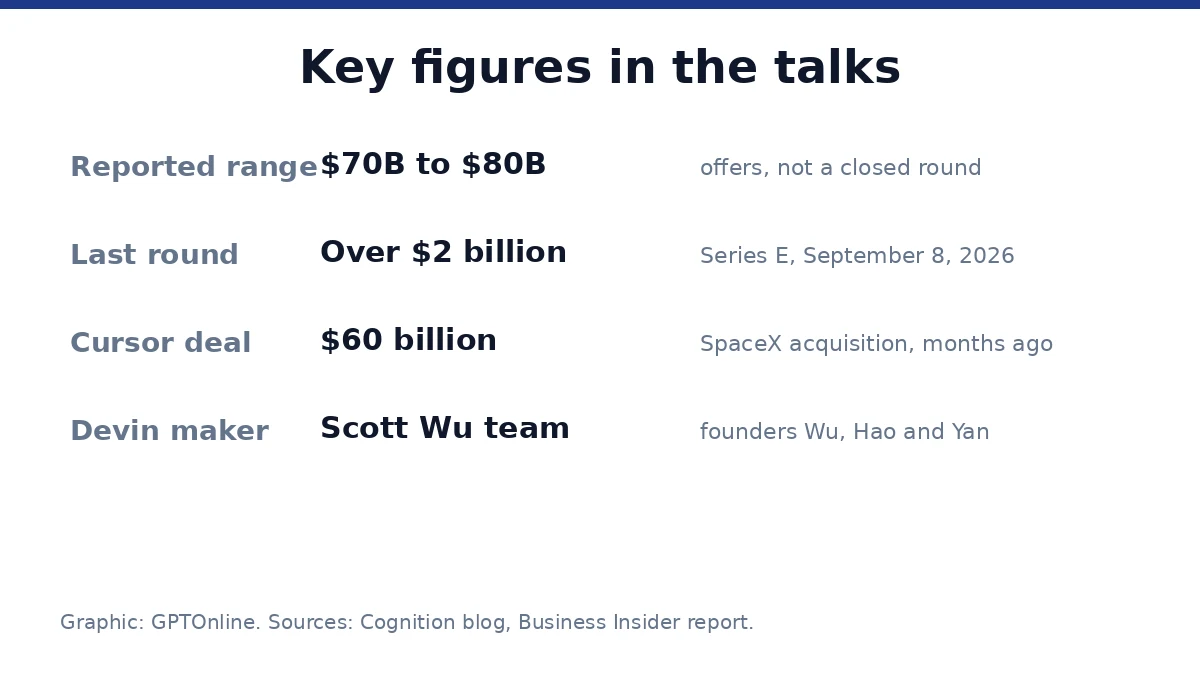
Cognition is best known for Devin, an AI agent designed to automate software engineering tasks. The San Francisco company was founded by Scott Wu, Steven Hao and Walden Yan, and its existing backers include Andreessen Horowitz, Accel, Founders Fund, Khosla Ventures, Elad Gil and Pear VC, according to the report. The new offers would value Cognition at $70 billion to $80 billion, up from the $48 billion valuation set in its Series E round announced on September 8, 2026.
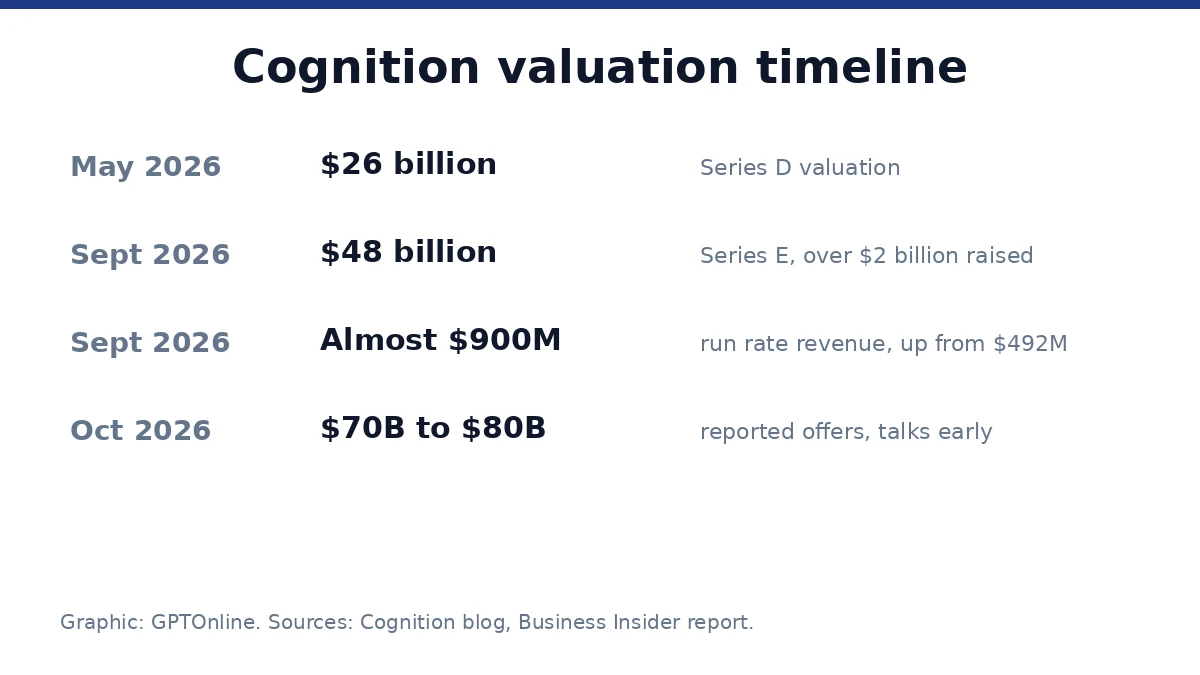
That September round was large by any measure. Cognition said it raised over $2 billion in the Series E, led by Andreessen Horowitz and Accel, with Founders Fund, General Catalyst and Avenir among the existing investors. In the same announcement, the company said its run rate revenue had grown from $492 million in May to almost $900 million, and it named customers including NVIDIA, GE Aerospace, Citi and Mercedes-Benz. A new round at $70 billion to $80 billion would therefore represent a jump of roughly 46 percent to 67 percent from the September valuation in about seven weeks, based on the reported range.
Why Investors Are Paying Up for AI Coding
Business Insider frames the climb as evidence of an investor rush into AI coding, which it describes as one of the hottest and most competitive corners of the AI market. The logic is straightforward: if coding agents can take on more of the work engineers do, the companies that build the best agents could capture a large share of software spending. Investors are, in the report’s account, placing increasingly expensive bets on the few startups they think could emerge as leaders, rather than waiting for proven profit margins.
The comparison point is Cursor. SpaceX acquired fellow AI coding company Cursor for $60 billion a few months ago, according to the report, which makes a $70 billion to $80 billion valuation for Cognition look less extreme to investors who already accept that price for a rival. The two companies have also been direct competitors in a fast moving market for agent based coding tools, and Cognition was drawn last month into a public dispute with rival Factory AI, which accused Cognition employees of posing as job applicants to seek product information. Cognition and a former Factory adviser denied that confidential information was sought or shared, according to the report.
What Could Change Before a Deal Closes
Several things could still move the outcome. Early stage financing talks can stall, shrink or change structure, and a valuation discussed with one group of investors does not guarantee that other investors will accept the same price. Cognition could also decide to wait, especially since it raised over $2 billion only weeks ago and reported run rate revenue approaching $900 million. A company with that much fresh capital is under less pressure to raise again quickly than a startup running low on cash.
There is also a broader market question. Big AI valuations have drawn sharper scrutiny in recent weeks, as investors weigh heavy infrastructure spending against the pace at which AI revenue is actually growing. Microsoft and Alphabet both reported strong cloud growth on October 28, but Alphabet shares fell after hours on a larger than expected cash burn, a reminder that even the strongest AI stories now face questions about cost. A Cognition round at $70 billion to $80 billion would test whether private investors are still willing to pay a premium for coding agents while public markets grow more selective.
For now, the verified facts are narrow but significant: a reputable outlet reports that offers at $70 billion to $80 billion exist, that Cognition is seriously considering a round before year end, and that the talks are early and could change. The September Series E at $48 billion, the revenue growth Cognition disclosed itself, and the $60 billion Cursor acquisition give that report context, but they do not confirm a new round. If Cognition announces one, the lead investors, the amount raised and the final valuation will be the numbers that matter. Until then, the story is a measure of how quickly the AI coding market is repricing itself, and how much investors are willing to pay to stay in it.