Waymo robotaxis are no longer allowed on California freeways. The state Department of Motor Vehicles restricted the Alphabet-owned company’s freeway operations after its driverless vehicles repeatedly entered active construction zones, and Waymo has now paused freeway rides in every market where it operates.
California’s DMV, which regulates the testing and deployment of autonomous vehicles in the state, issued the operational restrictions on November 11. The order was not made public until Tuesday, November 17, when the San Francisco Business Times first reported it. The DMV confirmed the restrictions to TechCrunch the same day.
Waymo has complied with the order and gone further. The company is preventing its robotaxis from accessing freeways in any of the markets it operates in, including those outside California. Waymo currently runs commercial services in 15 U.S. cities.
What the DMV Said
The DMV said Waymo’s freeway operations pose an “imminent hazard to public safety”. In an emailed statement to TechCrunch, the department said:
“The Department determined that Waymo’s driverless freeway operations pose an imminent hazard to public safety due to recurring incursions by its vehicles into active construction zones where construction workers, vehicles and equipment are present, despite a prior restriction and corrective actions implemented following similar incidents that occurred on May 18, 2026.”
The restrictions will remain in place until Waymo can demonstrate that it has taken “effective corrective actions” to address the deficiencies, the DMV said.
What Triggered the Ban
According to the DMV, three Waymo autonomous vehicles entered an active construction closure on U.S. Route 101 near Burlingame. A separate incident involved California Highway Patrol vehicles on Highway 280 in San Francisco, an episode captured in a viral video that showed a robotaxi failing to yield to highway patrol officers.
Waymo spokesperson Dana Gallagher said the U.S. 101 encounters did not involve any injuries or collisions. “Safety is at the foundation of everything we do,” Gallagher said in a statement to TechCrunch. “Following recent freeway construction zone encounters on U.S. 101 in California that did not involve any injuries or collisions, the California DMV has implemented an operating restriction on freeway operations in the state.”
Gallagher added that Waymo had also temporarily restricted freeway operations across its other operating markets to evaluate its performance, and that the company is working with the California DMV and other state officials to resume freeway operations.
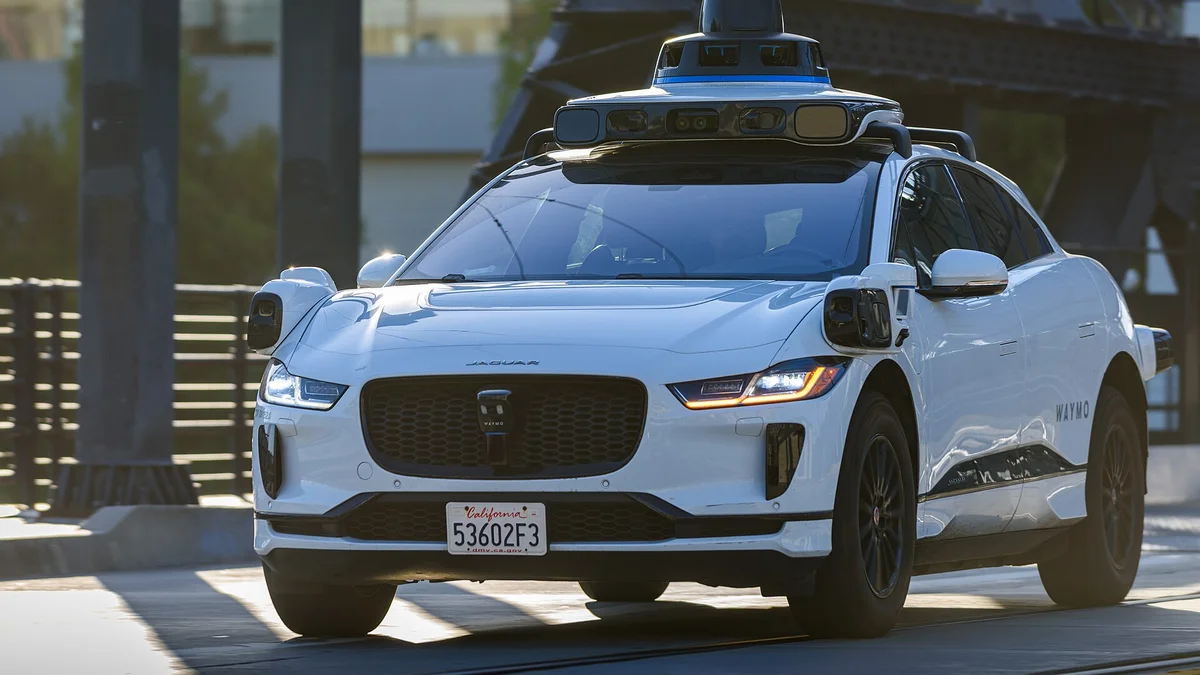
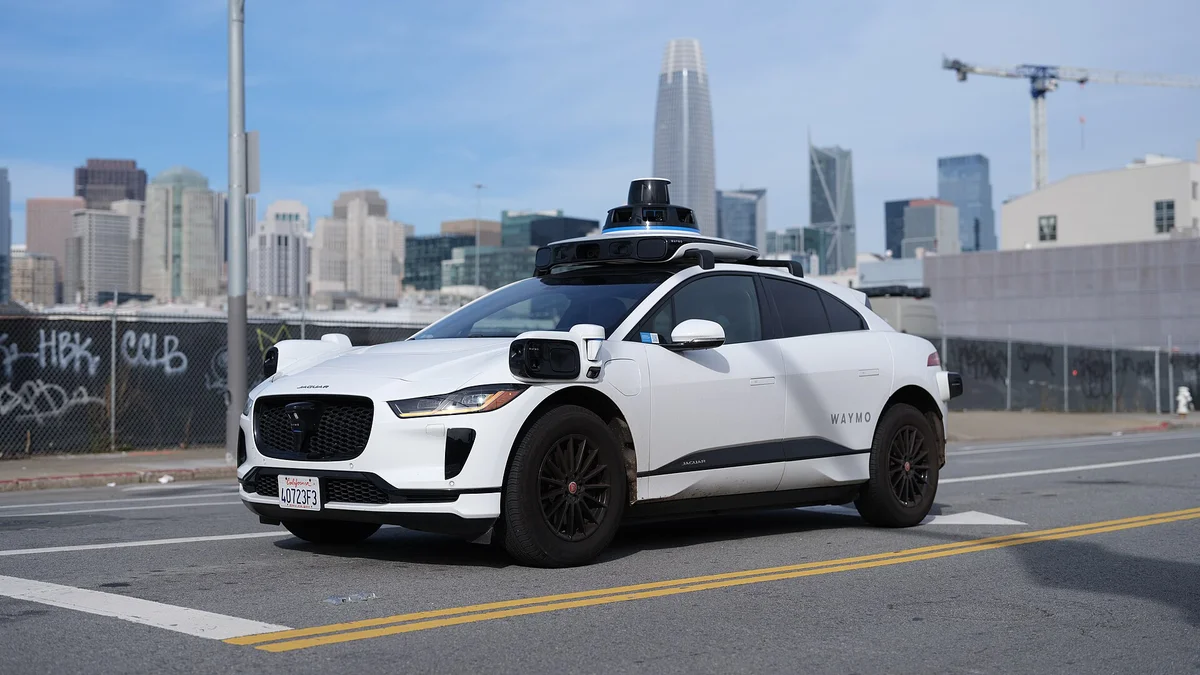
Waymo’s Jaguar I-PACE robotaxi, fitted with roof-mounted lidar and cameras. Photo: 9yz, CC BY 4.0, via Wikimedia Commons.
A Repeat Problem
This is not the first time Waymo’s freeway driving has drawn regulatory action. In May, Waymo abruptly stopped operating on highways. The company did not cite a specific reason at the time, but several social media posts showed Waymo robotaxis driving through traffic cones and struggling to navigate construction zones.
Waymo returned to freeways in July after saying it had updated its self-driving software to improve performance around freeway construction zones. The DMV’s new order makes clear that regulators consider those fixes insufficient: the same kind of incident happened again, and this time the department moved from a restriction to a full ban on freeway trips.
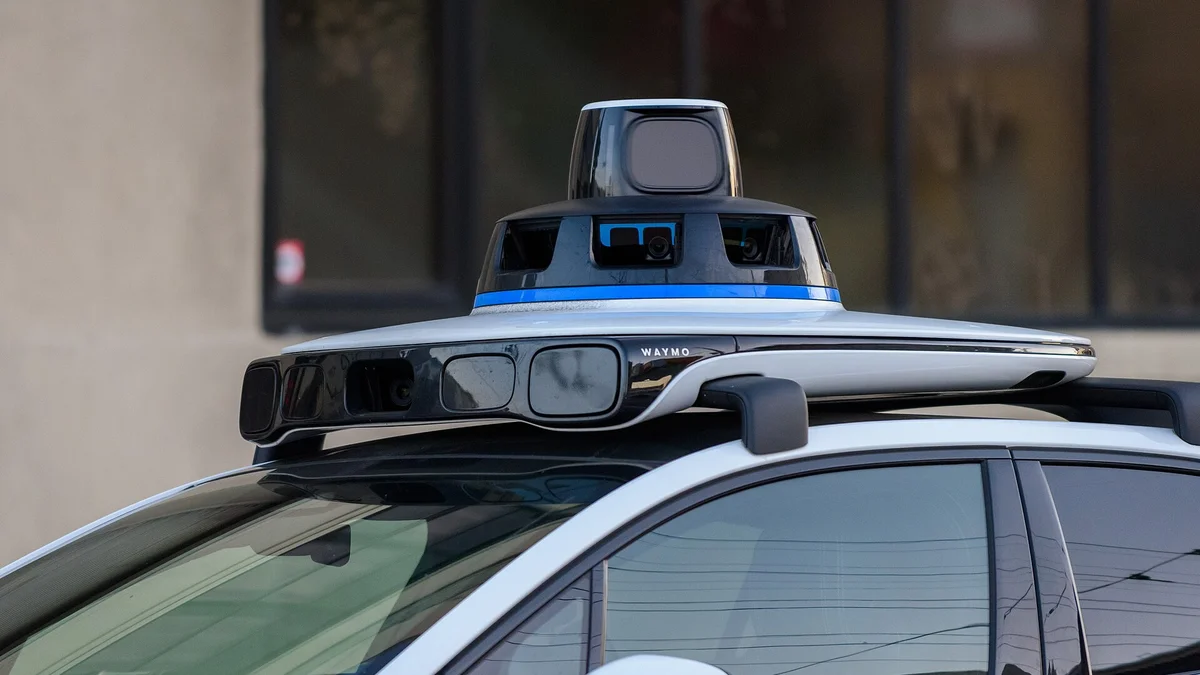
A close-up of the lidar and camera array on a Waymo vehicle. Photo: 9yz, CC BY 4.0, via Wikimedia Commons.
What It Means for Riders
Freeway access has been central to Waymo’s expansion in major metro areas. The company began offering freeway rides to the public in late 2025, and freeway routes let it connect riders to airports and other destinations far more quickly than surface streets. In the San Francisco Bay Area, where Waymo’s service area stretches from the city south to Silicon Valley, freeway access dramatically shortened trips across the Peninsula that previously took 45 minutes or more than an hour.
Trips to San Francisco International Airport, which rely on freeway routes, are among the journeys affected. Ride-hailing on surface streets continues normally, serving over half a million trips each week, according to Waymo.
Why It Matters
The Waymo freeway ban is the most significant regulatory setback yet for the leading robotaxi operator in the United States. Waymo has built its case for driverless expansion on a safety record, and construction zones have now produced the same failure twice in six months: once in May, and again in the incidents that led to the November 11 order.
For regulators, the question is no longer whether Waymo can fix the problem in software, but whether it can prove the fix works before it is allowed back on high-speed roads. Until that evidence satisfies the DMV, California freeways stay closed to the company’s robotaxis, and the nationwide pause means riders in every Waymo city lose the faster routes, not just those in California.
Sources
- Waymo suspends freeway rides nationwide after California DMV order, TechCrunch, November 17, 2026
- California bars Waymo driverless rides on state freeways, The Verge, November 17, 2026
- Waymo barred from operating on California freeways following viral I-280 incident, San Francisco Chronicle, November 17, 2026