Muse Can Now Make the Calls You Dread
Meta’s consumer AI agent Muse can now place calls to U.S. businesses on behalf of its users, after testing the feature since September. Only paid subscribers have access for now, TechCrunch reported on Thursday.
The rollout turns Muse from a chat companion into something closer to a personal assistant that handles chores. Meta said last month that Muse now has more than 10 million users, and placing calls is one of the ways the company hopes to make consumer AI a mainstream everyday product.
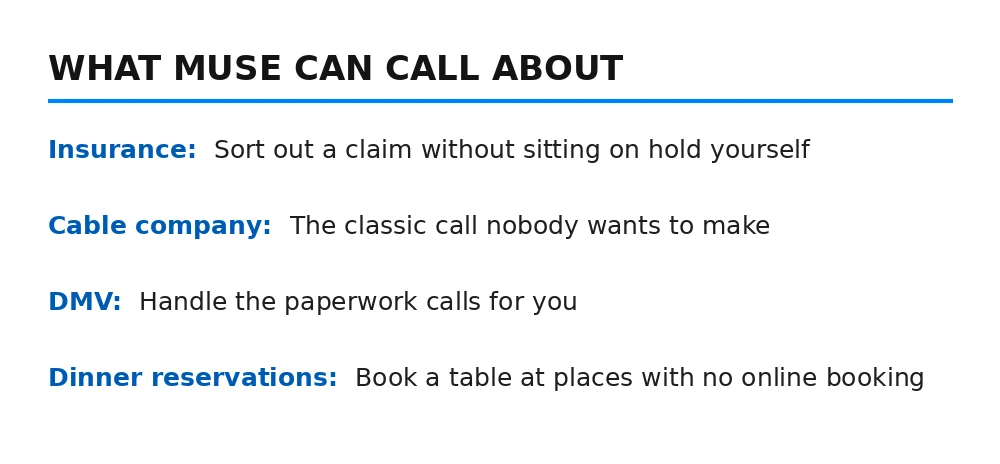
Alexandr Wang, Meta’s chief AI officer and head of its Superintelligence Labs division, announced the feature on X on November 12. “Muse can make phone calls for you,” he wrote. “Let muse take care of all those calls you don’t want to make. Insurance? Cable? DMV? Dinner res? Not your problem anymore. Out now to paid subs in the US.”
From a Limited Test to Paid Subscribers
Previously, only a select number of Muse early adopters could try the feature, and only after asking the AI for access. Now anyone who pays for Muse can make this type of request, TechCrunch reported.
The feature is aimed squarely at the calls people put off: the cable company, the DMV, or a restaurant that does not offer online reservations. Muse handles the phone tree and the hold music, and the user gets the result.
It is a different feature from the real-time voice mode Meta rolled out on November 5, which lets users talk to their own Muse out loud with an animated avatar. That feature, covered in GPTOnline’s earlier report, is about speaking with the agent. The new calling feature sends the agent out to speak with someone else.
What It Costs
Calls remain a paid-only feature for the time being. Muse subscription plans start at $20 per month for 500 million Muse tokens per week. Heavier users can pay $100 per month for 3 billion tokens.
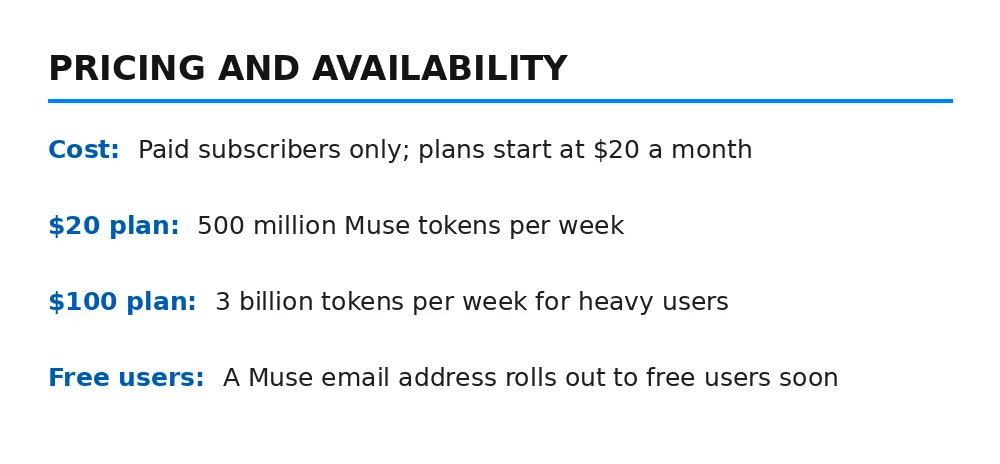
While calls stay behind the paywall, the recently added option to make a Muse email address will soon roll out to free users, Wang said this week.
The Other End of the Line
Muse is not the only AI agent able to place calls to businesses. The startup Instinct has offered a similar option, as has Google’s Gemini. But the reception on the other end of the line can be mixed. Many businesses and receptionists hang up on calls from AI agents as soon as they identify that it is not a human on the phone, TechCrunch noted.
That friction may fade as AI voices become harder to distinguish from real people. With AI now better able to mimic a real human voice, telling the difference between a customer and an AI working on the customer’s behalf will get tougher.
Why It Matters
For years, customers have been forced to navigate complex phone trees and sit on hold waiting for a human representative, and then hope that person can actually help rather than transfer them elsewhere. An AI with infinite patience is a natural fit for that tedious task, and Meta is betting that taking over the calls people hate is how a consumer AI agent earns a permanent place in daily life.
The test will be whether businesses accept the calls. If receptionists keep hanging up, the feature’s value stays limited no matter how good the voice sounds. If they start treating Muse like any other caller, the phone call, one of the last tasks that still required a human, starts to look automatable too.