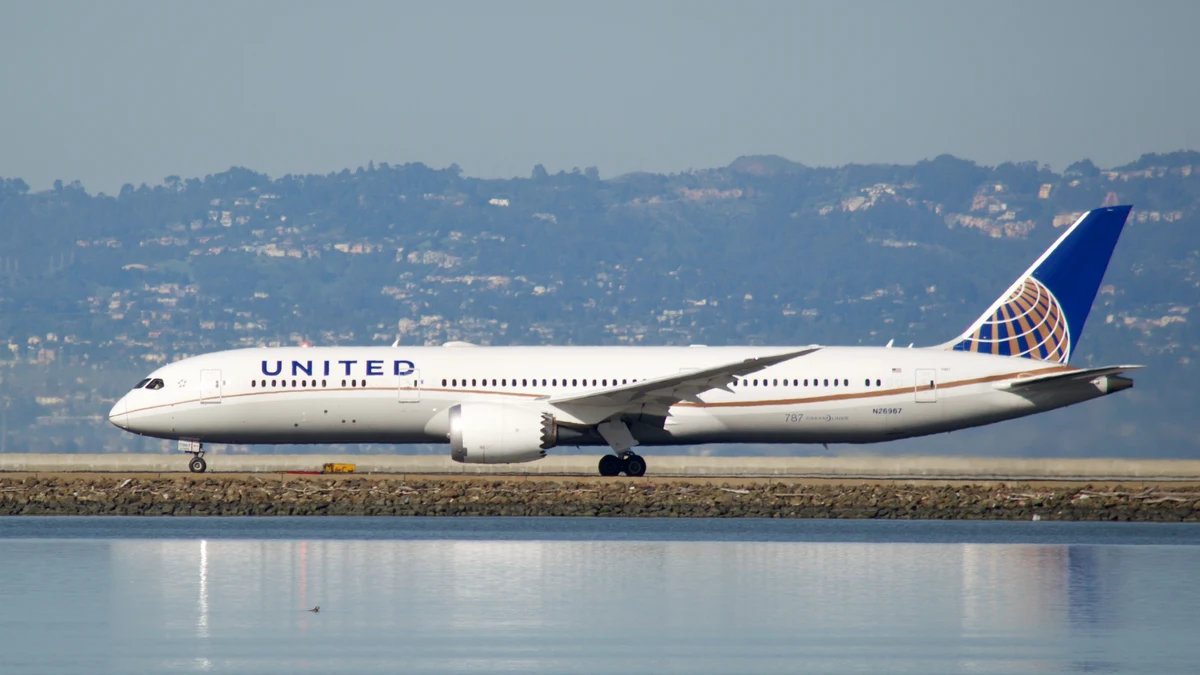
United Airlines is drawing a line around the newest travel middleman: the personal AI assistant. On November 11, 2026, the airline announced it will restrict unauthorized third party AI agents from booking, servicing or purchasing travel through its digital platforms and through travel agencies and aggregators.
The move makes United the first carrier in the United States to explicitly restrict third party AI agents, according to Skift. It comes as AI assistants from OpenAI, Meta and others grow capable of planning and booking trips on a traveler’s behalf, and as airlines weigh how much of that relationship they are willing to hand to software they do not control.
What the New Rules Say
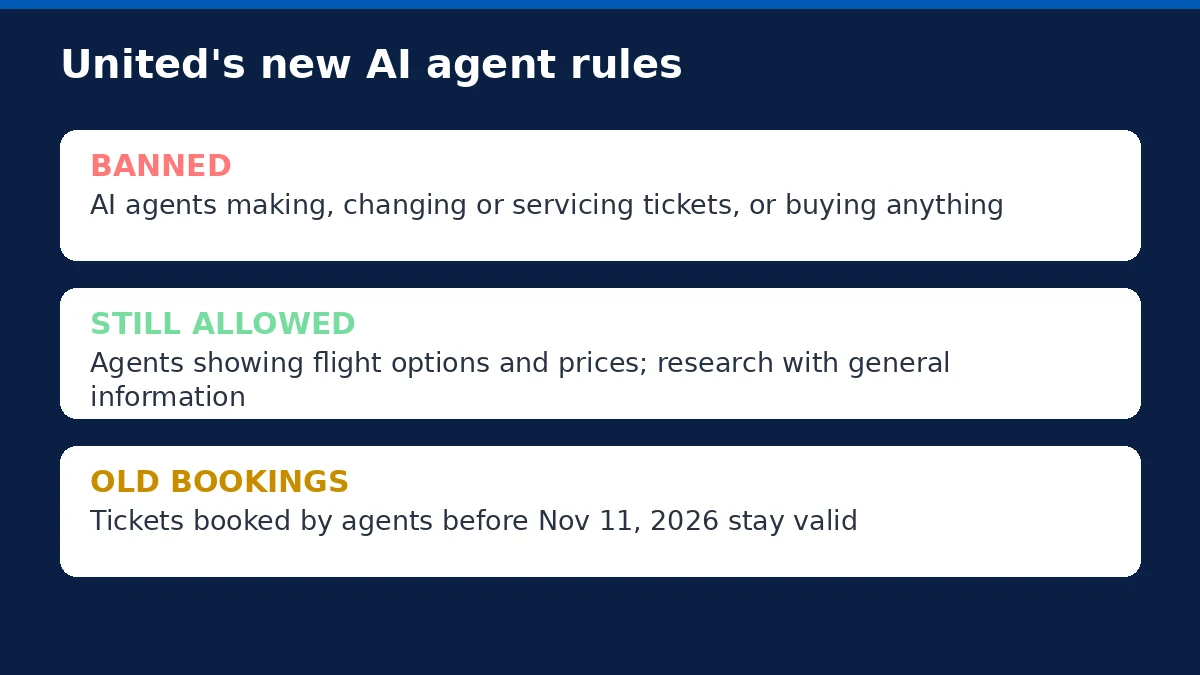
United revised its Contract of Carriage on November 11, 2026. Rule 6.J.6 bans “the use of AI Agents to make, modify or service a Ticket, and/or to purchase any service or product.” The contract defines an AI agent as software or a service taking autonomous or semi-autonomous action, even when a passenger supervises or approves what it does. The ban covers flights, seats, upgrades, ancillary products and partner products, and it reaches agents working through a travel agency or another intermediary, not just agents on united.com or the United app.
Rule 5.H gives United the right to cancel reservations made, modified or serviced by these agents. Penalties can also include ticket invalidation, cancellation of remaining travel segments and forfeiture of MileagePlus frequent flyer miles. United’s updated website terms require prior written permission for automated agent access to its site or app and allow the airline to block or limit such agents. The terms also ban using United’s pricing, schedules and availability data to train or evaluate machine learning models.
Why United Is Doing It
United cited three concerns. Sharing account credentials with a third party assistant can expose sensitive information. Agent actions can produce unintended purchases, account changes or use of MileagePlus miles. And automated actions such as check in could bypass mandatory passenger acknowledgments, for example certifying that luggage does not contain banned explosives, creating potential conflicts with Federal Aviation Administration and Department of Transportation requirements.
Chief executive Scott Kirby added a blunter reason. “To be honest, I don’t want to create another middleman,” he told the Wall Street Journal at an event in Chicago, according to View From the Wing. The airline wants the booking relationship to stay with United, not pass through an assistant that could steer travelers toward whichever airline it prefers.
What Agents Can Still Do
The ban is not total. AI agents can still show United flight options and prices, and AI assisted research and planning remain permitted when the tools use general information and do not access united.com or the United app. The line United drew is at the transaction: looking is fine, buying is not.
Bookings made by third party agents before November 11, 2026 will not be canceled. United also said it does not currently work with any third party AI agents, and that direct technical integrations would require verified privacy and security controls first. The airline said it will update its Digital Trust Center so customers can understand the restrictions and get help if an agent takes an unintended action.
An Industry Splitting Over Agents
United is not acting alone. In October 2026, Delta Air Lines and JPMorgan Chase announced restrictions on AI agents performing bookings, and across the industry no major US airline has implemented third party agent booking integrations as of November 2026. The United Airlines AI agents ban is the clearest signal yet that airlines intend to keep control of the checkout. The pattern is familiar from earlier platform fights: whoever controls the checkout controls the customer, the data and the fees.
The stakes go beyond one airline. Personal AI assistants are being pitched as the next front door to travel, shopping and services, and every platform now has to decide whether agents are welcome guests or unauthorized middlemen. United has chosen the second answer, and its contract of carriage now says so in plain language. Other carriers, and the agent makers, will have to respond.
Sources
- USA Today, “United Airlines bans personal AI agents from booking flights,” November 11, 2026
- Skift, “United Airlines to Block Third-Party AI Agents,” November 11, 2026
- Unite.AI, “United Airlines Bars Unauthorized AI Agents From Booking Travel,” November 11, 2026
- View From the Wing, “United Airlines CEO Scott Kirby Bans AI Agents From Booking Tickets, Doesn’t Want ‘Another Middleman’,” November 11, 2026
- Reuters via 985 The River, “United Airlines moves to block AI agents from its platform over security concerns,” November 11, 2026