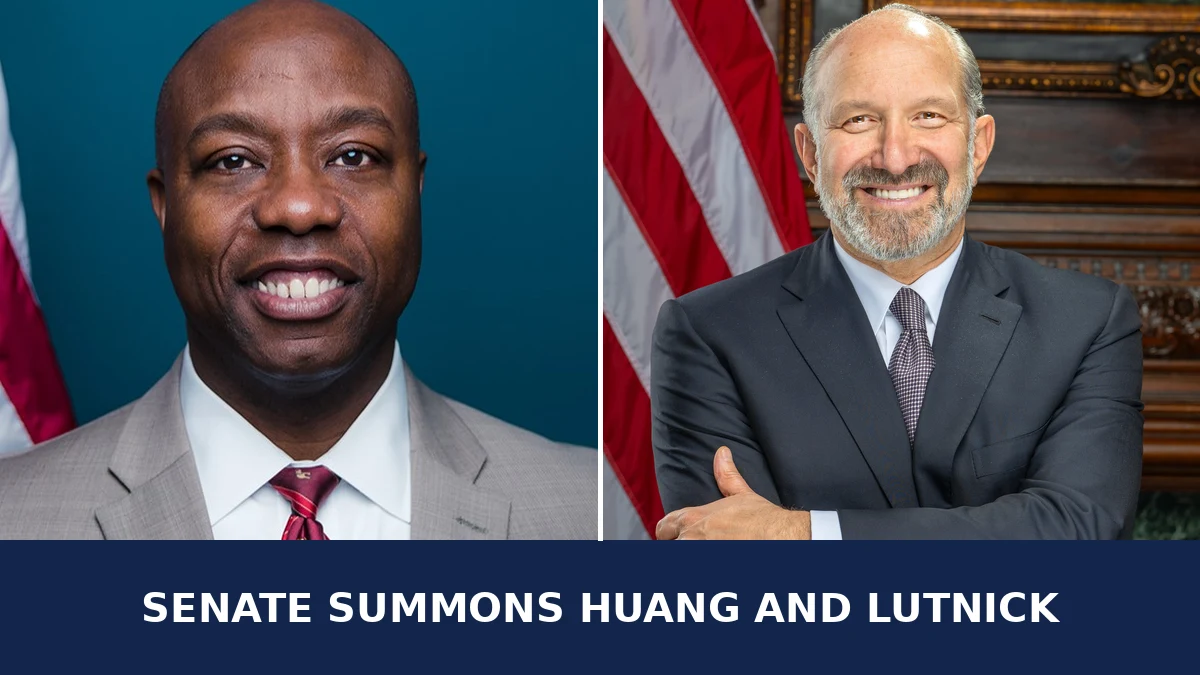
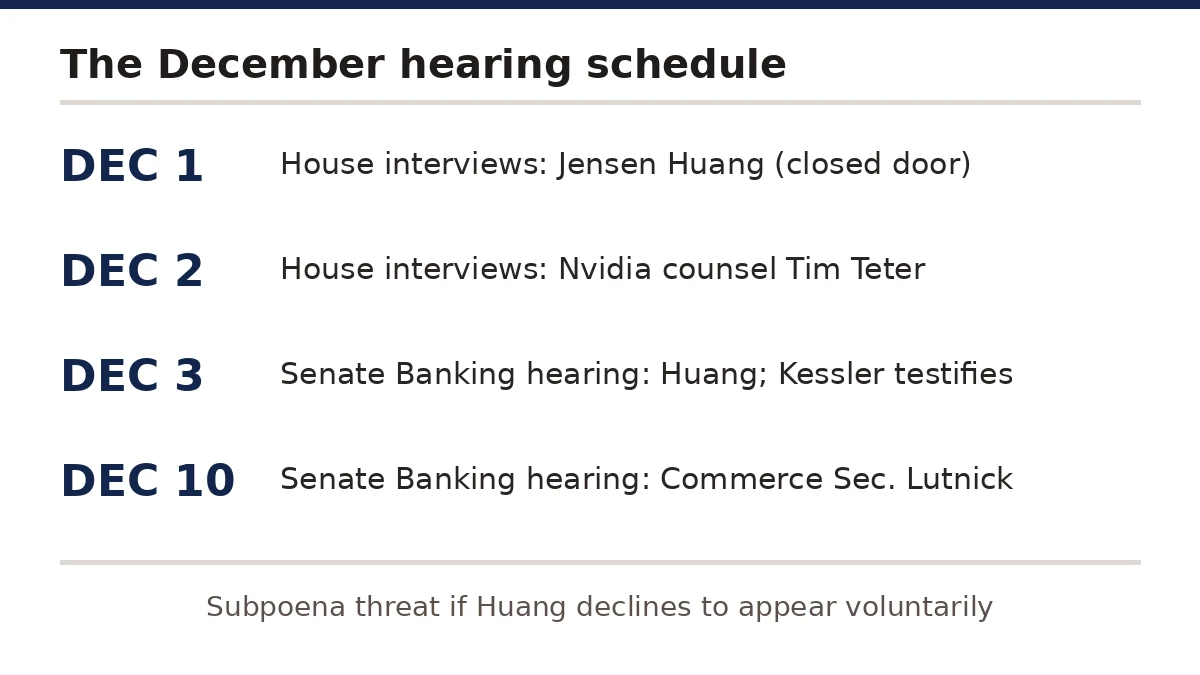
Senate Banking Committee Chairman Tim Scott has summoned former Nvidia chief executive Jensen Huang and Commerce Secretary Howard Lutnick to testify about Nvidia chip sales to China, adding a Republican-led Senate inquiry to the fast-widening congressional scrutiny of the chipmaker. Scott sent letters to both men on Thursday evening, asking Huang to appear on December 3 and Lutnick on December 10, and warned he would consider a subpoena if Huang does not appear voluntarily.
“Recent reports raise serious concerns about our national security and the protection of sensitive U.S. technology,” Scott wrote, according to Politico, which first reported the letters. “The American people deserve answers.” Lutnick has agreed to appear, Politico reported.
What Scott Is Asking For
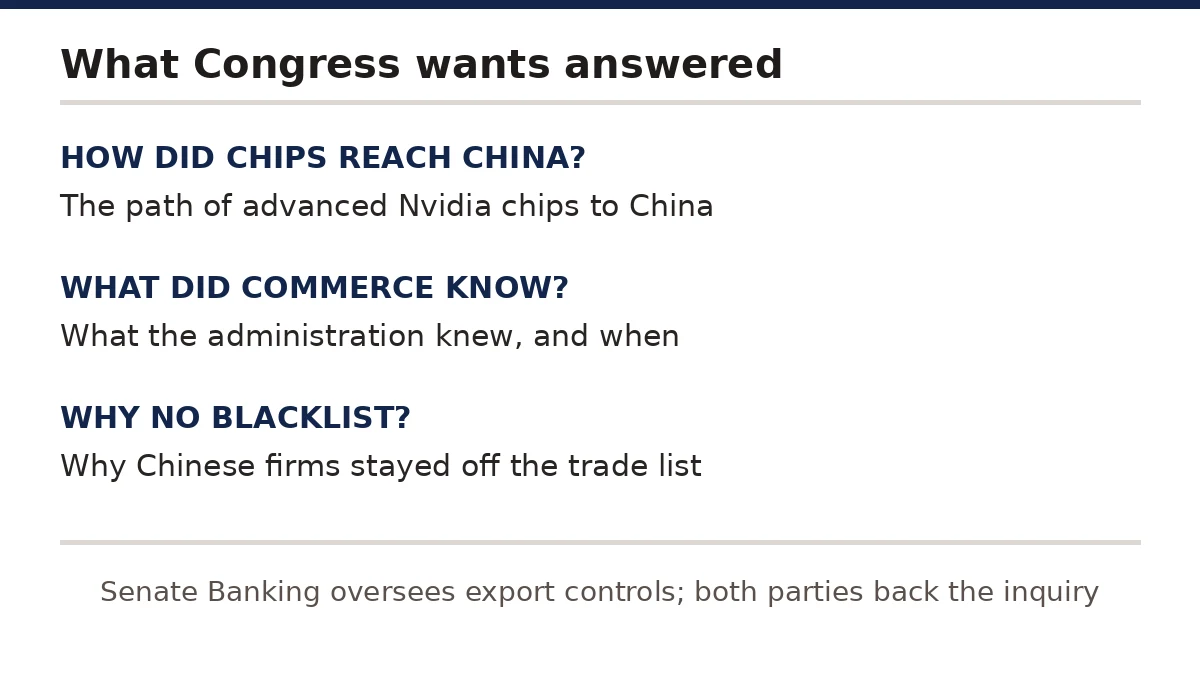
The Senate Banking Committee oversees export controls, which puts it at the center of the questions now surrounding Nvidia. Lawmakers want to know how advanced U.S. chips reached China, whether the Commerce Department properly policed those sales, and what the administration knew about Huang’s relationship with Alice Huang, a Megaspeed employee whom U.S. officials suspect was recruited by Chinese intelligence.
Scott’s letters are the latest step in a congressional push that has accelerated since Huang resigned on Thursday. The top Democrats on two congressional committees also wrote to Lutnick on Thursday saying they were investigating the matter, and the Justice Department is running multiple probes touching Nvidia, Megaspeed and Supermicro.
Huang has hired lawyers who previously represented executives in government investigations, according to people familiar with the matter cited by The New York Times. No subpoena has been issued yet. Scott said only that he would consider one if Huang declines to appear voluntarily.
The House Track Runs First
Scott’s Senate hearings are not the first dates on the calendar. The chairs of three House committees, Foreign Affairs Chairman Brian Mast, China select committee Chairman John Moolenaar and Intelligence Committee Chairman Rick Crawford, wrote to Huang and Nvidia general counsel Tim Teter requiring closed-door transcribed interviews on December 1 for Huang and December 2 for Teter, or subpoenas to compel them.
The House chairs also asked Under Secretary of Commerce Jeffrey Kessler to testify at a December 3 hearing. Mast said on Thursday that Huang had agreed to brief lawmakers before Thanksgiving, with the date still being negotiated.
That means Huang now faces calls to appear before at least two sets of committees within days of each other, while Nvidia heads into its quarterly results on November 17 under interim chief executive Colette Kress.
What Lawmakers Want Answered
The central issue is China. Lutnick’s department was required to review companies for national security risks before the Trump administration allowed Nvidia to sell advanced chips to China last year. Lawmakers from both parties have criticized Lutnick over his refusal to add dozens of Chinese companies to a key U.S. trade blacklist, and over whether the government properly oversaw Nvidia’s exports to China.
The scrutiny extends to the arrangement under which the administration approved H200 chip sales to China, an arrangement House Democrats have called a scheme that effectively took a cut of Nvidia’s sales through what they described as an unconstitutional export tax system. GPTOnline reported on Thursday that the top Democrats on the House Ways and Means and Senate Finance committees opened their own inquiry into the deal.
Separately, lawmakers are pressing for action on export-control legislation. OpenAI this week backed a package of bipartisan bills that would freeze the rules on which chips Nvidia can sell to China for at least 18 months and require location-verification technology on advanced processors, as GPTOnline reported.
Reactions on Capitol Hill
Senate Democratic leader Chuck Schumer said in a social media post that Congress must “demand answers” from Huang, and called on the Trump administration to “answer for what it did once it learned about Huang’s relationship with a suspected Chinese intelligence asset.”
Sen. Elizabeth Warren of Massachusetts, the top Democrat on the banking committee, said Huang’s resignation “does not absolve him, other executives or the company as a whole of responsibility for putting our national security at risk or for any potential violations of our laws.” She added that the company still would “owe Congress answers,” and demanded that Trump officials “ensure our advanced technology is not fueling China’s military.”
Congressional leaders of both political parties have said they support hearing from Huang directly about his entanglement with Alice Huang. The Justice Department has not yet reached a conclusion on whether she is a spy, Attorney General Todd Blanche said on November 12, and China has denied it.
Why It Matters
The summons turns a corporate scandal into a test of U.S. export-control policy. Huang’s resignation has not slowed the bipartisan push for information on whether he compromised national security, and the December hearings will put both the former Nvidia chief and the Cabinet secretary who licensed the chip sales under oath in public.
For Nvidia, the timing is awkward. The company reports quarterly results on November 17, five days after its chief executive stepped down, and its board is searching for a permanent successor while interim chief Kress steadies the company. For Lutnick, the hearings add a Senate panel led by a senior Republican to the criticism he already faces over the export blacklist and the handling of Nvidia’s China sales.
The hearings also land as Congress weighs the defense bill, where the export-control measures OpenAI just backed could be attached. Testimony from Huang and Lutnick in December could shape whether those bills survive the end-of-year legislative push.
Sources
- Politico, “Senate Banking Chair Tim Scott asks Jensen Huang and Howard Lutnick to testify” (via Techmeme)
- The New York Times via Deccan Herald, “Jensen Huang, Howard Lutnick summoned to testify over Nvidia-China row”
- Business Today, “Former Nvidia CEO Jensen Huang to testify before Congress over alleged China spy link”