Updated October 18, 2026.
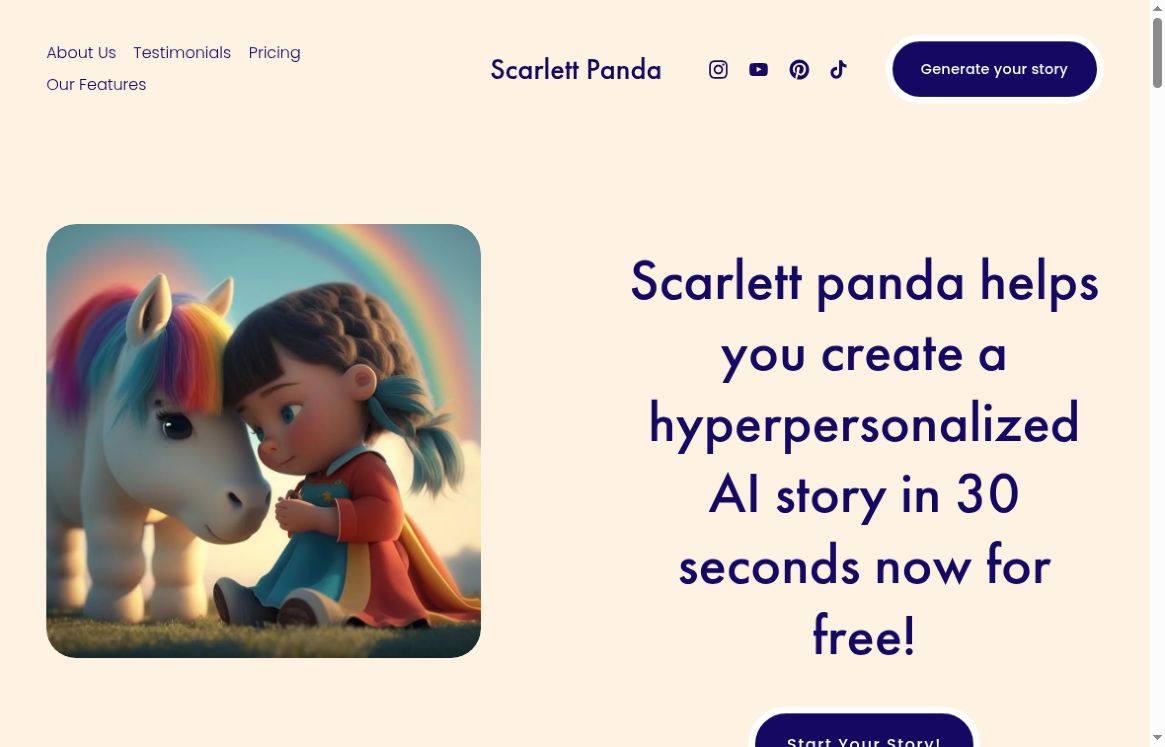
Featured image: screenshot of the official Scarlett Panda homepage, captured October 18, 2026. The illustration is the provider’s example, not a GPTOnline test result.
Scarlett Panda is an AI storytelling web app for families. An adult can choose characters, a setting and a theme to create illustrated stories, including short bedtime tales and longer storybooks. Its main appeal is personalization: a familiar toy, a favorite animal or an invented character can become part of the adventure.
The service also advertises learning adventures, lullabies and meditations. This overview is based on Scarlett Panda’s public product pages and subscription terms; it is not a hands-on test of generated stories or a claim that the app improves a child’s development.
What can Scarlett Panda do?
- Create personalized short stories. The setup described by the provider includes characters, a moral or lesson, a setting, an age range and an illustration style. Scarlett Panda promotes generation in about 30 seconds, but that is a vendor estimate rather than a speed we independently measured.
- Add AI illustrations. The illustrations page presents several visual styles. Review the pictures as well as the writing before sharing a story.
- Build longer storybooks. The storybook page describes ten-chapter books with up to four characters, images and personalized notes. Digital, printed and audiobook formats are advertised, with print arrangements handled separately.
- Explore themed learning adventures. This feature turns a chosen topic into a sequence of story chapters and lets the family select what to explore next. The provider’s examples include everyday routines and caring for a pet. Check factual information yourself before using a story to explain a topic.
- Create personalized lullabies. The lullaby workflow describes selecting a theme and tune, then receiving words and an image ready for singing. Do not assume that this means an automatically performed audio track is included.
Scarlett Panda’s homepage also lists scheduled stories and meditation content. Availability can change, so confirm the features included in the plan you select.
Pricing and free access
The official pricing page and plan-selection page were checked on October 18, 2026:
- Premium monthly: USD $9.90 per month. This plan has no free trial.
- Premium yearly: USD $79 per year after a seven-day free trial. Unless cancelled before the trial ends, it becomes a paid annual subscription.
- Included: the plan page advertises unlimited stories and premium content. It does not provide a detailed feature-by-feature usage table.
- Printed books and audio: the FAQ quotes $49 plus shipping for printed books and $9.90 for audio of a ten-chapter storybook. The FAQ does not explicitly label the currency for these extras; confirm currency, format and the full delivered price before ordering.
Subscriptions renew automatically until cancelled. The cancellation policy explains that cancelling stops future renewal and normally preserves access through the paid period. Refund requests are assessed separately; cancellation is not an automatic refund. Taxes and any currency conversion are shown at checkout.
Free story creation is advertised, but the public pages disagree about the allowance: the homepage mentions three stories, while other feature pages mention one, two or one per week. Treat the allowance shown in your account as the practical check rather than relying on a fixed count here. The annual subscription trial is a separate offer.
How to approach your first story
- Choose a small, clear idea. Decide who the story is about, where it happens and one theme to explore. Use invented characters or nicknames where possible.
- Set the tone and audience. Choose a suitable age range and describe the kind of story you want, such as a gentle bedtime adventure.
- Review the entire result. Check the language, pictures, emotional tone and any factual claims. Replace or discard unsuitable material before reading it with a child.
- Read together. Ask what the characters could do next or what the child would change. Personalization is a starting point for shared storytelling, not a guarantee of educational results.
- Check the format before paying. If you want a gift book or audio version, verify the price, available language, production arrangements and delivery details for that specific format.
Example story idea, not a tested output: A small fox and a toy robot visit a moon garden. They disagree about which path to take, then learn to take turns. Keep the mood gentle and finish with the characters safely back home.
Who is it useful for?
Scarlett Panda is worth considering for parents and caregivers who want custom reading material for shared bedtime routines, family story-making or a personalized book gift. The choice of characters and themes is more relevant to that use than a general-purpose image generator.
For classroom use, commercial publishing or distributing stories beyond the family, check the applicable permission first. The current consumer terms describe generated output as being for personal, non-commercial family use; they should not be read as a blanket school or commercial license.
Important limits and privacy considerations
- Adult oversight is required. The terms warn that AI content can contain mistakes or unexpected material and do not guarantee that every output is appropriate for a child. Review is still necessary even when a product is marketed for families.
- Keep personal information minimal. The privacy policy recommends nicknames where practical and cautions against entering unnecessary details such as a child’s address, school, precise location or health information. Adults should have the required permission before providing a child’s data or photographs.
- Language coverage depends on format. The storybook page advertises 74 languages, while the FAQ describes more than 100 for instant stories. Confirm your language in the format you need instead of assuming every feature has identical coverage.
- Use the web app as the verified access route. The FAQ describes browser access and downloadable stories for offline reading. It says a Google Play app is in development, but does not establish a release date; this review does not claim a native mobile app is available.
See the official FAQ for format questions and support options. If you are comparing other products, browse GPTOnline’s AI tools directory and focus on the story formats, permissions and recurring costs you actually need.