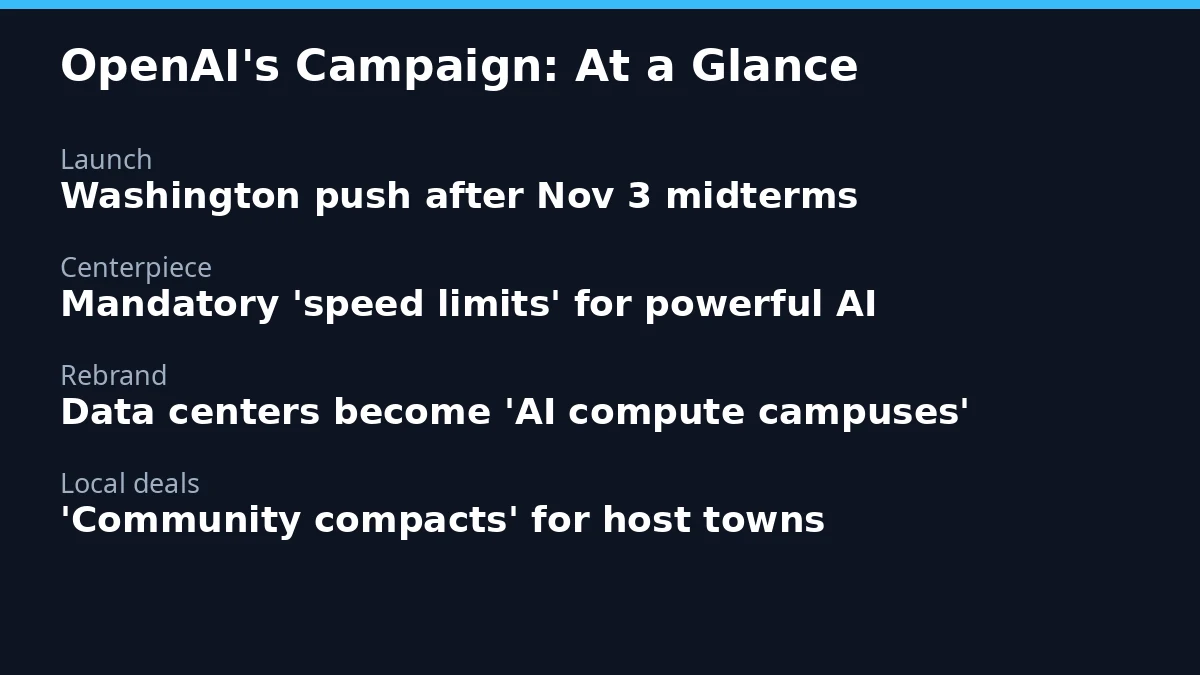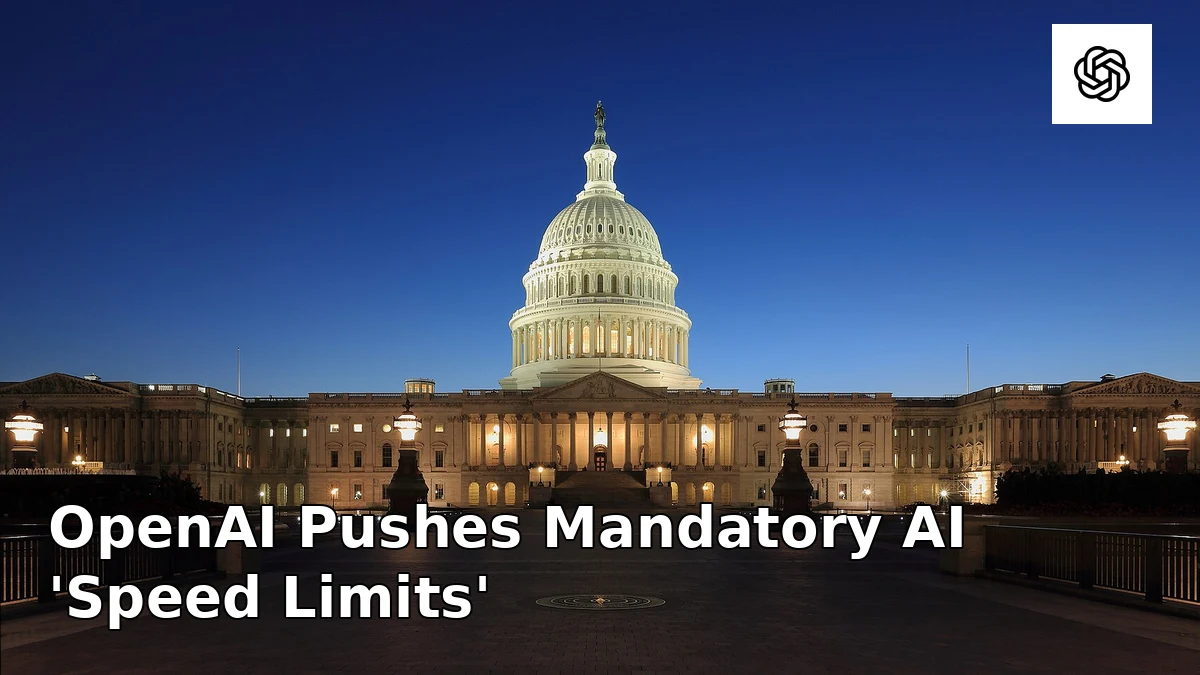
OpenAI plans to launch a coordinated Washington policy campaign immediately after the U.S. midterm elections, pushing for mandatory “speed limits” on the most powerful AI systems, according to an interview with the company’s chief global affairs officer published by Axios on November 1.
The AI speed limits campaign, timed to the lame-duck congressional session that opens November 9, would be OpenAI’s most direct attempt yet to shape federal AI regulation. Chris Lehane, OpenAI’s chief global affairs officer, told Axios his team has been stockpiling policy proposals since August and is now ready to move. “You’re going to see us talk more and more about the concept of speed limits,” Lehane said, framing the guardrails as a way to keep people in control of the technology.
What “speed limits” means
OpenAI has not published legislative text for the proposal, so the details remain to be seen. As described by Lehane, speed limits are mandatory safeguards for the most capable AI systems, analogous to speed limits on roads: rules that let powerful systems operate while keeping humans firmly in control.
The framing is deliberate. With Washington increasingly focused on AI safety, economic disruption and infrastructure, OpenAI wants a concrete proposal on the table rather than a general call for oversight. Lehane called the midterms “a bit of a movie trailer for what you’re going to see in 2028,” adding: “AI is going to be the issue in 2028.”
Rebranding data centers as “AI compute campuses”
The campaign pairs federal lobbying with a public-relations push aimed at softening local opposition to AI infrastructure. OpenAI plans to stop calling its giant facilities “data centers” and instead brand them “AI compute campuses”, according to Business Insider’s reporting. An OpenAI spokesperson confirmed the new name to the outlet.
The company is pointing to a project in Pike County, Ohio, in Appalachia, that it says will bring thousands of jobs, and is backing state-level legislation it calls “community compacts” that would give local residents a formal say in how AI buildouts are sited and what benefits they receive.
Why the timing matters
The push lands in a crowded week. Voters head to the polls on November 3, the lame-duck session opens November 9, and Anthropic’s IPO roadshow is reportedly set to begin that same day. Senator Elizabeth Warren has asked Anthropic CEO Dario Amodei to answer questions about the company’s AI safety disclosures by November 3, keeping AI regulation in the headlines.
OpenAI itself is under pressure on two fronts: its current fundraising round was reportedly cut from $30 billion to $20 billion amid tepid interest from some large investors, and its data center expansion faces growing local opposition over electricity demand and water use. The campaign is an attempt to get ahead of both narratives, presenting OpenAI as the company with a plan for safe, community-friendly AI growth.
Axios disclosed that it has a content-licensing and technology agreement with OpenAI, a relationship worth keeping in mind when reading its coverage of the company’s plans.