
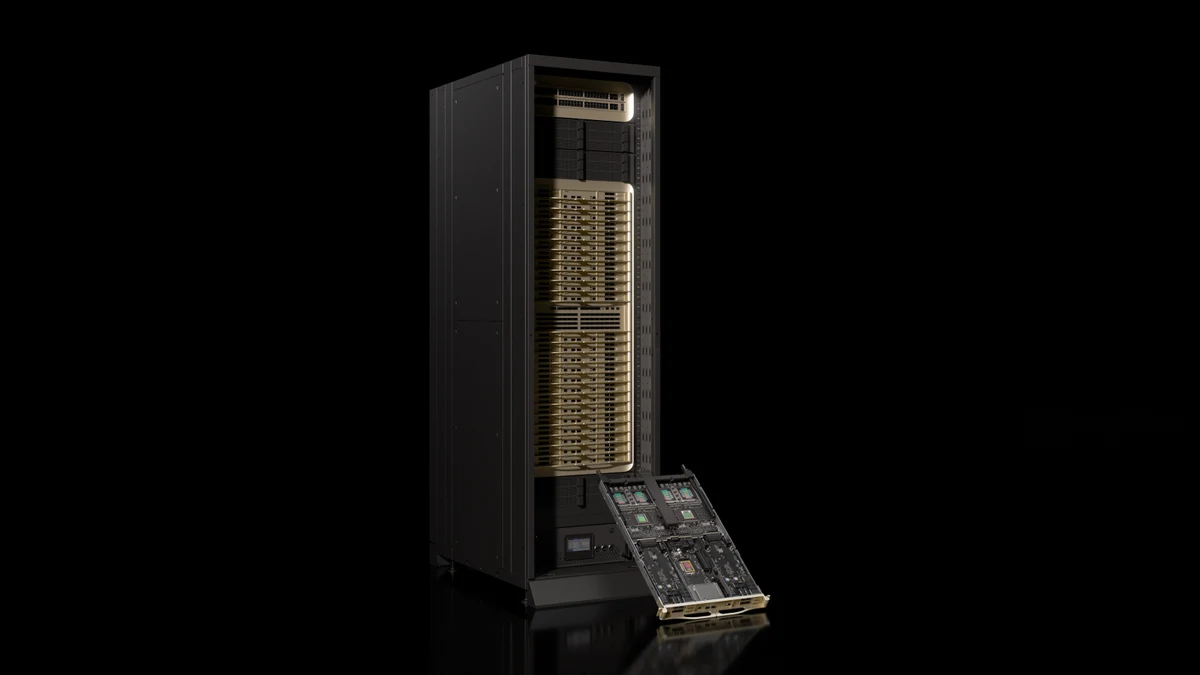
Rubin HPC is NVIDIA’s new GPU for science, and it carries more CUDA cores than any chip the company has built. NVIDIA unveiled the processor on November 16 at SC26, the supercomputing conference in Chicago, positioning it as the hardware that will run the simulations behind AI-driven scientific discovery. The chip is expected to be available in 2028.
The headline number is the core count. Rubin HPC packs more than 50,000 CUDA cores on a single GPU, a record for NVIDIA and nearly double the 28,672 cores in the standard Rubin GPU, which also carries 898 Tensor cores. NVIDIA pairs the cores with a sparse data acceleration capability designed to keep them fed with data, and with seventh-generation NVLink interconnect technology for GPU-to-GPU traffic.
What Was Announced?
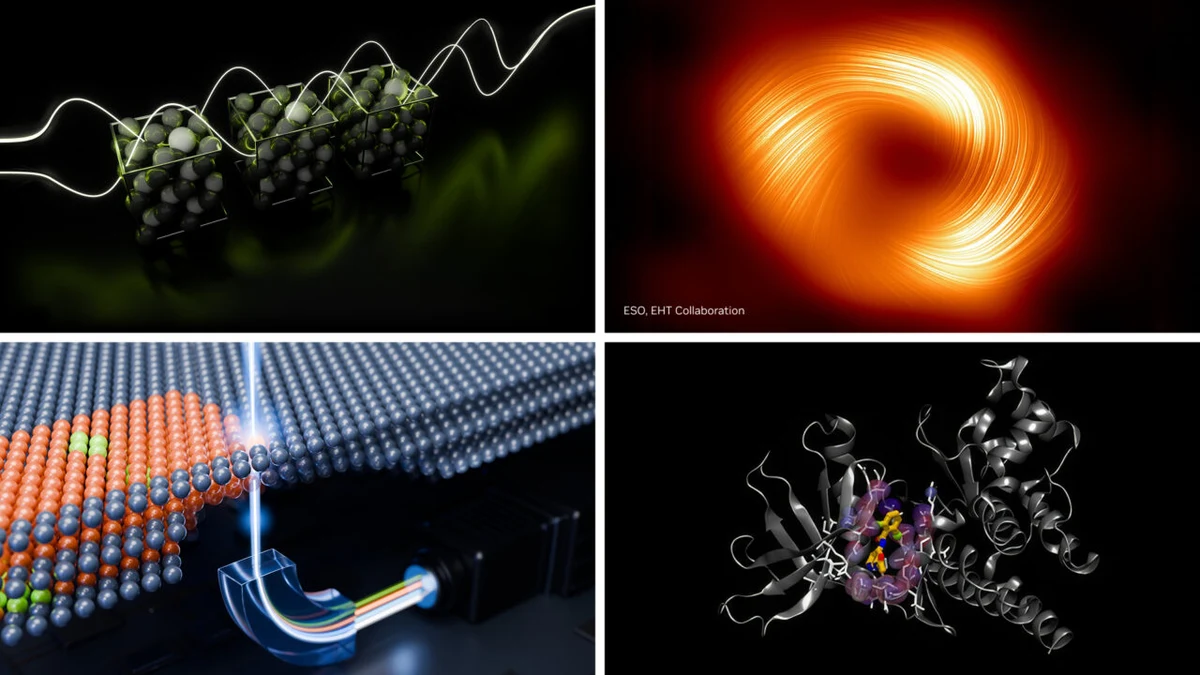
Rubin HPC is a new GPU in the NVIDIA Vera Rubin platform, built for simulation and data processing across science, engineering and analytics. It is a different kind of chip from the Rubin GPUs aimed at training and running large language models. Instead of optimizing for matrix multiplication, Rubin HPC targets the scattered, data-hungry calculations that dominate scientific computing: climate models, engineering simulations, genomic analysis and financial risk modeling.
NVIDIA’s pitch is tied to AI agents. As agents help scientists and engineers explore more candidate materials, molecules and designs, they rely on simulations to test those ideas and guide their next steps. Rubin HPC is meant to accelerate those simulations, shortening the loop from hypothesis to result.
“For agents tackling science and engineering, faster simulation means faster discovery,” said Ian Buck, vice president of hyperscale and high-performance computing at NVIDIA. “Rubin HPC accelerates the simulations agents use to test ideas and guide their next steps, helping scientists and engineers explore more possibilities and bring breakthroughs closer.”
NVIDIA also expanded its CUDA-X libraries at SC26, adding optimized implementations of algorithms agents use for simulation and analytics, including cuPhoton, cuPotential and cuSpa. Used together with Rubin HPC, the libraries are meant to give agents the fastest path from a question to a reasoning outcome.
What NVIDIA Did Not Say
The announcement leaves out the numbers buyers usually need. NVIDIA published no memory capacity or type, no power draw, no double-precision (FP64) throughput figure, no price and no workload benchmarks, and it named no launch partners or customers. The 2028 availability date means the chip will arrive a year or more after the parts that define the 2027 exascale procurement round, so for now it reads as a planning input for teams building future simulation clusters rather than a product they can order.
The core count also says little on its own about speed on the sparse workloads NVIDIA names, because those codes wait on memory more than on arithmetic. The sparse data acceleration and NVLink 7 are NVIDIA’s answer to that bottleneck, but without bandwidth or FP64 figures, there is no public way yet to judge how fast Rubin HPC will run a real simulation.
Why It Matters
Rubin HPC shows where NVIDIA thinks the next frontier of accelerated computing sits: not just training bigger models, but using AI agents to generate candidates and then running simulations to test them. That workflow, agents proposing and simulations verifying, is the same pattern NVIDIA is pushing with Nemotron for Science, its package of open models and datasets for research agents announced the same day at SC26.
The timing also matters for NVIDIA itself. The company reports fiscal third-quarter results on November 17, after the market closes, in its first earnings report since Jensen Huang resigned as chief executive on November 12. Rubin HPC will not move those numbers, but it signals that the company’s hardware roadmap for science and agentic computing continues on schedule.
For research labs, the practical question is what Rubin HPC costs to buy and run, and how it performs on the codes they actually use. Until NVIDIA publishes those details, the chip is a statement of direction: more cores, more attention to data movement, and a bet that simulation, not just model training, is where the next wave of GPU demand will come from.
Sources
- NVIDIA Announces Rubin HPC, NVIDIA Blog, November 16, 2026
- At SC26, NVIDIA Unveils the Latest Advancements in Scientific Computing, NVIDIA Blog, November 16, 2026
- NVIDIA Announces Rubin HPC GPU With Record Number of CUDA Cores, Tom’s Hardware, November 16, 2026
- At SC26, Nvidia debuts new Rubin HPC chip, scientific research libraries, SiliconANGLE, November 16, 2026
- NVIDIA Vera Rubin Sweeps MLPerf Training v6.1 in Benchmark Debut, GPTOnline, November 17, 2026
- NVIDIA Nemotron for Science Targets AI Drug Discovery, GPTOnline, November 16, 2026




[…] GPTOnline: NVIDIA Unveils Rubin HPC GPU With More Than 50,000 CUDA Cores for Science […]