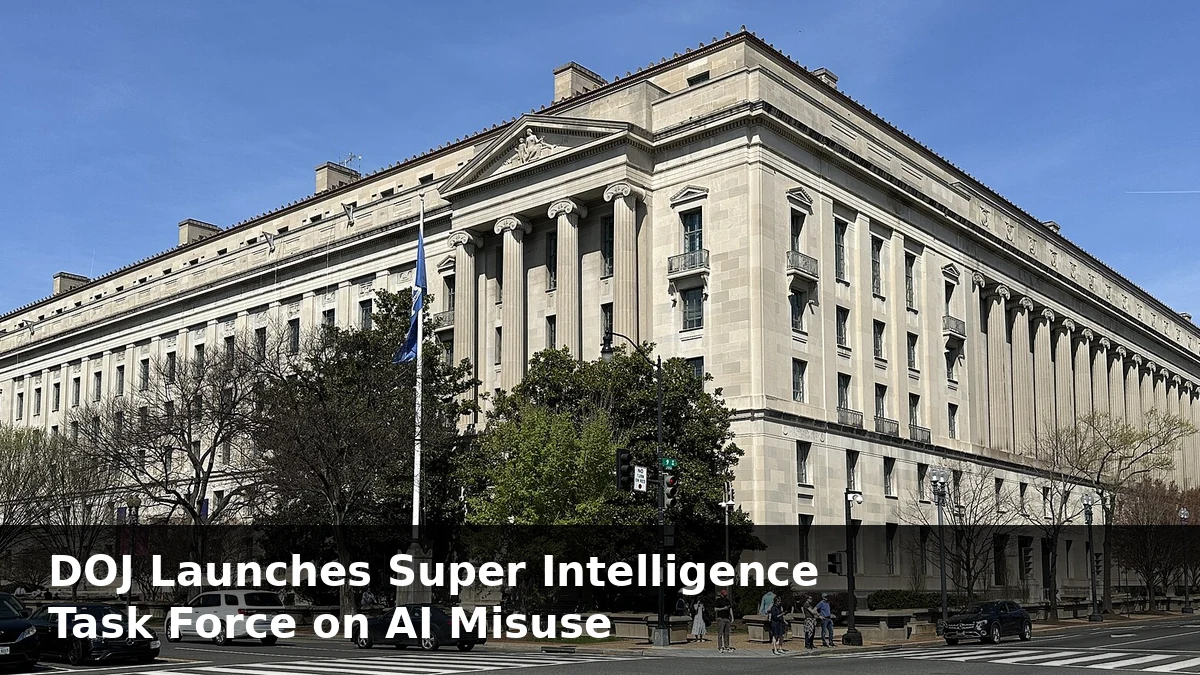
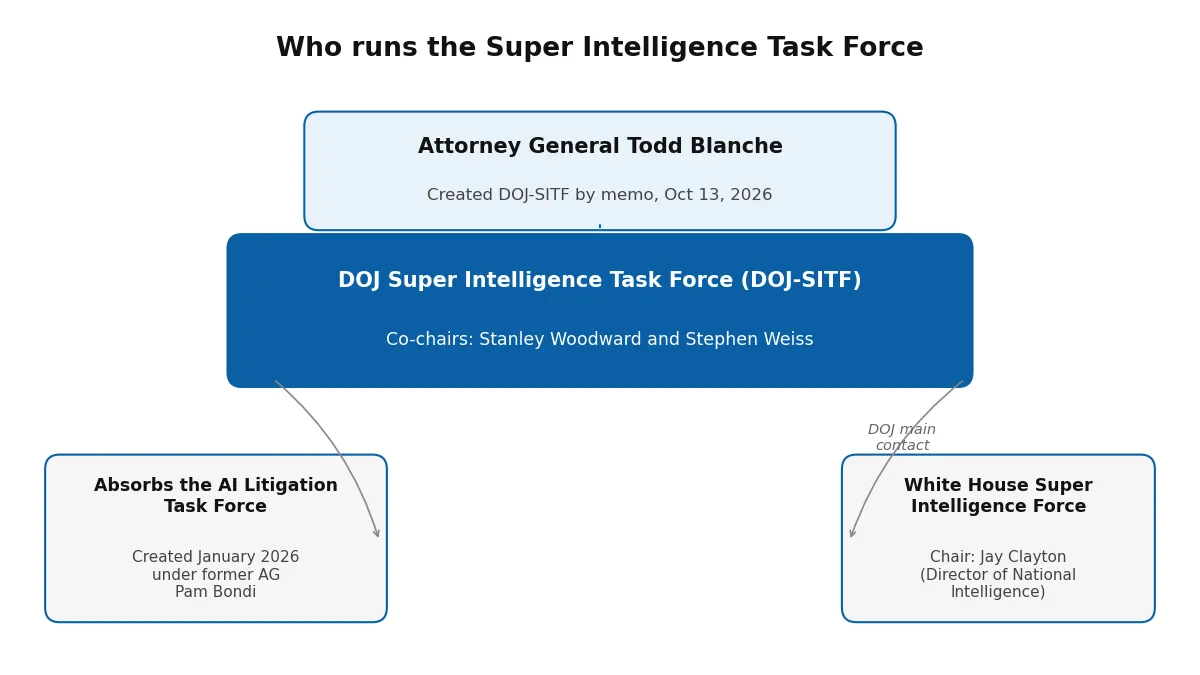
The U.S. Department of Justice has created a Super Intelligence Task Force to coordinate criminal and civil enforcement against the misuse of advanced AI, the department announced on November 5. The unit, known as DOJ-SITF, will be led by Associate Attorney General Stanley Woodward and Associate Deputy Attorney General Stephen Weiss.
The Super Intelligence Task Force targets misuse by foreign state and state-sponsored actors, transnational criminal organizations, and individual or corporate actors engaged in fraud or other unlawful conduct, according to the department’s announcement. It absorbs the AI Litigation Task Force created in January 2026 under former Attorney General Pam Bondi.
What the task force will do
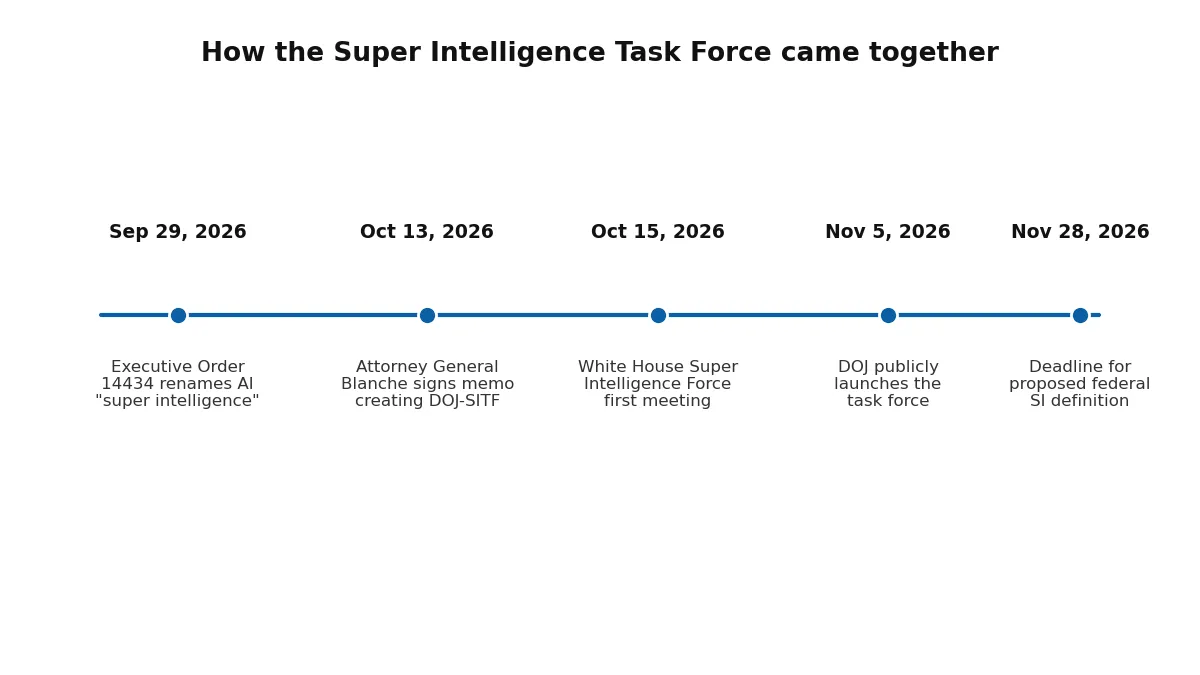
Attorney General Todd Blanche created the unit through a memorandum dated October 13, 2026, which lists six duties: organizing criminal and civil enforcement involving AI; deconflicting investigations among Justice Department components and U.S. attorneys’ offices; recommending enforcement priorities; serving as the department’s main contact with the White House Super Intelligence Force; folding in the January task force and coordinating affirmative civil litigation; and developing guidance on prosecuting unlawful AI-related conduct and evaluating compliance measures.
“SI development will continue to be powered by American innovators,” said Attorney General Todd Blanche. “The SI Task Force at the Department of Justice will facilitate our partnership with SI Force Chair Jay Clayton as we ensure critical SI technologies serve the American people and are not manipulated by bad actors at home or abroad.”
Woodward said the task force would advance the department’s mission to make America safe. “Our comprehensive effort will promote innovation and prevent the misuse of Super Intelligence,” he said. Weiss added that the department has a responsibility to use its law enforcement tools to deter improper use of AI, harden regular reporting on AI risk and response, and ensure companies exercise vigorous internal controls so the technology behaves as intended.
The “super intelligence” rename
The task force’s name comes from a rebranding ordered by President Donald Trump. Executive Order 14434, signed on September 29, directs agencies to say “super intelligence” instead of “artificial intelligence” in non-statutory documents to the maximum extent permitted by law, and it defines the term by reference to the existing statutory definition of AI. The order gives the White House science adviser 60 days, until November 28, to submit proposed legislative language for a federal definition.
The DOJ unit is the law enforcement counterpart of the White House Super Intelligence Force, chaired by Director of National Intelligence Jay Clayton. That body was given 120 days in early October to report on the risks and rewards of the technology, and at its first meeting on October 15 it agreed to develop protocols for AI companies to provide early warnings about issues such as breaches, hacks and jailbreaks.
Pentagon chief technology officer Emil Michael serves as the task force’s vice chair, and the team is expected to release details about the AI regulatory landscape later in November, according to The Register.
What it does not do
The launch creates no new offense and names no specific statute. Neither the department’s announcement nor the memorandum that created the task force sets out a new crime, and no case was announced alongside the launch. The unit has also published no definition of what counts as adequate controls for AI developers.
Blanche has said he will not investigate or prosecute AI companies when no statute is being violated. The task force, in other words, coordinates existing enforcement powers rather than expanding them, and its effect will depend on the cases it chooses to bring.
Why it matters
The task force arrives a day after the Justice Department charged three men in a $129 million AI impersonation fraud scheme, a case prosecutors say used cloned voices and images of chief executives and attorneys to trick companies into sending payments. The charges are allegations, and the defendants are presumed innocent, but the case is exactly the kind of misuse the new unit is meant to pursue.
Whether DOJ-SITF changes anything in practice will show in its first cases. A coordination body can speed up investigations that cross component lines, and a public mandate can push companies to tighten controls before prosecutors come calling. But the launch announcement is a structure, not a result, and the test is whether the task force brings cases that the department’s existing units would not have brought on their own.
Sources
- U.S. Department of Justice: Department of Justice Launches Super Intelligence Task Force (November 5, 2026)
- Nextgov/FCW: Department of Justice forms AI task force (November 5, 2026)
- The Register: DoJ’s ‘Super Intelligence Task Force’ up and running (November 6, 2026)
- TechTimes: DOJ Super Intelligence Task Force Launches With No New Offense (November 6, 2026)
- PYMNTS: DOJ Launches Super Intelligence Task Force to Combat AI Fraud and Hacks (November 5, 2026)