Jack Dorsey’s Block on Friday, October 23 unveiled Dessa, a full-duplex speech-to-speech AI model that its in-house research lab says was trained from scratch on nothing but human conversation. No books, no web pages, no text of any kind. Just people talking.
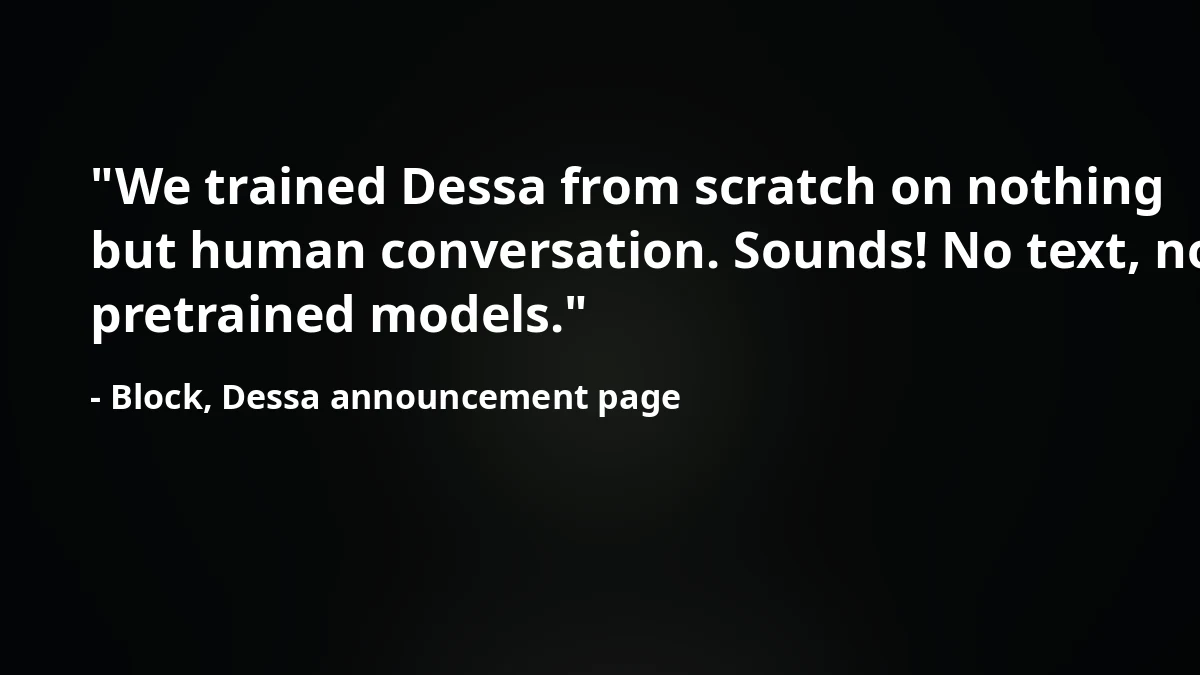
“We trained Dessa from scratch on nothing but human conversation. Sounds! No text, no pretrained models,” the lab writes on the official Dessa page. “As far as we know, Dessa is the world’s first AI you can have a realistic live conversation with that was trained only from human speech.”
What Dessa Does
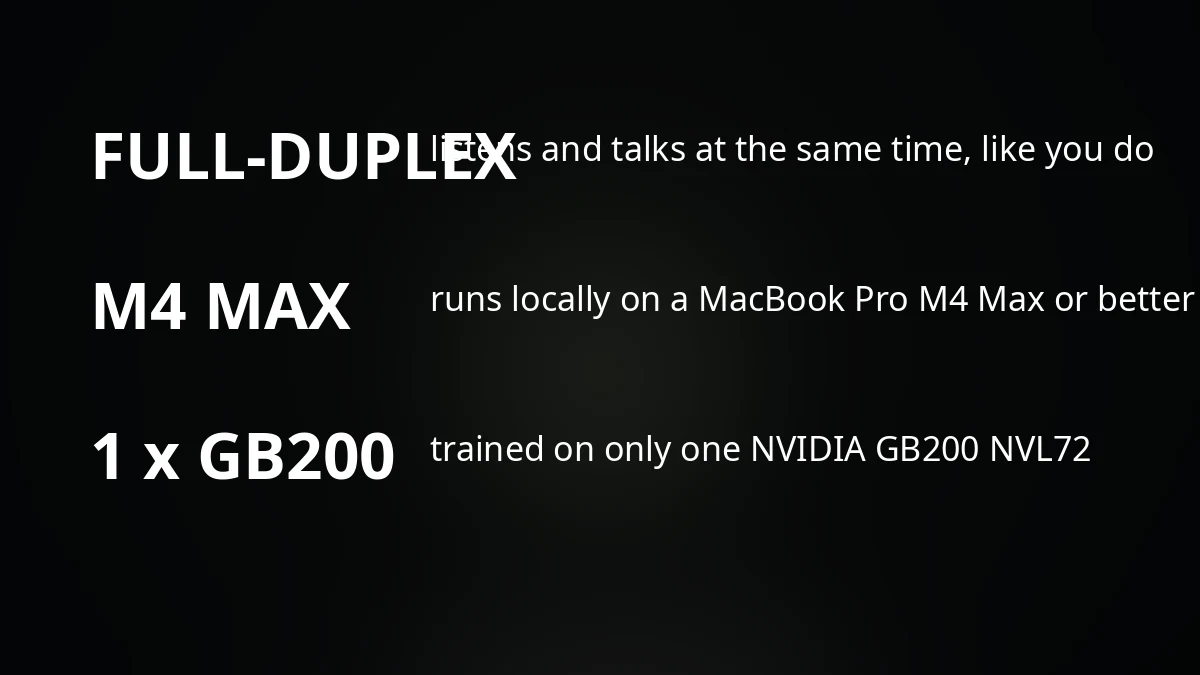
“Audio in, audio out. Dessa is a true speech-to-speech model, and everything it knows came from human speech. It’s full-duplex, so it listens and talks at the same time, like you do,” Block says. It listens while it speaks, so it can react when someone cuts in or trails off, and it uses backchanneling (“yeah!”, “got it!”) the way people do.
It natively hears and speaks emotion, sarcasm, laughter, a frustrated sigh, and a voice cracking with sadness. “Inference runs faster than real time, so there’s no awkward wait. And it runs locally on a MacBook Pro M4 Max or better.”
Block released live recordings of people talking to Dessa. “Nobody steers it. Dessa picks what to say, when to say it and how, down to its own voice and personality,” the page says. The demos include a chat about Christopher Nolan films, a surprise trip to Paris that drew “what sounds like teary gratitude,” and a conversation with OpenAI’s GPT-Live-1 voice model, a third-party model Block notes is not affiliated with it. They can be awkward: in one recording shared by Dessa lead Ragavan Thurairatnam and reported by The Verge, the model initially mistakes the speaker for someone named “Ronaldo.”
Trained Without Text
The no-text decision is the headline technical bet. Block says Dessa learned language from “hundreds of times fewer words” than large language models, and that the team figured out how to train the model on only one NVIDIA GB200 NVL72.
“Babies learn to talk without ever seeing a word written down. We wanted to see if a model could too. It can. It’s just very hard,” the team writes.
The lab is led by Ragavan Thurairatnam, a co-founder of the original Dessa, a Toronto deep learning startup Block acquired in 2020. The team reports directly to Dorsey, Block’s cofounder, chairman and Block Head. Thurairatnam called the release “a GPT3 moment for speech,” according to Unite.AI.
Safety and Availability
Block is giving a small group of AI safety researchers early access to find risks the team has not anticipated, and opened a public waitlist. The lab lists three reasons for building Dessa: “curiosity (aka fun), better understanding between humans and AI, and safety.”
“AI keeps gaining power and independence, and it’s still nearly deaf to the emotion in our voices,” the page says. “That’s the safety problem. Dessa is a step toward fixing it.”
Why It Matters
Most voice assistants flatten speech into text somewhere in the stack, throwing away timing, tone, and other non-text signals. Dessa is a bet that a model can learn language the way a toddler does, by hearing it. Block has not published independent benchmarks, so the claim that this is the most authentic full-duplex speech model ever built remains the company’s own. But if speech-native models can match text-trained ones with far less data, the economics of voice AI could change fast.
Sources
- Block, Dessa official page: https://block.xyz/dessa
- Unite.AI, “Block Unveils Dessa, a Full-Duplex Speech Model Trained on Conversation” (October 23, 2026): https://www.unite.ai/block-unveils-dessa-a-full-duplex-speech-model-trained-on-conversation/
- CryptoBriefing, “Block unveils Dessa, an AI voice model trained only on human conversation” (October 23, 2026): https://cryptobriefing.com/block-unveils-dessa-ai-voice-model/