Anthropic has been telling prospective IPO investors that its new 15-person chip design team is already using Claude for engineering and design work on custom silicon meant to train and run Claude, The Information reported on November 3. It is a striking dogfooding claim, and one Anthropic is using to sell investors on the company’s in-house silicon effort ahead of a blockbuster listing.
What Was Reported
According to The Information, Anthropic made the pitch in recent investor meetings. Engineers on the team told investors that Claude “cuts time taken to design chips” compared with their estimates of traditional workflows at major designers such as Nvidia and AMD. There is no announced plan to commercialize or sell the chip-design tooling.
Anthropic also reassured investors that its custom silicon is additive, not a replacement: the company plans to keep a multi-chip approach, with Nvidia GPUs, AMD GPUs, AWS Trainium and Google TPUs remaining central to its compute pool. The custom chips are meant to eventually train and run Claude alongside those merchant parts.
The team itself is not new. Anthropic publicly confirmed in August that it was assembling an in-house chip group, after Reuters reported in April that the company was exploring custom silicon. In June, OpenAI’s former custom-chip program lead Clive Chan left to join Anthropic, and reports have also linked the company to talks with Samsung Electronics about a potential manufacturing partnership.
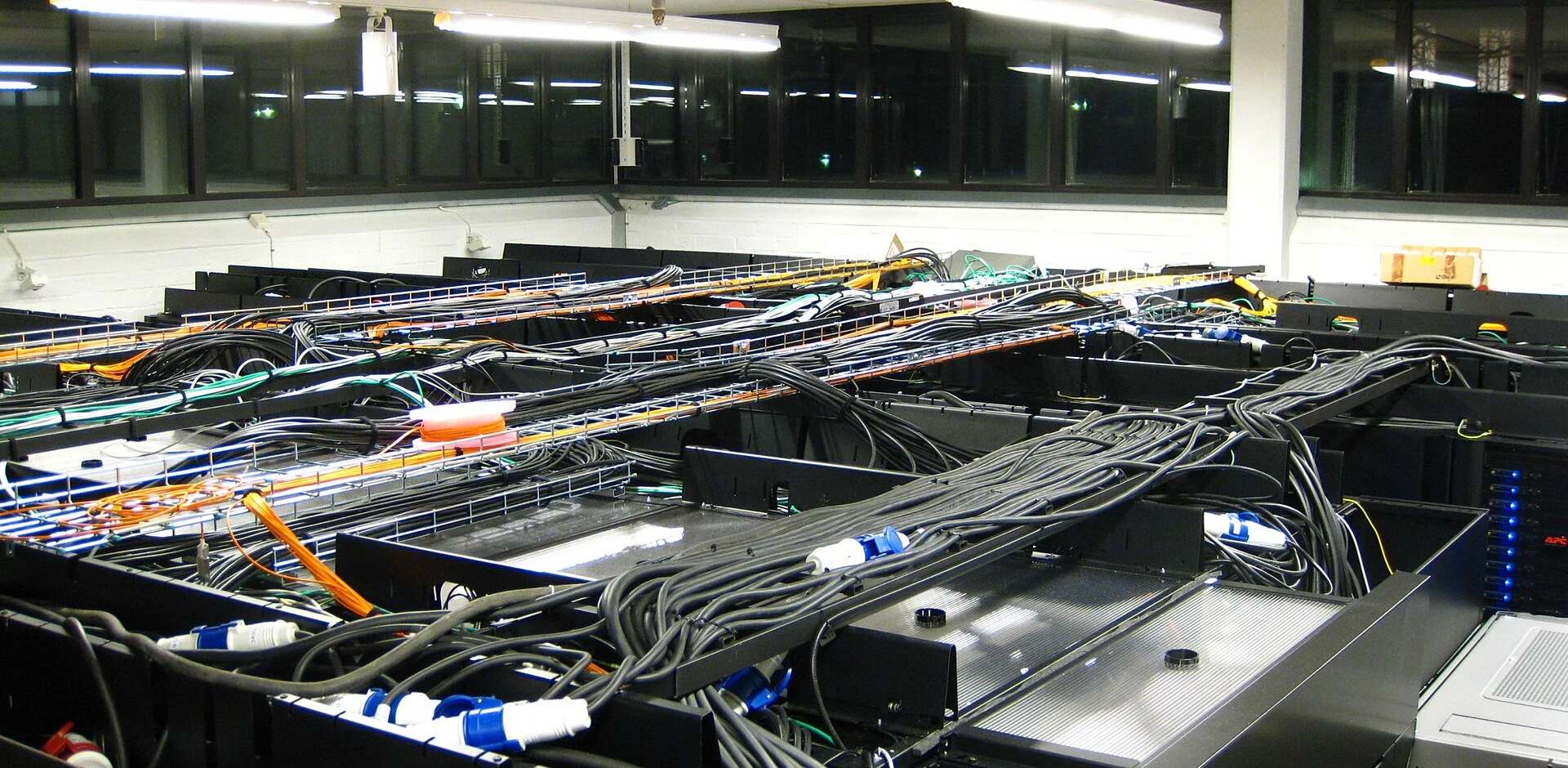
The PDC server room. Image: Esquilo/Wikimedia Commons (CC BY-SA 3.0).
Key Details
The pitch lands in a market where every frontier lab is moving toward custom silicon. OpenAI and Broadcom debuted “Jalapeño,” their first co-designed inference processor, in June, and OpenAI’s CFO Sarah Friar named chip design among the company’s target business areas at a Goldman Sachs conference in September. Designing an advanced AI chip can cost roughly half a billion dollars, according to industry sources cited by Reuters, which makes efficiency in the design process itself a financial question as well as an engineering one.
There are early signs the AI-for-chip-design story has substance beyond Anthropic’s investor pitch. Last month, ChipAgents and Nvidia released a benchmark to assess AI models’ chip-design capabilities, on which Claude Fable 5.1 scored highest at 16.6%, according to Sina Finance coverage.
Caveats apply. The comparison against Nvidia and AMD workflows comes from Anthropic’s own engineers speaking to investors, and the report offers no independent benchmark of time saved. The Information’s article is paywalled, and public details come from corroborating coverage. It is also worth noting that Anthropic’s amended S-1 filing shows compute commitments of $895.4 billion, which GPTOnline reported on earlier this week; even a successful custom chip would be one piece of a compute bill measured in hundreds of billions.
Why It Matters
For IPO investors, the story is about vertical integration. If Claude chip design can genuinely accelerate silicon development, Anthropic converts one of its largest costs, silicon, into an asset it designs with its own product. The pitch also extends the dogfooding narrative Anthropic has leaned on throughout its IPO run: Claude that writes code, Claude that designs the chips Claude runs on. Competitors are running the same playbook, which means the chip-design claim is as much a recruiting and positioning move in the talent war with OpenAI, Google and Meta as it is a technology announcement.
More broadly, the report signals how fast AI-assisted hardware engineering is becoming a mainstream corporate claim. A year ago, “AI designs chips” was a research talking point. Now a 15-person team is telling investors it is the workflow, and a dedicated benchmark exists to score it.
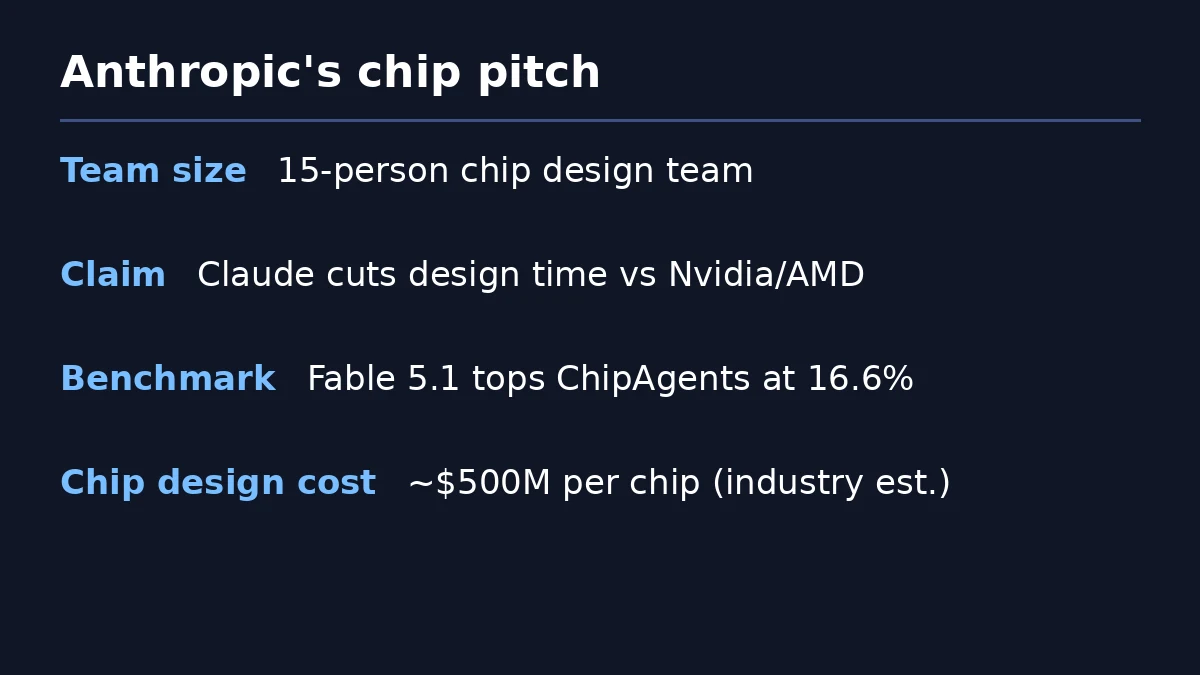
Anthropic’s chip pitch at a glance. Graphic: GPTOnline.
Sources
- The Information, via Techmeme and AI Weekly: “Anthropic Tells IPO Investors Its 15-Person Chip Design Team Is Already Using Claude” (November 3, 2026)
- Binance Square / Sina Finance: Anthropic Pitches Claude’s Chip-Design Capabilities to IPO Investors
- Reuters: Anthropic to build in-house chip design team for Claude (August 5, 2026)