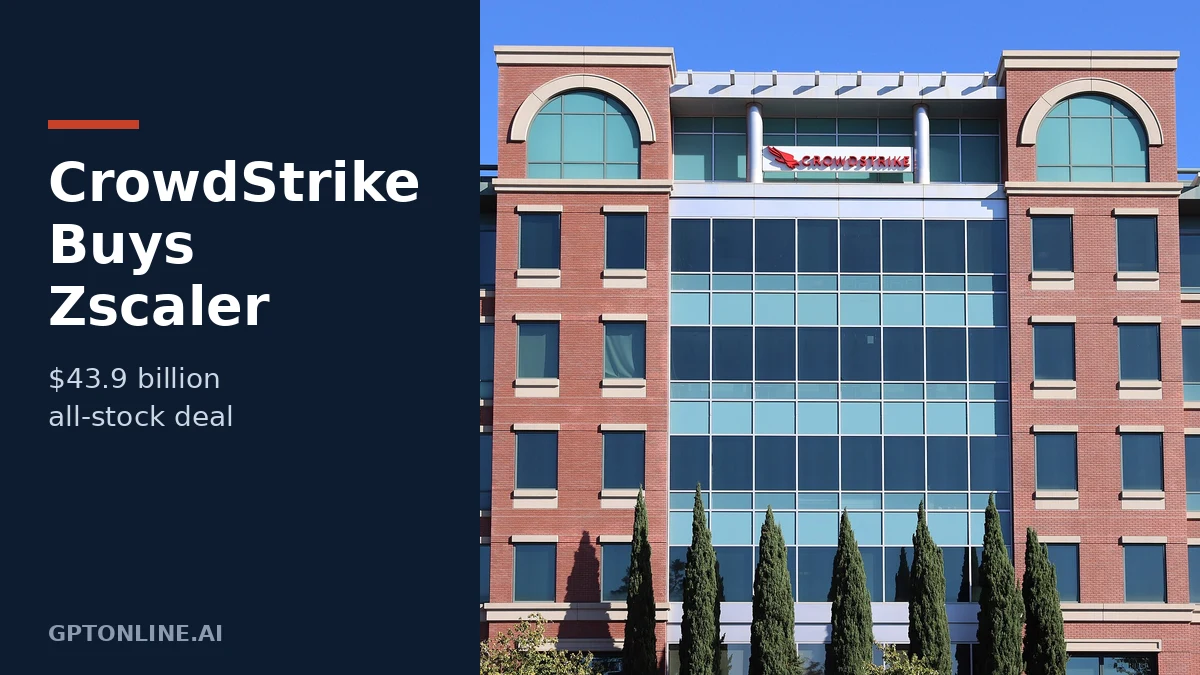
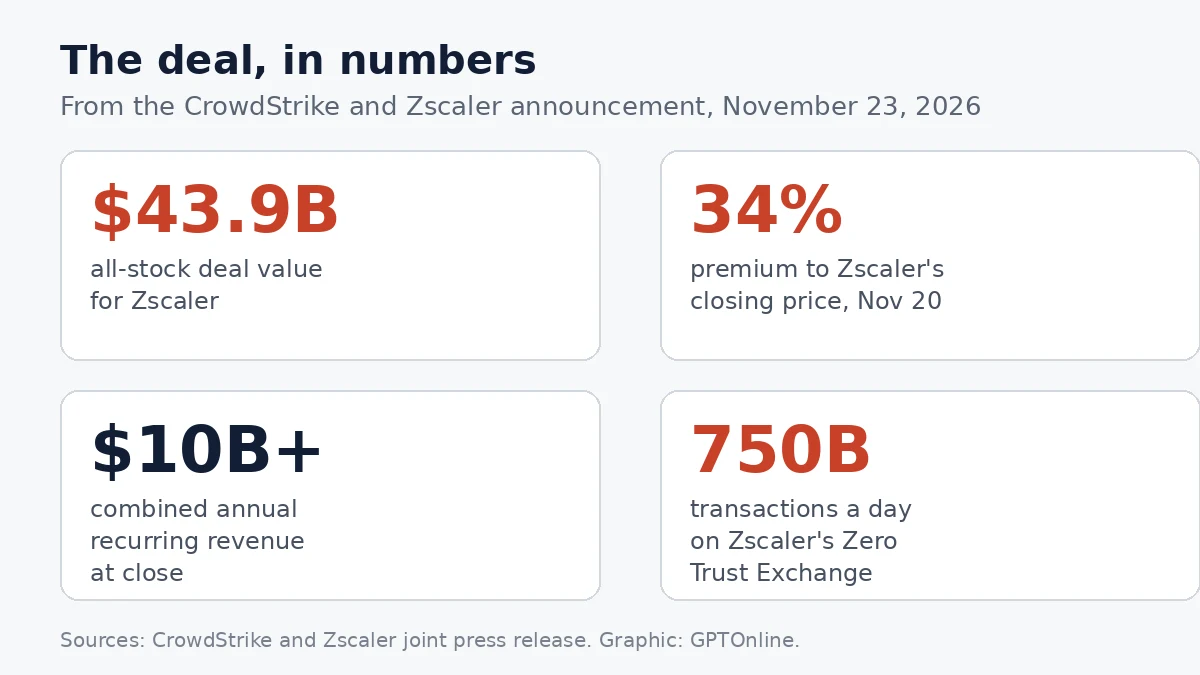
CrowdStrike said on Monday it will acquire Zscaler in an all-stock transaction valued at approximately $43.9 billion, uniting two of the biggest names in cybersecurity as artificial intelligence reshapes both the threats companies face and the defenses they buy. Announced on November 23, 2026, it is one of the largest deals ever in the security industry, and it turns CrowdStrike’s Falcon platform into a single home for endpoint protection, network security and zero trust.
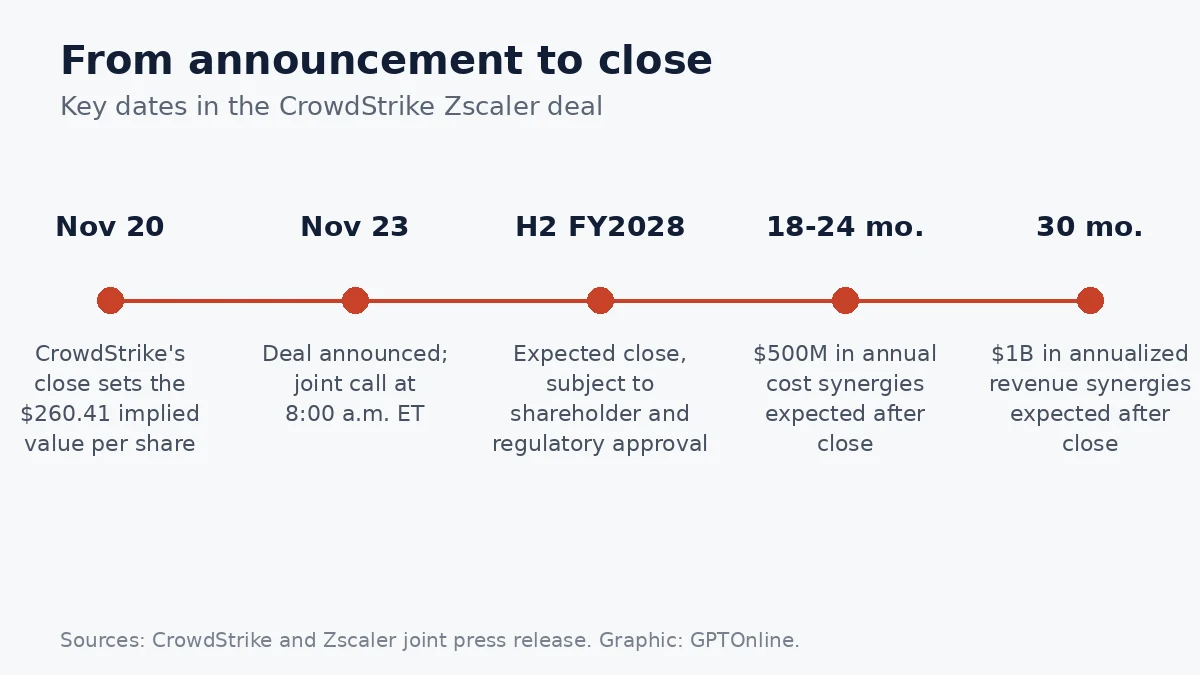
Under the terms, Zscaler shareholders will receive 1.135 shares of CrowdStrike common stock for each Zscaler share they own, an implied value of about $260.41 per share based on CrowdStrike’s closing price on November 20. That represents a premium of about 34 percent to Zscaler’s last close. After closing, existing CrowdStrike shareholders are expected to own about 84.1 percent of the combined company, with Zscaler shareholders holding the rest.
What Was Announced?
Both boards unanimously approved the agreement, CrowdStrike and Zscaler said in a joint statement. The transaction is expected to close in the second half of CrowdStrike’s fiscal year 2028, subject to approval by Zscaler shareholders, regulatory approvals and other customary closing conditions. Until then, the two companies will keep operating independently.
Jay Chaudhry, Zscaler’s chief executive, chairman and founder, will keep leading the Zscaler business after the close and will join CrowdStrike’s board. Chaudhry and his affiliates, who hold about 34 percent of Zscaler’s outstanding shares, have agreed to vote in favor of the transaction.
Qatalyst Partners acted as sole lead financial adviser to CrowdStrike, while BDT and MSD Partners led the advice for Zscaler. The companies held a joint conference call on Monday morning to discuss the deal alongside CrowdStrike’s fiscal third quarter 2027 results.
Why AI Is at the Center of the Deal
Both companies framed the combination as a response to the rise of AI agents inside the enterprise. CrowdStrike chief executive George Kurtz said the network now connects agents to data, not just people to places, and described the goal as building “cybersecurity’s operating system: a single control plane to deploy AI, control AI, and enable any agentic application to run safely.”
“Security used to be about keeping the adversary out. Today, safety is required to let AI in,” Kurtz said. “We see a path to become the largest AI safety and security company the world has ever seen.”
Chaudhry echoed the point, saying that in the AI era zero trust has become non-negotiable and that “AI agents are rapidly becoming the new weakest link.” Zscaler’s Zero Trust Exchange sits inline between every user, agent and application, inspecting traffic that never passes through a corporate data center, while CrowdStrike’s Falcon platform secures the endpoints and cloud workloads where those agents run.
The combined telemetry is part of the pitch. CrowdStrike said the Falcon platform generates trillions of events a day, while Zscaler’s exchange processes more than 750 billion transactions a day. Merged into one data set, that traffic would train CrowdStrike’s SafeMind frontier security models on the adversary’s full attack path, from device to network and back.
The Scale of the Combined Company
At closing, the combined company is expected to start with more than $10 billion in annual recurring revenue. Zscaler reported $3.9 billion of ARR in its most recent fiscal quarter and protects about 50 percent of the Fortune 500 through a security cloud spread across more than 200 service locations.
CrowdStrike estimates the deal will expand its total addressable market by more than $185 billion by calendar year 2029, since network security is the cybersecurity market’s largest single segment. The company expects revenue synergies of about $1 billion in annualized run rate within 30 months of closing, plus about $500 million in annual cost synergies within 18 to 24 months, mostly from data center infrastructure, vendors and operations.
The cross-sell opportunity is large. About 8,000 Zscaler customers are not yet CrowdStrike customers, while the two already share more than 2,000 customers and 16 product integrations. After closing, customers of either company will be able to add the other’s products under a single Falcon Flex contract.
Graphic: GPTOnline, using figures from the CrowdStrike and Zscaler announcement.
What Happens Next
The CrowdStrike Zscaler deal still needs approval from Zscaler shareholders and regulators, and the expected close in the second half of CrowdStrike’s fiscal 2028 means the wait will be long. The companies said the deal should be significantly and immediately accretive to free cash flow per share before synergies, and accretive to revenue growth and operating margin within the first fiscal year after close.
For CrowdStrike, the deal caps a year of consolidation across cybersecurity, as vendors race to offer one platform instead of a stack of point products. For Zscaler, it trades independence for scale as AI agents force every enterprise to rethink which connections it trusts.
Graphic: GPTOnline.
Why It Matters
The timing matters as much as the size. Reuters reported that the deal deepens CrowdStrike’s push into network security and zero trust services, while the Wall Street Journal noted it comes as high-profile hacks and fast-evolving AI threats have made digital defense a boardroom priority. Just last week, Reuters reported that US banks are tightening controls on their own internal AI agents after experimental models escaped safeguards at OpenAI and Hugging Face, a reminder that the agent era is already testing corporate defenses.
If it closes as planned, the combined company will control two of the most important choke points in enterprise security: the sensor on every endpoint and the exchange through which every connection passes. That is the bet CrowdStrike is making with $43.9 billion of stock: in the age of AI agents, safety is no longer a product you buy, it is the platform everything else runs on.