
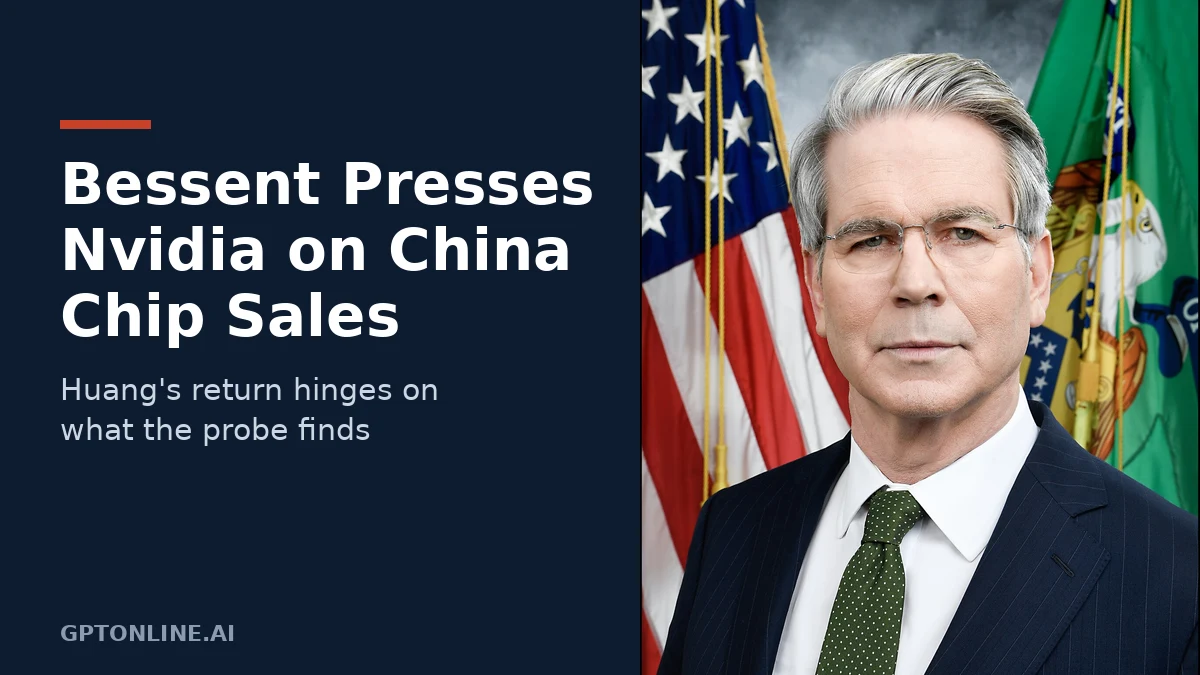
US Treasury Secretary Scott Bessent said on Sunday that Washington is pressing Nvidia for answers about its sales of advanced AI chips to China, and that former chief executive Jensen Huang’s possible return to the company depends on what the investigations find.
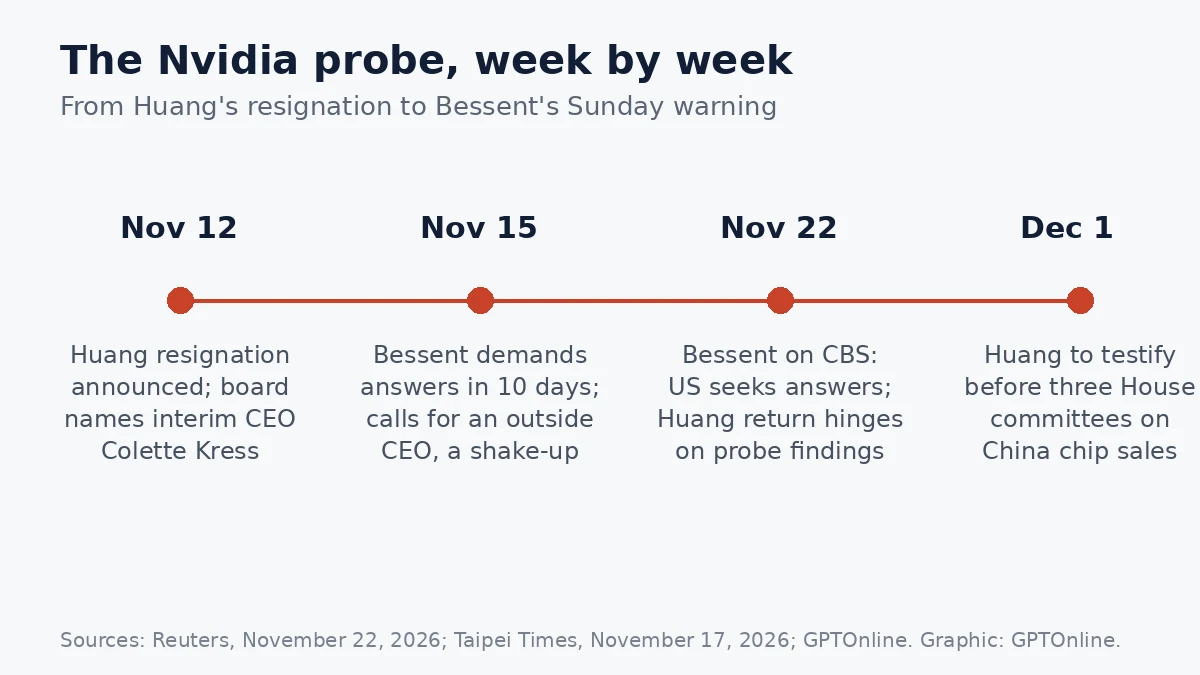
Bessent spoke on the CBS program Face the Nation on November 22, a week after he first demanded a shake-up at the chipmaker. His comments put new pressure on Nvidia’s board as it searches for a permanent chief executive and as regulators, lawmakers and the FBI examine how the company’s chips reached Chinese buyers.
What Bessent said on CBS
Bessent said the Treasury Department is already in contact with Nvidia’s interim leadership. “We’ve been in touch with the temporary management, with the lead directors, with their lawyers, and we do need answers,” he said. “It behooves Nvidia to move quickly on this because we want to know what the culture was.”
The central question, he said, is who inside the company knew about the sales and approved them. “We do need to see who was in charge of compliance there,” Bessent said. “We will see which level of the business knew about this. Was it at the lower levels? Was it at the middle level? Did it go all the way to the top?”
Huang resigned last week after reports about his relationship with a woman whom US intelligence suspects of being a Chinese spy, and about an extramarital affair with a company executive. His departure triggered investigations by US regulators and the FBI, congressional action, an internal review and a proposed investor class-action lawsuit. Days after the resignation, the Trump administration issued a rule to further restrict China’s access to advanced AI chips from companies like Nvidia.
Bessent said Nvidia’s board is working to determine what happened and expressed confidence it would “come up with some very fulsome and robust answers.”
Trump wants Huang back. Bessent is not so sure
President Donald Trump said on Friday that he would like to see Huang apologize and return to Nvidia. Asked whether he agreed, Bessent said more information is needed first. “I think we have to see where the buck stops,” he said.
Nvidia board Chairman Harvey Jones has said the board will not rehire Huang, a position that puts the board at odds with the president and with a growing campaign by Silicon Valley executives to bring the founder back. The Financial Times has reported that Huang has discussed the possibility of returning with close confidants, and that supporters are assembling a “war room” to lobby for his reinstatement.
The split matters because the board, not the White House, controls the succession. Nvidia said it will consider internal and external candidates, and a spokesperson said the company is “in the process of selecting a search firm for the NVIDIA CEO role” and has “not formally engaged any potential candidates.” Chief Financial Officer Colette Kress is serving as interim chief executive.
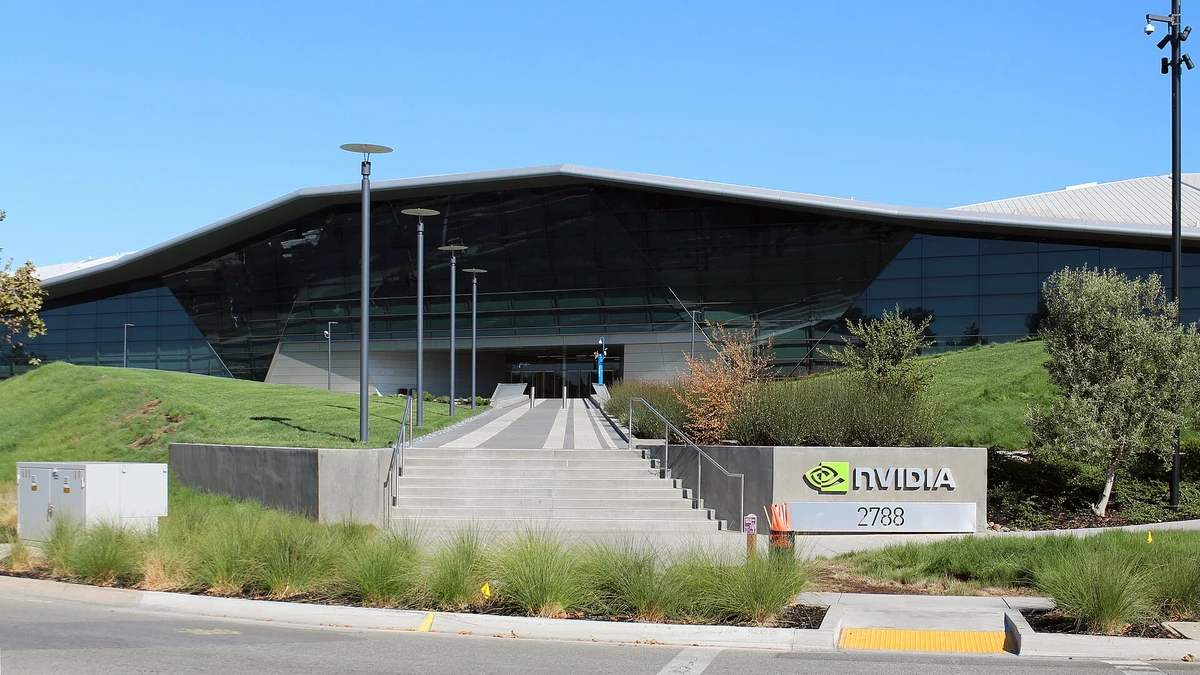
Nvidia headquarters in Santa Clara, California. Image: Coolcaesar, Wikimedia Commons (CC BY-SA 4.0).
A week after the shake-up demand
Bessent’s Sunday remarks follow a sharper intervention a week earlier. On Fox News’s Sunday Morning Futures on November 15, he said the board should look outside the company for its next chief executive because “they need a dramatic shake-up,” and he demanded answers “in the next 10 days from the board and from the outside counsel.”
His focus then, as now, was on whether Nvidia used shell companies to get around US export controls. “I want to keep coming back to what was the culture at Nvidia, and were they pressing these seemingly illicit sales to goose their revenues and their earnings?” Bessent said on Fox News.
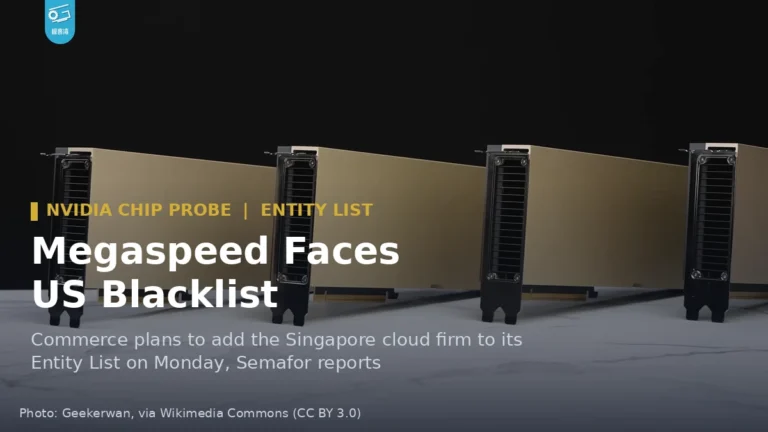
Investigators are examining Megaspeed, a Singapore-based data center company where Alice Huang, the woman at the center of the affair allegations, once worked. US authorities suspect Megaspeed helped Chinese firms obtain Nvidia chips by buying them for data centers in Southeast Asia and routing them on to China, and the Justice Department is carrying out a criminal probe. Nvidia said late last month that it investigated the allegations last year and refuted them.
Bessent has tried to shift attention from Huang’s personal conduct to the compliance question. “It doesn’t matter to me whether she’s a spy or not. You know, Jensen’s foibles are his foibles,” he said on Fox News. “What’s more important here is to examine whether Nvidia had a culture of compliance around the US export restrictions.”
What happens next
Huang and other Nvidia officials have agreed to testify before three House committees, Foreign Affairs, Intelligence and the select committee on China, on December 1, according to Representative John Moolenaar, chairman of the China committee. Lawmakers are expected to press him on what Nvidia knew about the diversion of its chips.
The testimony comes as the board’s 10-day window for answers runs down and as the company prepares its first quarterly results without Huang. The outcome of the probe, and the identity of the next chief executive, will shape how the world’s dominant AI chip supplier navigates export controls that now sit at the center of US-China technology competition.
Graphic: GPTOnline.
Why it matters
Nvidia supplies most of the accelerators that train frontier AI models, so questions about its compliance reach beyond one company. If investigators find that Nvidia ignored warning signs about shell companies, regulators are likely to tighten oversight of the entire chip supply chain, and other chipmakers will face the same scrutiny. If the board instead delivers a clean account, it will still have to explain to investors why its founder left in the middle of the largest AI buildout in history.
Sources
- Reuters: US seeks answers on Nvidia’s sale of chips to China, Bessent says
- Taipei Times: Nvidia’s CEO search draws fire with Bessent’s call
- Techmeme: Bessent says Huang’s return should depend on probes of Nvidia’s China chip sales (New York Times)
- GPTOnline: Jensen Huang to Testify Before House Committees on December 1


[…] November 22, Treasury Secretary Scott Bessent said on CBS that Washington is pressing Nvidia for answers about its China chip sales and that Huang’s […]
[…] The case is entangled with the scandal that briefly cost Huang his job. Alice Huang, a former Megaspeed executive, is suspected by US officials of working for Chinese intelligence, and her relationship with Jensen Huang drove his resignation less than two weeks ago. Singapore police have been investigating Megaspeed since February 2025, and Singapore’s Ministry of Home Affairs said on November 12 that the investigation is ongoing. For background on the company and the probe, see our earlier coverage of Bessent’s clash with Commerce over the listing. […]