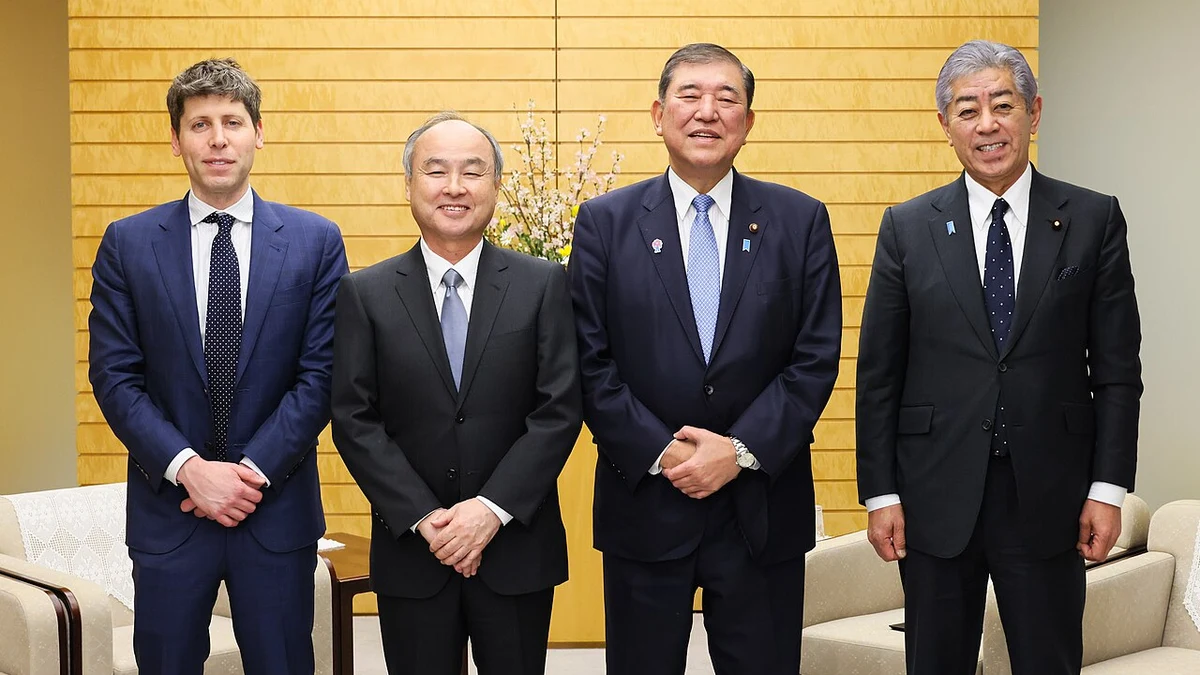
SoftBank Group chief executive Masayoshi Son recently explored buying South Korean memory chip giant SK Hynix in a deal worth about $1 trillion, approaching Wall Street banks about financing, The Information reported on Friday. The idea is now dead: a SoftBank spokesperson told the outlet the deal is “no longer under active evaluation.”
If it had gone ahead, the takeover would have been by far the largest acquisition ever attempted, dwarfing Microsoft’s $69 billion purchase of Activision Blizzard in 2023, the biggest completed deal on record. It would also have handed SoftBank control of the company that supplies most of the high-bandwidth memory (HBM) at the heart of the AI boom.
What Was Reported?
According to The Information, which cited people familiar with the matter, Son recently sounded out Wall Street institutions about financing a possible trillion-dollar buyout of SK Hynix. Reuters picked up the report on Friday. SoftBank and SK Hynix did not immediately respond to Reuters’ requests for comment.
The Information quoted a SoftBank spokesperson as saying Son was no longer considering such a deal. The report did not say when the exploration began, how far the financing talks got, or what price Son had in mind beyond the headline $1 trillion figure.
Why SK Hynix Is So Valuable
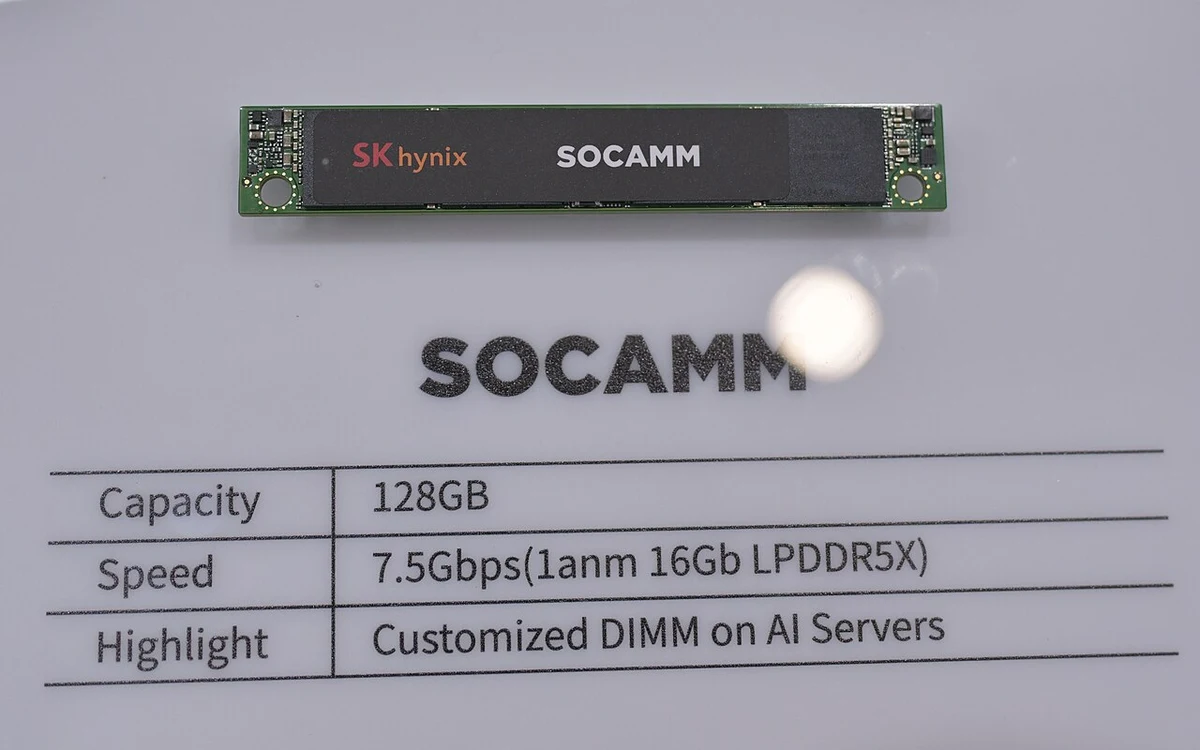
SK Hynix’s SOCAMM memory module, shown at Computex 2025. The 128GB module is built for AI servers. Photo: Wikimedia Commons
SK Hynix is the world’s second-largest memory chipmaker and the dominant supplier of HBM, the stacked memory that sits next to AI accelerators and feeds them data at high speed. The company held about 61% of the global HBM market in 2025, ahead of Samsung at 17% and Micron at 21%, and it is Nvidia’s primary HBM supplier.
The AI memory boom has transformed its valuation. SK Hynix joined the trillion-dollar club in May 2026, when its market value passed $1 trillion, and its shares had more than tripled that year. A $1 trillion buyout price would therefore be roughly in line with the company’s market value, before any takeover premium.
Why the Deal Stopped
SK Hynix logo. Image: SK Hynix / Wikimedia Commons
The report gave no reason for Son dropping the idea, but financing a $1 trillion takeover would have been a stretch for any buyer, including SoftBank. The group reported a net loss of about $7 billion for the July to September quarter, after a charge tied to revised orders for US data center power equipment.
SoftBank is already deep into AI spending. It has invested $64.6 billion in OpenAI for an approximately 13% stake, and it is the financial lead of Stargate, the $500 billion US AI infrastructure program announced in January 2025. Adding a trillion-dollar acquisition on top of those commitments would have tested even Son’s appetite for leverage.
A foreign takeover of SK Hynix would also have faced formidable obstacles in Seoul. The chipmaker sits inside South Korea’s SK Group, and any deal would have needed political and regulatory approval in South Korea as well as antitrust clearance in the United States and other markets.
Why It Matters
The story matters even though the deal is dead. It shows how far the AI infrastructure race has pushed the ambitions of its biggest backers: Son was willing to contemplate buying the world’s leading AI memory supplier outright, rather than simply investing in it.
It also underlines how central memory has become to AI. HBM is now one of the tightest bottlenecks in the AI supply chain, with demand outpacing supply, and control of its leading producer would be a strategic prize for any AI empire builder. For now, that prize stays in Korean hands.
Sources
- The Information: SoftBank’s Masayoshi Son Explored $1 Trillion Moonshot Buyout of SK Hynix
- Reuters via The Business Times: SoftBank’s Son explored US$1 trillion buyout of SK Hynix
- Morningstar: SK Hynix Joins Trillion-Dollar Club Alongside Nvidia, TSMC
- AI Magazine: How SK Hynix Overtook Samsung in AI Chipmaking Stakes
- Tech Insider: SoftBank’s $40 Billion OpenAI Loan Has Been Repaid
- GPTOnline: SoftBank Swings to $7 Billion Loss on US Data Center Hit