Cursor, the AI coding platform owned by SpaceX, has told two US House committees it plans to explore phasing out Chinese developed open-weight AI models, citing geopolitical risk, according to a joint congressional report released on Friday, November 20. The report, titled “Beijing’s AI Playbook,” lands as Washington steps up its scrutiny of how deeply Chinese AI has entered the American technology stack.
The report comes from the House Committee on Homeland Security and the House Select Committee on China, after a months-long investigation opened in April by chairmen Andrew Garbarino and John Moolenaar. Reuters reported that Cursor “informed the committees” of its plans, and that Airbnb and DoorDash also took part in the inquiry into their own use of Chinese AI models.
What the report found
Cursor’s developer, Anysphere, built its flagship coding model, Composer 2, on Moonshot AI’s open-weight Kimi K2.5. The report says that fact “became public only after an independent developer identified the underlying model.” Anysphere has now told the committees it plans to “explore phasing out PRC-developed open-weight models because of geopolitical risk.”
The wording matters. Cursor has said it will study a phase-out, not that it has committed to one, and it has set no timetable. Cursor, SpaceX and DoorDash did not respond to CNBC’s requests for comment, and Airbnb declined to comment.
SpaceX acquired Anysphere in August in a $60 billion all-stock deal, and Cursor has been involved in training SpaceX’s Grok family of AI models, according to Reuters. That makes the company’s stance a test case for how far a major US AI toolmaker is willing to go in cutting ties with Chinese models it once built on.
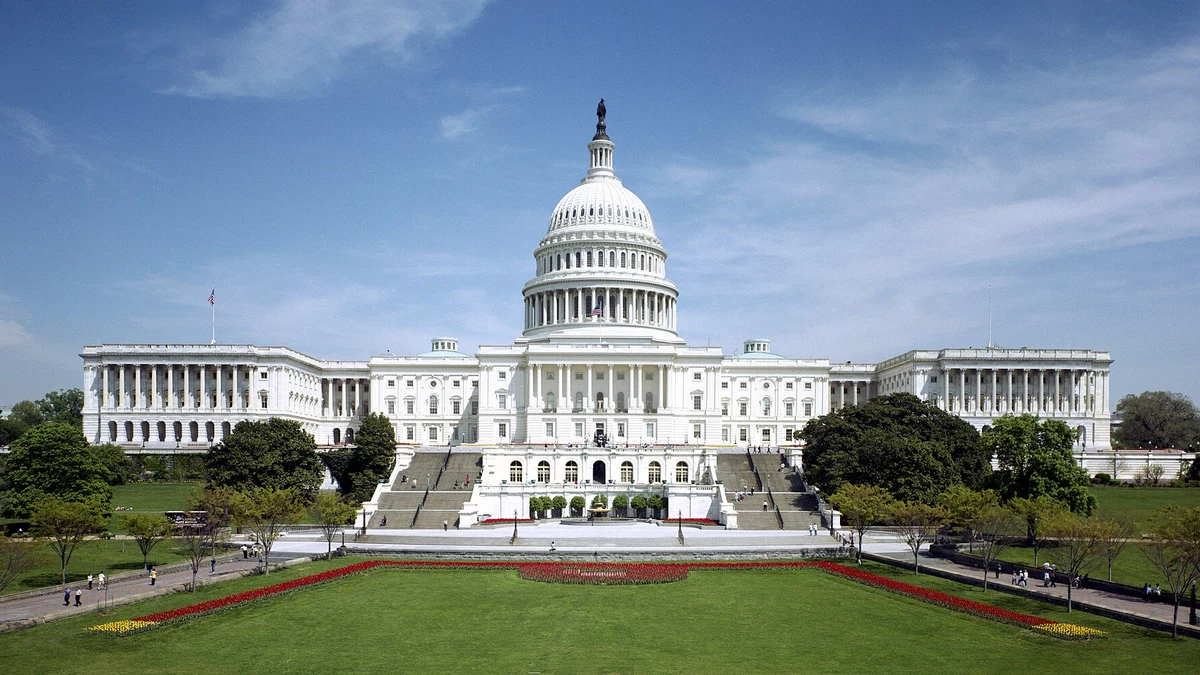
The U.S. Capitol in Washington, D.C. Image: Wikimedia Commons.
A wider look at Chinese models in US software
The committees looked beyond Cursor. Airbnb runs customized versions of Alibaba’s Qwen models for customer support, including an assistant handling about 80,000 guest and host interactions a day. DoorDash reported that 25 Chinese model families had been authorized and deployed across its systems.
The report draws a contrast between the companies. DoorDash did not change its use of a Moonshot model after the White House accused Moonshot of illicit distillation, and Airbnb kept Alibaba models approved after the Department of War identified Alibaba as a Chinese military company. “By contrast,” the report says, Anysphere told the committees of its plan to explore phasing out such models.
The investigators say Chinese models have spread through US companies because they are cheap, easy to customize and now close to frontier performance. “Beijing is now seeking to turn those technological gains into global market share and long-term dependence,” the report says.
What lawmakers want next
The report makes 12 recommendations, including a national American open-weight AI initiative, a model provenance standard, a ban on Chinese-developed models in federal systems and federal contract work, building on the October exclusion of DeepSeek from federal civilian systems, and a bar on using federal cybersecurity grants to buy them. It also calls for removing Chinese-developed models from high-risk critical infrastructure functions.
Hours after President Donald Trump returned from meetings with Chinese President Xi Jinping in Shenzhen, Garbarino and Moolenaar urged him to promote lower-cost American AI tools. In a statement reported by Reuters, they called on the administration to give US companies developing open-weight models access to federal computing resources and to direct government agencies to use their products, arguing that would build confidence among private-sector buyers.
Why it matters
The report arrives in the middle of a wider US push to map, and in some cases limit, reliance on Chinese AI. Reuters reported earlier in the week that the Trump administration is considering requiring US companies to publicly disclose their use of Chinese AI models, a plan discussed by the Treasury Department and the White House Office of Science and Technology Policy.
The stakes are high because the dependence is real. Chinese AI models were the three most popular by token usage in October on OpenRouter, an AI marketplace that tracks usage, and China now leads in open-weight AI systems. American-made open-weight offerings include Meta’s Muse Glimmer, Nvidia’s Nemotron and Thinking Machines Lab’s Inkling, but lawmakers warn the US still lacks competitive open-weight alternatives that match Chinese models on price and performance.

Cursor logo. Image: Cursor.
The pressure is also coming through regulation. The Commerce Department’s Bureau of Industry and Security published an interim final rule on Monday aimed at stopping Chinese companies from remotely accessing AI chips through overseas data centers, and Washington is examining how Chinese labs use distillation, where new models are trained with help from older, established ones.
For Cursor, the question is now practical as well as political. If it moves ahead, it will have to replace the model its flagship product was built on, a step its rivals have so far avoided. For the rest of the industry, the report is a signal that Congress is moving from asking questions about Chinese AI to naming companies and setting out what it expects them to do.
Sources
- CNBC: Cursor tells lawmakers it is considering phasing out Chinese open-weight AI models due to “geopolitical risk”
- House Committee on Homeland Security: Chairmen Garbarino, Moolenaar Release Joint Investigative Report Urging Removal of PRC Open-Weight Models From Federal Systems, High-Risk Critical Infrastructure
- Reuters: SpaceX’s Cursor weighs phasing out Chinese AI models over geopolitical risk, CNBC reports
- Reuters: After Trump’s China trip, US House Republicans push AI strategy to counter Beijing
- MLQ.ai: Cursor tells lawmakers it is considering phasing out Chinese AI models