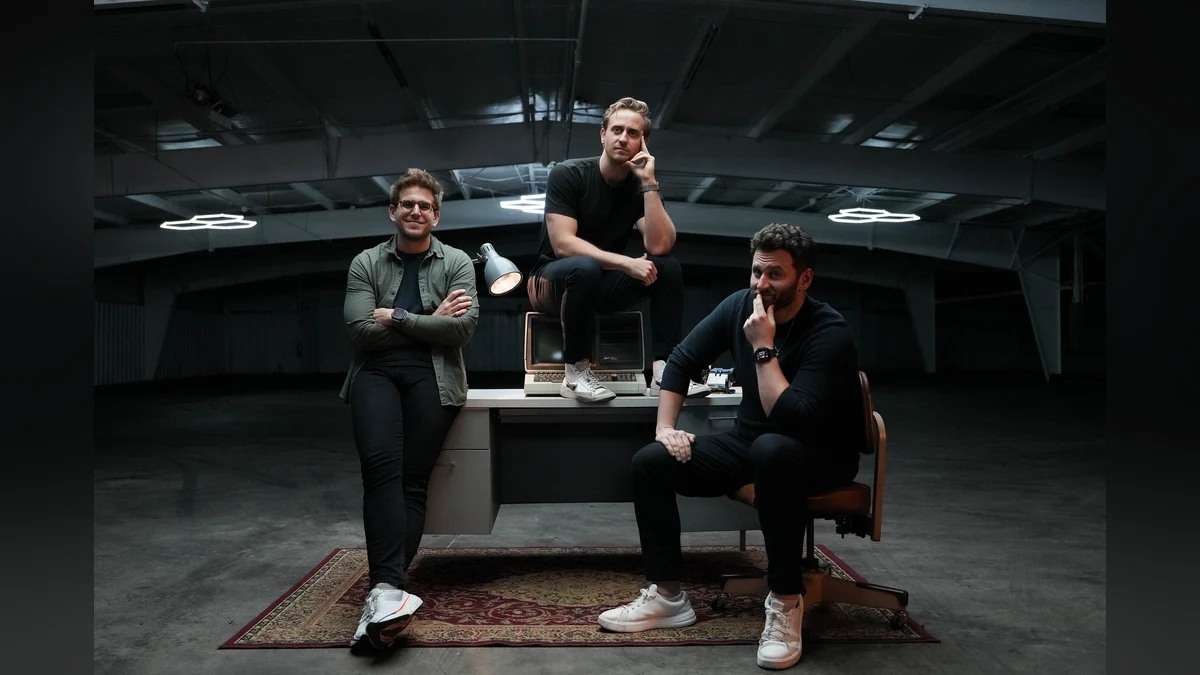
Linq, the startup building messaging and voice infrastructure for AI agents, has raised $90 million in a Series B round led by Andreessen Horowitz, the company announced on November 18. Andreessen Horowitz co-founder Ben Horowitz will join Linq’s board of directors as part of the deal.
The Linq Series B round brings the San Francisco company’s total funding to more than $120 million. Existing investors TQ Ventures, Mucker Capital and Abstract returned for the round, alongside new investors Anthos and Left Lane Capital. The raise comes less than ten months after Linq’s $20 million Series A in February 2026, making the new round four and a half times the size of the last one.
What Linq Does
Linq gives developers the plumbing that lets AI agents reach customers inside the messaging apps they already use, including Apple Messages for Business, RCS and WhatsApp. Instead of asking users to download a new app or learn a new habit, a business can put an agent in the text thread, where it can answer questions, take orders and complete payments.
The company says it has already processed more than 1 billion messages through its platform. DoorDash, Town and Tomo run agents on Linq, along with hundreds of other businesses, and the assistant Poke launched on Linq last year. Linq is also an official Apple Messaging Service Provider, which lets it help enterprises launch agents on Apple’s messaging channel.
Linq is already part of the agent story at OpenAI: ChatGPT’s always-on dots agents can be texted over iMessage and RCS because Linq routes the messages, a partnership OpenAI disclosed in October.
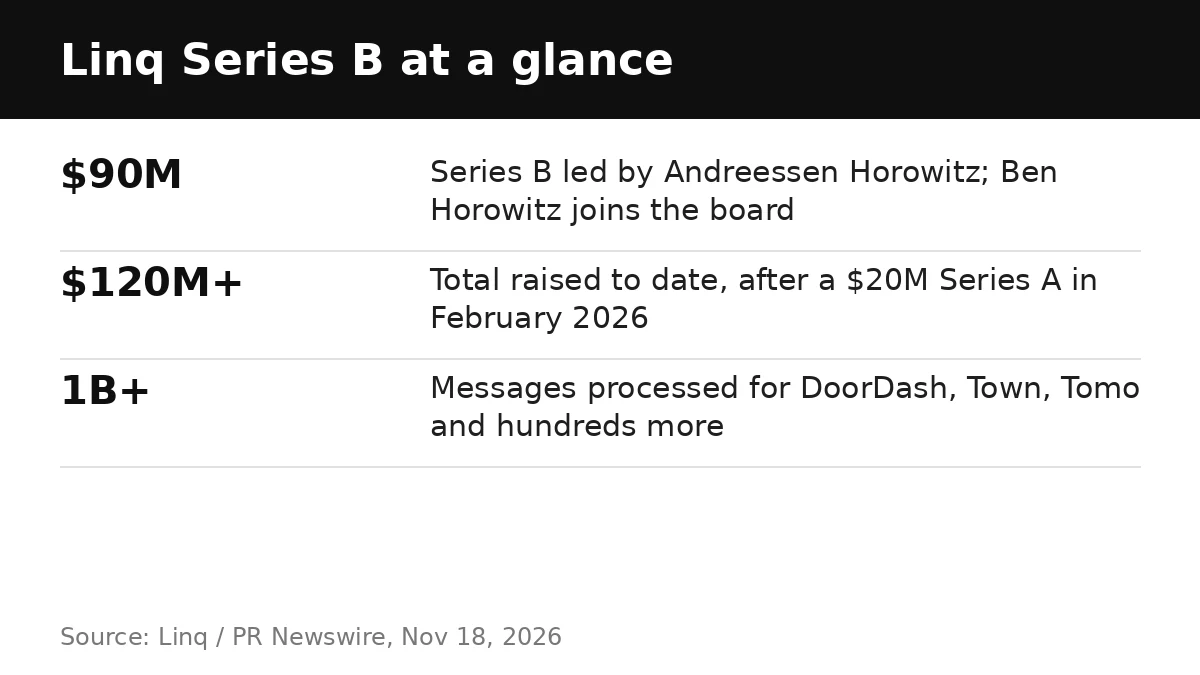
Graphic: GPTOnline. The Linq Series B round at a glance.
What the Money Funds
The funding will go toward deeper investment in messaging and an expansion beyond it. Linq is adding HD Calling for Agents, which lets agents make handset-quality phone calls, and a computer use offering that gives agents access to physical computing infrastructure so they can interact with software and complete tasks. The company named KERNEL among its first computer use customers.
“Clicking through five screens to make a payment will become two words to an agent: ‘pay rent,'” said Elliott Potter, CEO of Linq. “We help developers build customer-facing agents that use human tools to do human work.”
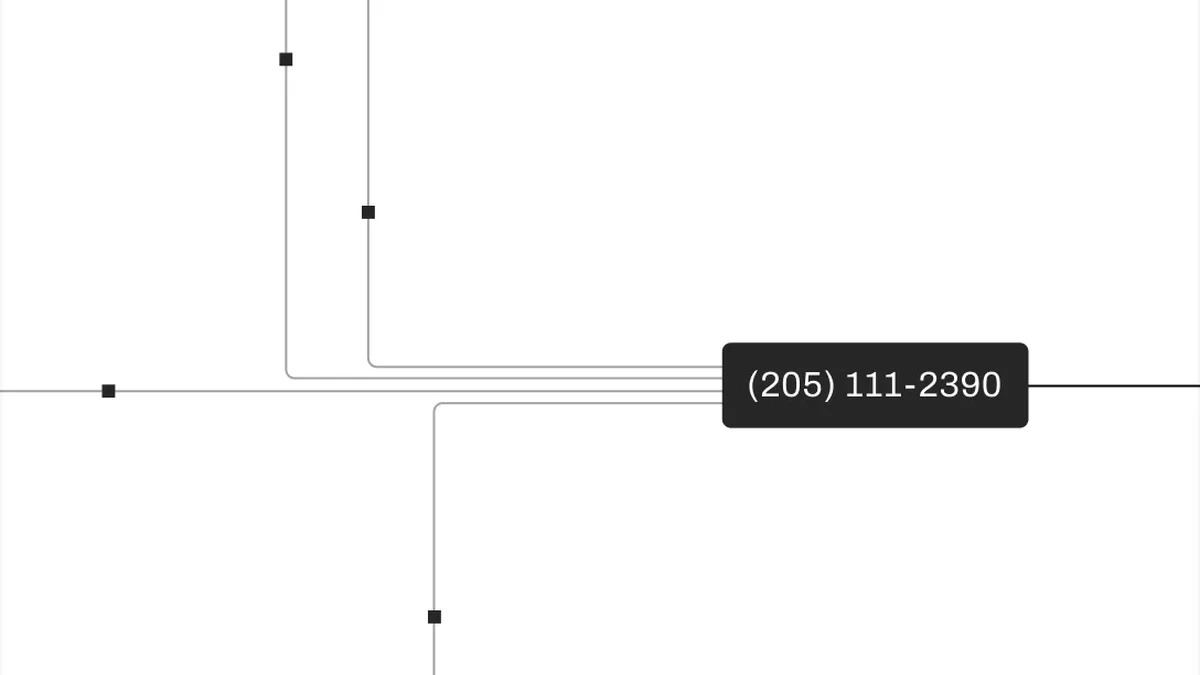
Linq’s HD Calling routes many callers to one number. Image: Linq.
Why It Matters
The bet is that the next wave of software will not be opened, but texted and called. Linq’s announcement cites Cloudflare data showing that more than half of internet traffic is no longer human, with AI agent requests on Cloudflare’s network up more than 1,700% in a year. If agents become the way people book, buy and plan, the companies that own the connection between agents and customers will sit at a valuable chokepoint.
“Agents will communicate and get work done just like people do. Linq gives agents the infrastructure to do both at scale,” said Ben Horowitz, cofounder and general partner at Andreessen Horowitz.
DoorDash, one of Linq’s largest customers, offered an early verdict on the approach. “The best AI experiences fit naturally into people’s lives,” said Aryan Shah, Head of AI research at DoorDash. “Linq gives us the messaging infrastructure to bring ordering into a familiar conversation, so customers can go from deciding what they want to placing an order in one thread.”
The round also shows how fast the agent infrastructure market is moving. Linq has now raised $120 million in under a year, and its backers include one of Silicon Valley’s largest firms betting that messaging, voice and computer use will converge into a single platform layer for agents.
Sources
- PR Newswire, “Linq Raises $90 Million in New Funding Led by Andreessen Horowitz to Build the Infrastructure Platform for AI Agents,” November 18, 2026
- Gunderson Dettmer, “Linq Announces $90 Million Series B,” November 18, 2026
- TechStartups, “Linq raises $90M from Andreessen Horowitz to power AI agents that can text, call, and get things done,” November 18, 2026
- Linq, official site