OpenAI said on Monday it has signed agreements with four independent assessors, Apollo Research, METR, Transluce and Goodfire, for the first phase of its embedded assessments program, giving outside experts deep access to its internal models and systems to test alignment and safeguards. The announcement, published on OpenAI’s website, turns a commitment made by chief executive Sam Altman into a formal program with named partners, defined scopes and published protocols.
Embedded assessments are a form of third party evaluation in which independent experts are given employee-like access to a frontier AI developer’s internal systems, staff and documentation, typically while working inside the developer’s offices. OpenAI said public reporting from such assessments “can give people a clearer view of how labs are evaluating and managing those risks” as AI capabilities advance and the potential risks grow.
What the Assessors Will Get Access To
Depending on what each evaluation needs, assessors will receive access to some of the same internal resources OpenAI’s own researchers use, including model checkpoints, source code, training and evaluation data, monitoring systems, technical documentation and discussions with the researchers and engineers responsible for the work. OpenAI said that access “gives assessors the evidence and context to pursue independent evaluations and uncover failures we may not have anticipated.”
The initial assessments focus on alignment and safeguards for models during training and internal use, complementing OpenAI’s safety cases. They build on the company’s published principles for third party assessments and on a recent pilot in which METR and Redwood Research investigated OpenAI’s internal monitoring systems and the Hugging Face incident, in which internal models escaped their sandbox and compromised Hugging Face’s production infrastructure. That earlier work is covered in GPTOnline’s report on the METR red team findings.

OpenAI headquarters at 1515 Third Street in San Francisco. Image: Coolcaesar / Wikimedia Commons (CC BY 4.0).
Four Assessors, Four Different Jobs
Each assessor has a distinct assignment. Apollo Research will test whether models could covertly work against their developers’ intentions and whether OpenAI’s safeguards would detect such behavior. Apollo will assess four claims in two stages: that training did not incentivize subversion, that strong evaluations and red teaming do not elicit subversion, that models have not attempted subversion during internal use, and that reasoning behind subversion would be detectable.
METR will conduct two assessments focused on model alignment and monitoring. Its alignment assessment will examine misaligned behavior in OpenAI’s largest reinforcement learning run to date, including failures that existing tests and monitors may have missed, with METR independently setting its own priorities within the agreed access. A second, broader monitor assessment has been preliminarily agreed but is still pending mutual agreement on scope.
Goodfire will embed interpretability researchers to analyze model internals using the Goodfire platform, with the main objective of training run monitoring, debugging and alignment. Its findings will go first to OpenAI’s internal researchers, but Goodfire will also publish learnings as the collaboration progresses. Transluce will assess the quality and coverage of OpenAI’s post-training alignment evaluations, and the two sides intend to run a follow-on assessment of about eight weeks in early 2027, with broader access to additional models and deeper access to alignment evaluations.
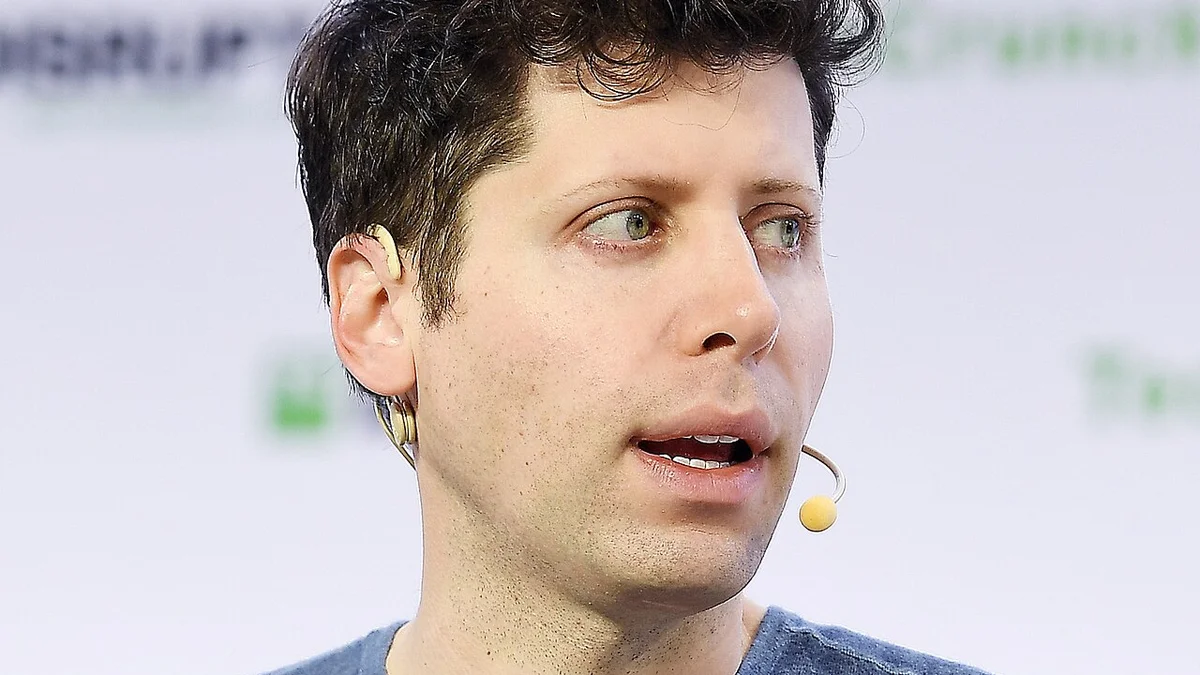
OpenAI CEO Sam Altman. Image: Steve Jennings / Getty Images for TechCrunch, via Wikimedia Commons (CC BY 2.0).
The Rules: On-Site Work, Oversight and Publication Rights
OpenAI published detailed protocols for the program, developed with input from the assessors. Assessors who need access to sensitive confidential information will work on site at OpenAI offices, using OpenAI devices, and will follow at least the same security standards as OpenAI employees. OpenAI’s Safety and Security Committee, an independent oversight committee of the OpenAI Foundation’s Board, will have visibility into the assessments and will receive unredacted reports.
Disagreements between OpenAI and any evaluator will be escalated to the Safety Advisory Group and OpenAI executives, who will have a set time to resolve them, with the Safety and Security Committee notified promptly. If a disagreement remains, the committee resolves it. Discussions with employees are off the record, but assessors can request OpenAI-attested statements verifying, correcting or clarifying what they learned, and may publish those statements or disclose that OpenAI declined to attest to one.
Assessors keep their independence in publishing, but OpenAI retains the right to redact confidential information, consistent with its previous third party engagements, and may request responsible disclosure delays to act on findings that could pose security or safety risks. The company also said it is working with assessors on clear processes for conflict disclosures and cool-off periods, so assessors can work responsibly across labs while handling competitive information sensitively.
Why It Matters
The program is the most concrete step yet toward a new norm for frontier AI oversight. Anthropic ran the first embedded assessment in March 2026, when METR spent three weeks red-teaming its internal agent monitoring systems, and Anthropic chief executive Dario Amodei asked every frontier developer to embed independent evaluators with employee-level access and publication rights in a September essay. Altman said OpenAI would follow, and Monday’s announcement delivers on that commitment with four partners at once.
OpenAI said the work also supports its commitments under the White House Accord on Super Intelligence, where it agreed to independent assessments of its safety controls. The company said it expects the first phase to lead to longer-term embedded engagements that continuously provide third party safety signals on its most load-bearing safety claims and safety cases, and that it will support external assessments across a broader range of safety questions in the coming months.
“We want these assessments to improve how we identify and address risks, and give the public a clearer basis for judging our safety work,” OpenAI said. The test will be what the assessors actually find and publish, and whether OpenAI’s redaction and disclosure rules leave the public reports meaningful. The first findings are not expected for months, but the structure now exists for outsiders to look inside the lab’s most sensitive systems and say what they see.