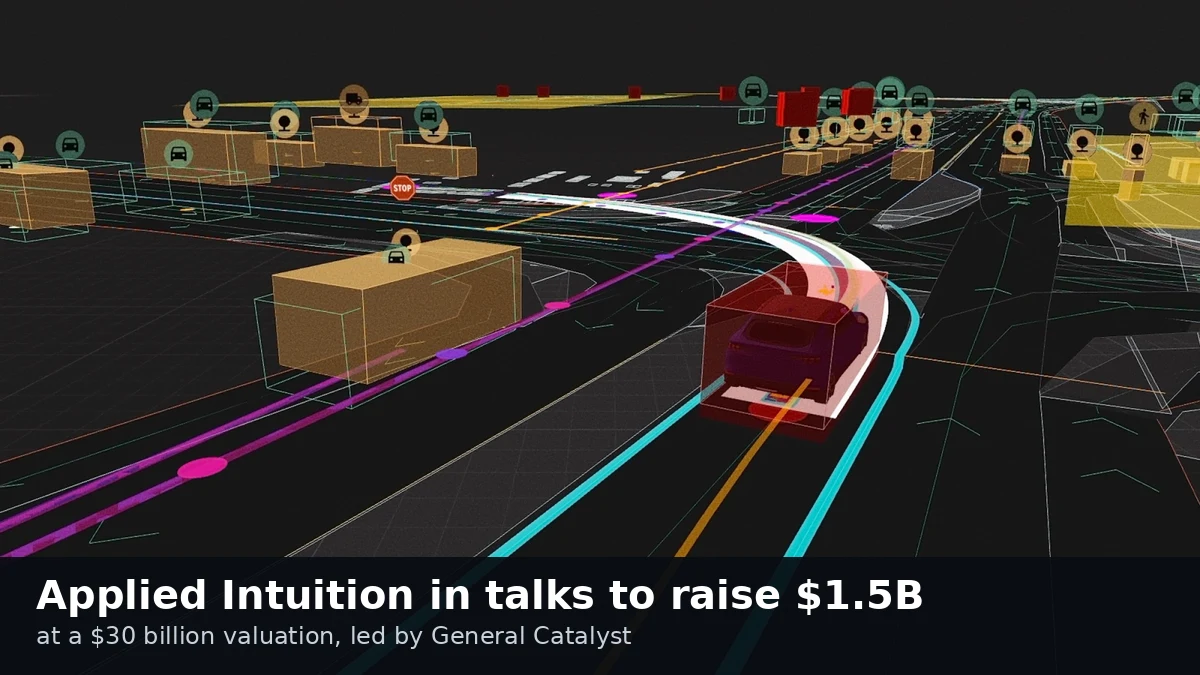
Applied Intuition, a startup that builds software for autonomous vehicles and defense systems, is in talks to raise at least $1.5 billion in a new funding round led by General Catalyst, Bloomberg reported on November 11. The round would value the company at roughly $30 billion before the new money, double the $15 billion valuation it set in June 2025. General Catalyst plans to invest $250 million in the round, according to people familiar with the matter cited by Bloomberg.
The talks are not final. Bloomberg reported that the people spoke on condition of anonymity because the information is not public, and terms could still change before any deal is signed. Applied Intuition has not announced a round, so the reported figures describe a negotiation in progress, not a closed financing. That distinction matters: a valuation in talks is a price investors are willing to discuss, not a price a completed transaction has set.
What Bloomberg Reported
The report, published on November 11, says the round is led by General Catalyst and aims to raise at least $1.5 billion at a pre-money valuation of about $30 billion. General Catalyst itself would put in $250 million, according to one person cited by Bloomberg. The report describes Applied Intuition as a defense contractor developing technology for self-driving vehicles, and says the company builds automation operating systems and autonomous driving technology for industries including construction, transportation and defense.
The report lands about a month after The Information reported in October that Applied Intuition had fielded investment offers valuing it at $30 billion or more, with a raise of $1 billion or more expected in the coming months. The Bloomberg report puts a lead investor, a larger target and a specific commitment on those talks, which suggests the discussion has moved from fielding offers to structuring a round.
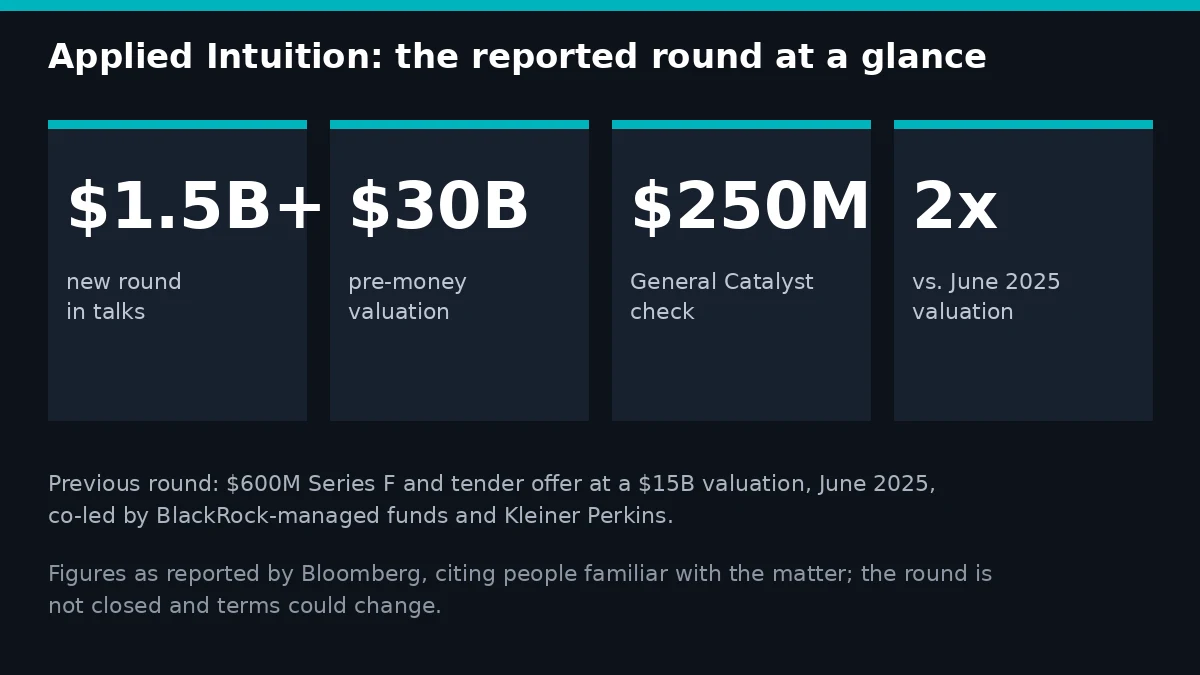
The reported round would double Applied Intuition’s valuation in about five months. Figures as reported by Bloomberg, citing people familiar with the matter. Graphic: GPTOnline
What Applied Intuition Does
Applied Intuition does not build cars. It builds the software layer that carmakers, truck makers and defense contractors use to develop, test and deploy autonomous vehicles: simulation environments, validation tools, autonomy software and vehicle operating systems. Its products let engineers test self-driving systems in virtual environments before they reach real roads, which is how the company has become a supplier to much of the auto industry. The Information reported that the company serves 18 of the top 20 global automakers.
The company was founded in 2017 by Qasar Younis, a former chief operating officer of Y Combinator, and Peter Ludwig, a former product manager at Google. It has expanded steadily from passenger cars into trucking, construction and off-road vehicles, and more recently into military vehicles. In October, it announced a partnership with Honda to accelerate software development for the automaker’s next-generation software-defined vehicles, and it has landed contracts with the US Army for autonomous vehicle projects.
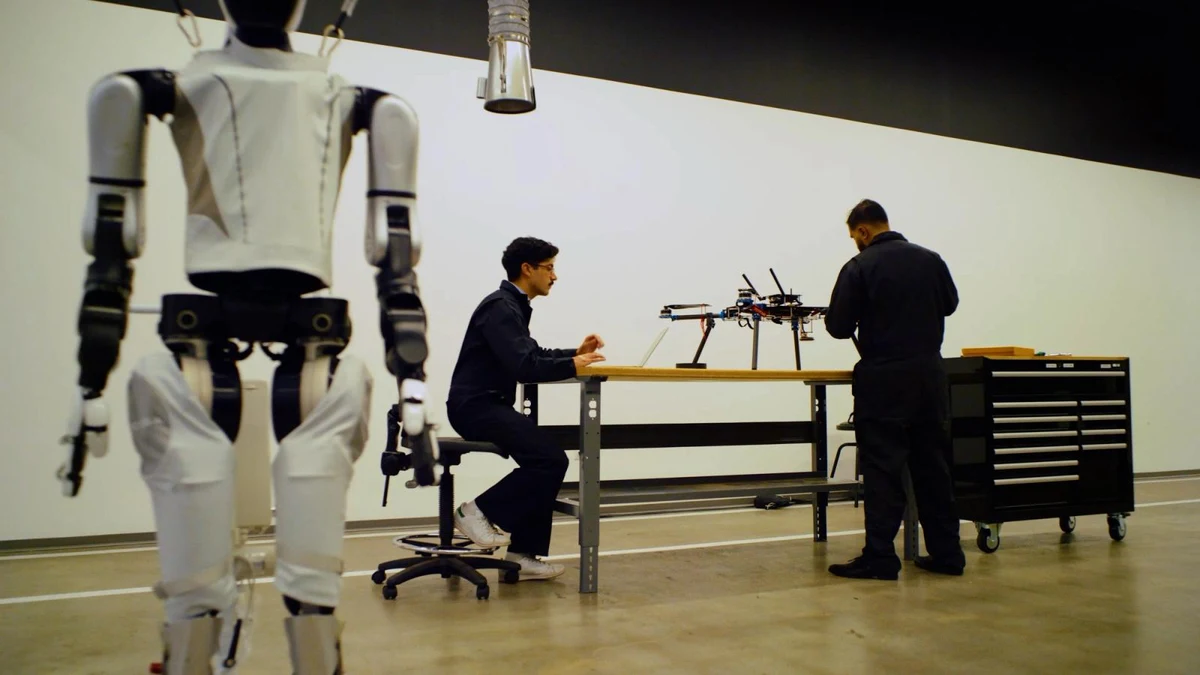
Applied Intuition has expanded from passenger cars into trucking, construction and defense autonomy. Image: Applied Intuition
Why the Valuation Doubled
The jump from $15 billion to $30 billion in about five months reflects how fast investor appetite for physical AI has grown. In June 2025, Applied Intuition closed a $600 million Series F round and tender offer at a $15 billion valuation, co-led by funds managed by BlackRock and Kleiner Perkins. It had raised about $1.2 billion in total before that round, from investors including Andreessen Horowitz, General Catalyst, Lux Capital and Kleiner Perkins.
Andreessen Horowitz disclosed in July that Applied Intuition reached $400 million in annual recurring revenue at the end of 2024, with revenue roughly doubling each year. At a $30 billion valuation, investors would be paying about 36 times that 2025 revenue estimate, according to The Information’s October reporting, a rich multiple that only makes sense if the company keeps growing at its recent pace and if defense work becomes a larger share of the business.
That defense expansion is the second driver. Applied Intuition’s push into autonomous military and off-road vehicles puts it in direct competition with defense startups that have also raised at large valuations this year, and it gives the company a customer base beyond automakers. The Bloomberg report’s description of the company as a defense contractor, rather than only a self-driving software maker, underlines how central that shift has become to the investment case.
Why It Matters
If the round closes at the reported terms, it would be one of the largest private financings of the year in autonomy, and it would make Applied Intuition one of the most valuable private companies in physical AI. It would also confirm a pattern across the sector: investors are paying up for companies that bring AI into machines, from cars and trucks to military vehicles, rather than only for chatbots and copilots.
For now, the deal is still a report about talks, and the history of this company shows why that caution is warranted. In March 2025, Applied Intuition was reported to be in talks to raise at a $15 billion valuation, and it closed the round at that valuation three months later. The October offers and the November talks point in the same direction, but until the company or General Catalyst confirms the round, the $30 billion figure is a negotiation, not a done deal.