TraceX is an AI engineer for production issues. When a support email, Slack message, or Jira ticket comes in, TraceX reads it, investigates the database, code, and logs, proves the root cause with evidence, and writes the fix as a pull request, along with a drafted reply for the customer. It is currently in private beta and free while in beta.
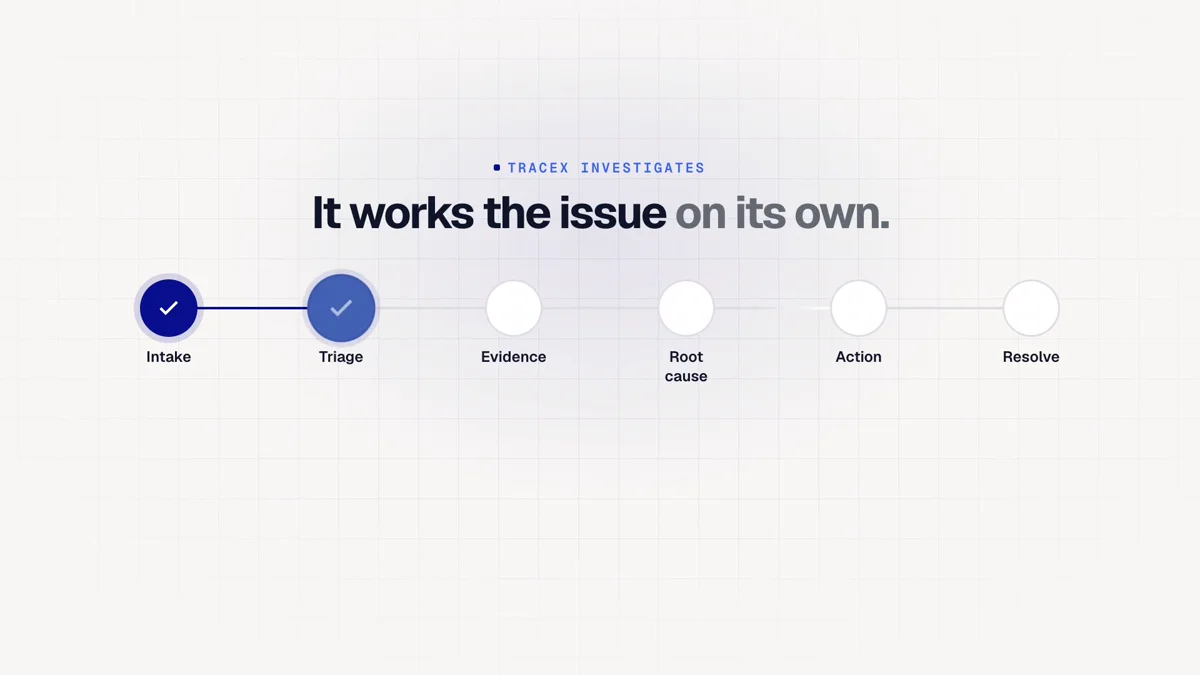
The pitch is that it works an issue the way a good engineer would: it reads the thread, plans what to check, and follows the data and the code until the cause is clear, showing each step as it goes.
How an investigation works
Intake. An issue arrives as a support email, a Slack message, a Jira ticket, or a question asked in the TraceX dashboard.
Evidence. TraceX queries the database read-only, reads the code and recent changes, and checks error and log tools such as Sentry, Datadog, and CloudWatch. It connects read-only to PostgreSQL, MySQL, and MongoDB, plus code, logs, and inboxes.
Root cause. It returns a root cause with a confidence score, what should happen versus what actually happens, and the evidence behind each claim. Every finding cites the record, code, or log line it came from, and a second model checks the answer against that evidence.
Action. TraceX writes the fix as a pull request, with the change, its risk level, and validation steps, and drafts a reply ready to send to the customer.
More than incident response
- Plain-English questions. Ask about your systems in everyday language, such as how many refunds are stuck and since when, and get answers drawn from databases, code, and logs, with each step shown and each claim cited. Results can be exported as spreadsheets, CSV files, or PDFs.
- Pull request review. TraceX reviews your team’s pull requests too, with a reviewed diff, risk level, and one-click suggestions.
- TraceX CLI. Sign in through the browser, link a repository with one command, and ask TraceX from the terminal. In a repository that is not linked, it works as a coding agent that asks before every change, edit, or test run.
- Read-only by design. TraceX connects with read-only access and runs only read-only queries, so nothing in production is changed. Access can be revoked at any time, and fixes always arrive as pull requests for human review.
- Your data stays yours. TraceX keeps no index of your code or data. Answers keep what was looked up and where, not the rows, and exported files are deleted after 24 hours.
- Bring your own model keys. Teams can run TraceX on their own Anthropic or Gemini account, so AI usage is billed to them rather than through TraceX. Enterprise sign-in includes SSO, two-factor sign-in, roles, revocable sessions, and a full audit log.
Who it is for
TraceX is built for engineering teams that spend too much time triaging production issues and support tickets. It fits teams that want a faster path from a customer report to a proven root cause and a reviewed fix, without giving an AI agent write access to production.
Pricing
TraceX is free during the private beta. Beta workspaces get 50 investigations a month, 500 chat messages a month, up to 5 seats, every integration, and the TraceX CLI at no cost. Larger teams needing more seats, their own model account, private tenancy or self-hosting, SSO, and data residency controls are quoted individually, so contact the team for details. Pricing may change when the beta ends, so check the official TraceX pricing page for the latest information.
Things to know
TraceX is in private beta, so access requires requesting early access, and post-beta pricing has not been announced yet. The company says it will tell beta teams about plans well before the beta ends, and nothing will be charged without agreement. As with any AI debugging tool, the root cause and fix still deserve a human review before merging, even when the evidence looks convincing.
Image credit: Official product visual from tracexpro.com (product tour poster).