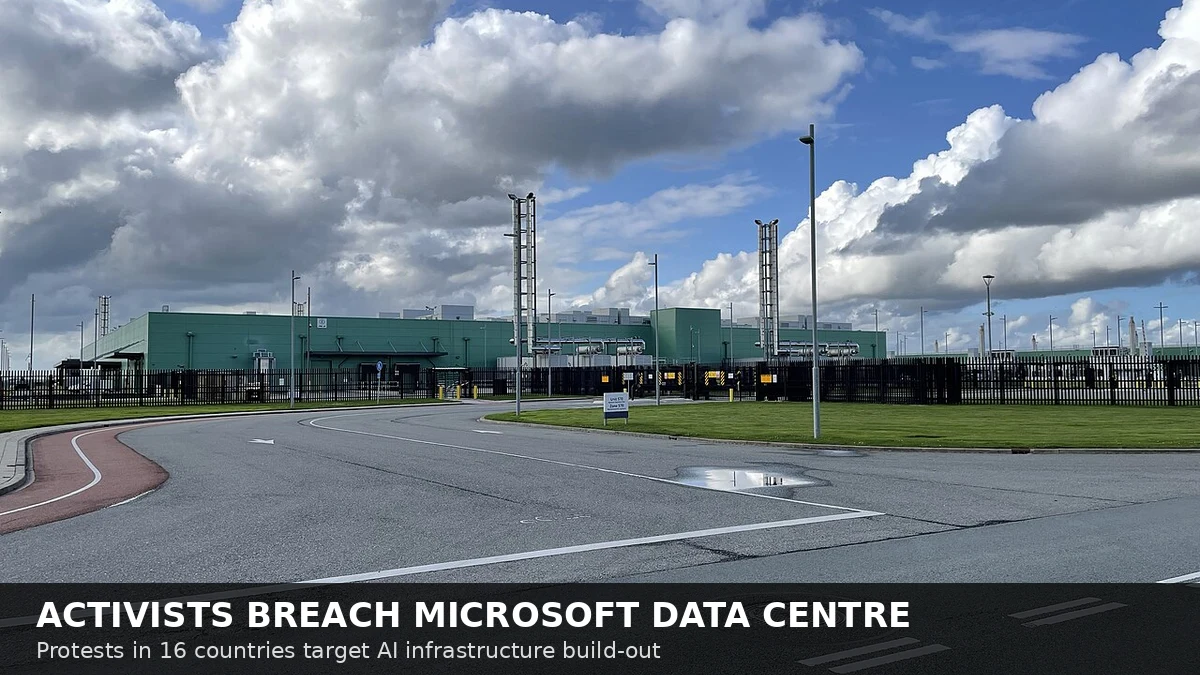
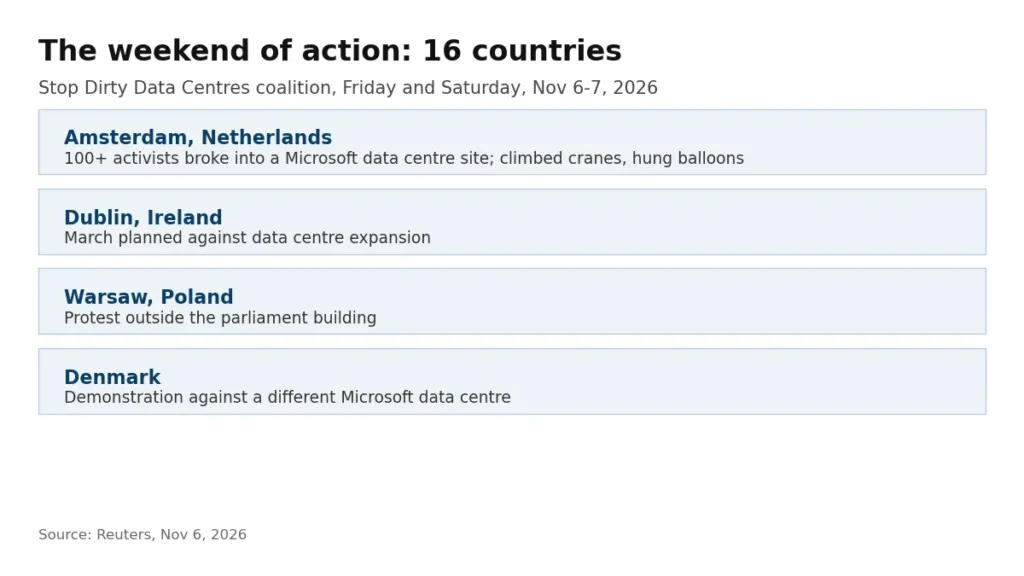
More than 100 activists broke into the construction site of a Microsoft data centre in Amsterdam on Friday, opening two days of coordinated protests against the rapid build-out of computing power for artificial intelligence. The Microsoft data centre protest is part of a global backlash that now stretches across 16 countries, and it landed on the same day technology shares suffered a second straight day of sharp losses.
Activist groups announced actions for Friday and Saturday under the banner of the “Stop Dirty Data Centres” coalition, which brings together environmental groups and digital rights campaigns. The coalition is calling for a pause on large-scale data centre construction until governments set clearer rules, a demand that puts it directly at odds with the trillion-dollar infrastructure race now under way.
What happened in Amsterdam
In Amsterdam on Friday, more than 100 activists gathered at the site, marched arm in arm, and then broke in, climbing cranes, hanging balloons and dancing while police stood by, according to Reuters. Some carried placards reading: “Screw your datacentre”.
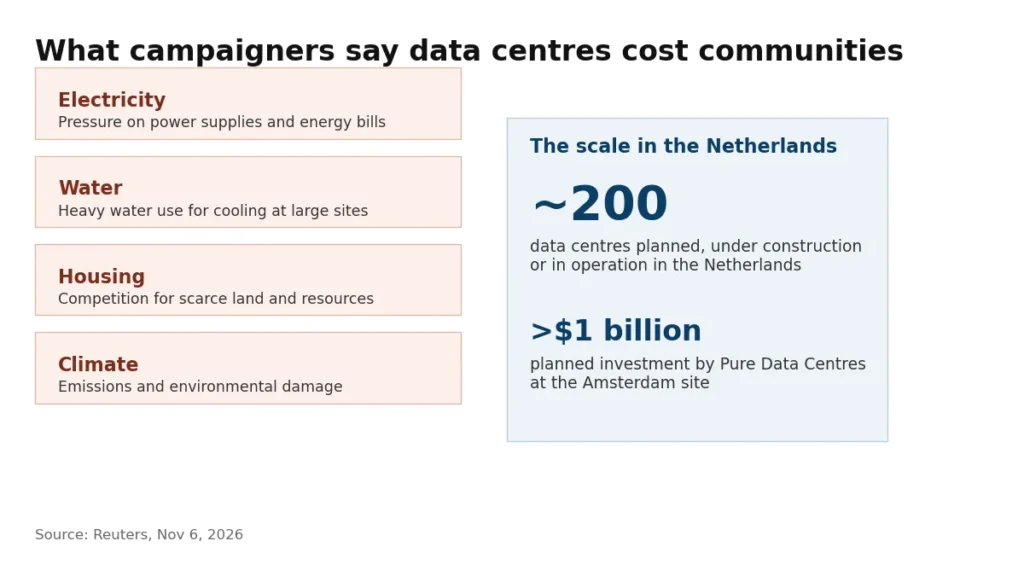
The site is owned by Pure Data Centres, which plans to invest more than $1 billion in the project and is backed by Brookfield-owned Oaktree. The company said it was committed to engagement with local stakeholders and added: “We respectfully ask those on site to leave safely and engage with us in dialogue about the development and any concerns they may have.”
Microsoft said it understood that people had strong feelings about the project and respected their right to express them peacefully, but did not condone any unlawful actions.
A coordinated weekend of action
The Amsterdam breach was the opening act of a planned weekend. Other actions include a march in Dublin, a protest outside the parliament building in Warsaw, and a demonstration against a different Microsoft data centre in Denmark.
The coalition says pushback is growing from Spain to India and the United States, where the politics of data centres collided with markets on Friday. Technology stocks drove what became a second day of sharp losses in share prices, as investors worried that Democratic control of Congress could mean tougher regulation that curtails the AI boom.
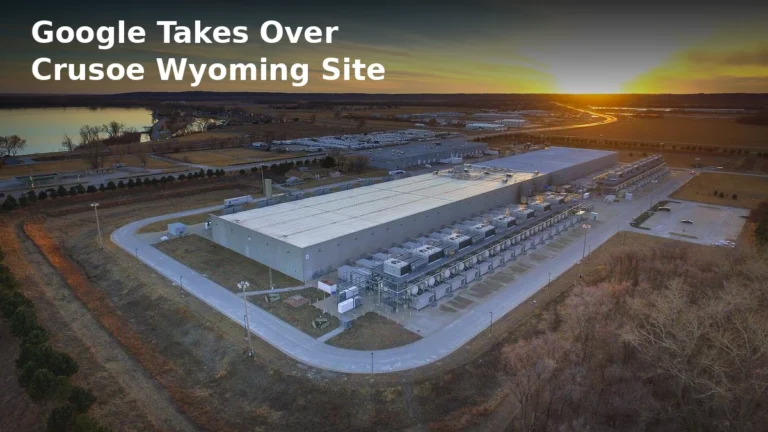
The timing is awkward for an industry that has spent 2026 racing to secure power and land. Google said only this week that it will spend $17 billion on its first Wyoming data centre, a project covered in our earlier report on Google’s Wyoming site purchase. Microsoft itself is reassessing billions of dollars in cloud partnerships, and has begun winding down its deal to rent AI computing capacity from Oracle.
Why campaigners are pushing back
Campaigners say data centres pressure electricity and water supplies, compete with housing and other businesses for scarce resources, and threaten climate goals. They also point to job losses and to risks to personal and national security from private companies and big tech concentrating power.
The coalition stresses that it is not anti-progress and is not calling for existing data centres to be closed. Its demand is narrower: major construction should be halted until governments establish clearer rules on where facilities can be built and what they must give back to the communities around them.
Technology companies take the opposite view. They say data centres are essential to meeting global demand for artificial intelligence and cloud computing, and provide critical infrastructure for businesses, governments and consumers.
The wider backlash
Europe is divided between its ambition to catch up with the United States and Asia on AI, and its generally more stringent controls and public protections. Speaking to Reuters on Thursday, EU tech chief Henna Virkkunen said Europe needed more data centres to power AI development, though she added it needed to be done with care.
“AI, of course, is a super important technology and we need to have our own capacity,” Virkkunen said, pointing to investments in chip-making capacity, AI startups and a plan to build Gigafactories around the region. She added: “It is very important for citizens that they can trust that their energy bills are not skyrocketing and there are not electricity blackouts because of data centres, or they are not destroying the environment with these projects.”
The regulatory screws are already tightening in places. A Google project in Finland faces a criminal probe over land clearances, Italy and Portugal are tightening environmental regulation for data centres, and Microsoft pulled out of a UK data centre project that was hit by infrastructure delays. The Netherlands alone has about 200 data centres either planned, under construction or in operation.
Why it matters
The Amsterdam breach shows that opposition to AI infrastructure is moving from planning hearings and opinion polls into direct action, and it is doing so just as the economics of the build-out come under strain. Investors are already questioning whether the massive capital spending on AI will generate sufficient returns, and the Nasdaq sell-off earlier this week showed how quickly that doubt can spread.
For the companies building the infrastructure, the weekend of protests is a warning that securing power, land and permits may no longer be enough. They will also have to win over the communities living next door, at a moment when energy bills, water use and housing are already politically charged across Europe.