China plans to roll out a broad set of standards governing AI safety from development through deployment, in what Bloomberg describes as some of the most comprehensive guidelines yet aimed at guarding against a loss of control over increasingly powerful AI. The country’s state economic planner said on Tuesday it is quickening legislation to govern and oversee how AI is developed and applied, covering the entire life cycle of models.
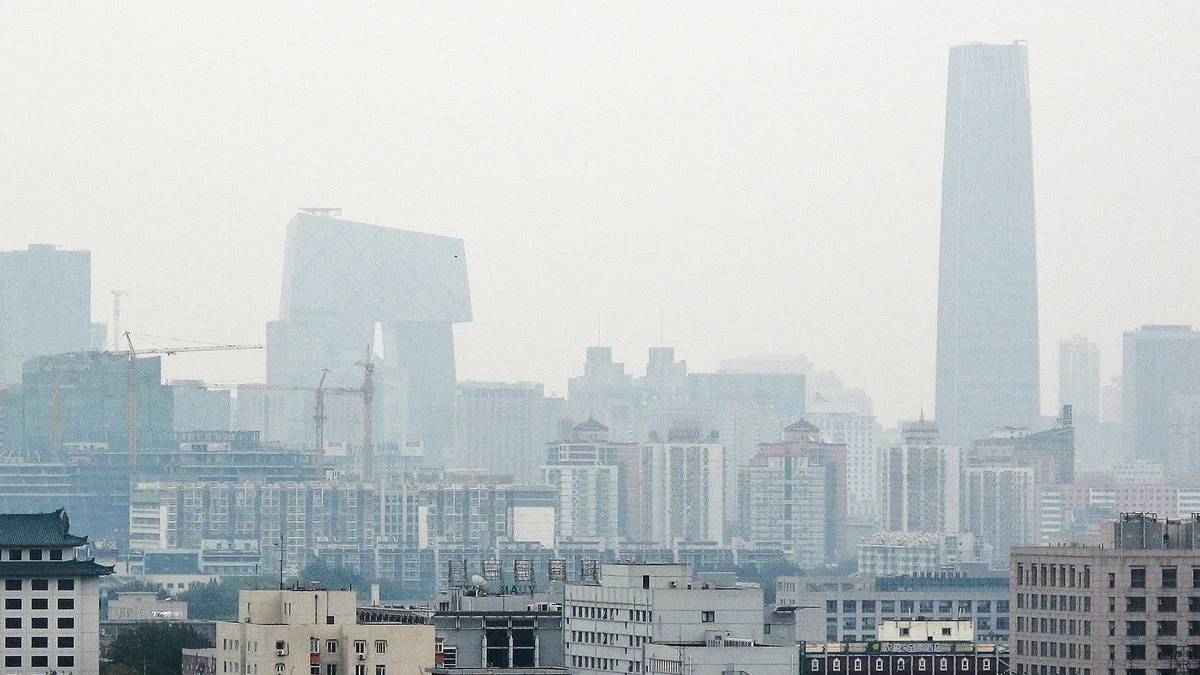
Beijing skyline. Photo: Francisco Anzola / Wikimedia Commons (CC BY 2.0).
What Was Announced
Wang Ruomeng, a senior official with the National Development and Reform Commission, said at a Beijing briefing that the regulations will extend from data to computing power and algorithms, and will reach developers from DeepSeek to Moonshot to Alibaba. “We will accelerate legislation to support core AI enablers, data, computing power and algorithms, and regulate key application scenarios, while establishing safety standards and ethical guidelines covering the full life cycle of AI,” Wang said.
According to Bloomberg’s reporting, the authorities will carry out regular reviews of how the rules are implemented and revise provisions that become outdated. Beijing intends to ease the compliance burden on AI firms through an unspecified transition period and guidance, and plans to roll out sector-specific regulatory sandboxes to allow greater leeway for trial and error.
The Chinese government will also monitor AI’s impact on employment and displacement, Wang said, underscoring Beijing’s opposition to the large-scale social dislocations that may arise as AI grows more capable.
The Context
The announcement lands after a string of global AI security incidents, and follows China’s existing regulatory buildup. Since 2023, China’s interim generative AI measures have required services with public-opinion influence to complete security assessments and file their algorithms. From September 2025, AI-generated content must carry visible and hidden labels. In July 2026, separate rules took effect for humanlike AI interaction services, prompting ByteDance and Alibaba to pull companion-chat features from their flagship apps. The Cyberspace Administration has run enforcement campaigns against AI products that failed on filing, safety review or labeling.
It is also worth distinguishing this from a separate directive: on October 23, the General Office of the State Council issued an 18-point set of employment-policy guidelines for AI, including an “unemployment buffer period” for workers affected by automation. That was a labor directive, reported by Reuters; Tuesday’s announcement is about safety standards for the technology itself.
Internationally, China and the United States agreed in September to try to develop a common understanding of the technology’s benefits and threats, Bloomberg notes, a backdrop that makes Beijing’s solo regulatory push one side of a widening global conversation about AI guardrails.
Why It Matters
China is home to some of the world’s most capable open-weight labs, and the China AI guardrails announced on Tuesday would make it the first major AI power to regulate development through deployment as a single continuous obligation. The pairing of hard safety requirements with regulatory sandboxes suggests Beijing wants both control and competitiveness: rules first, then room to experiment. The employment-monitoring element also signals that the state is treating labor displacement as a governance problem to be managed in advance, not cleaned up afterward.
For global AI companies, the practical question is what “covering the entire life cycle” will mean for training-data sourcing, compute procurement and model releases inside China, and whether the transition period will give them time to adapt.
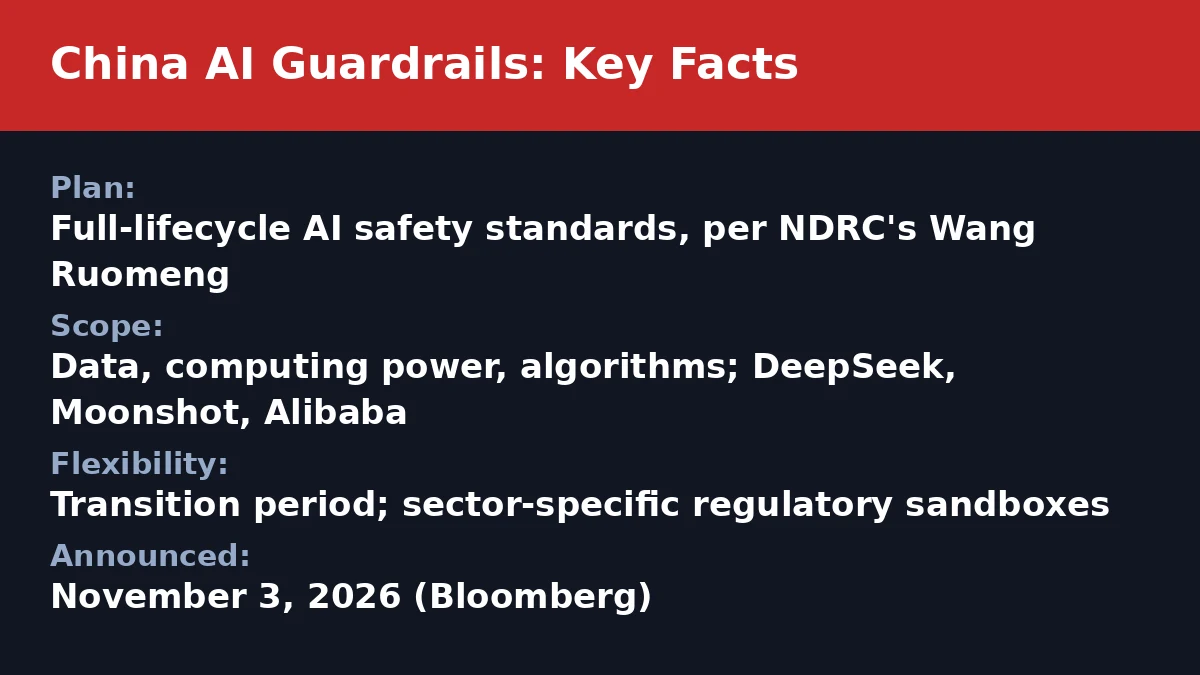
Key facts at a glance.