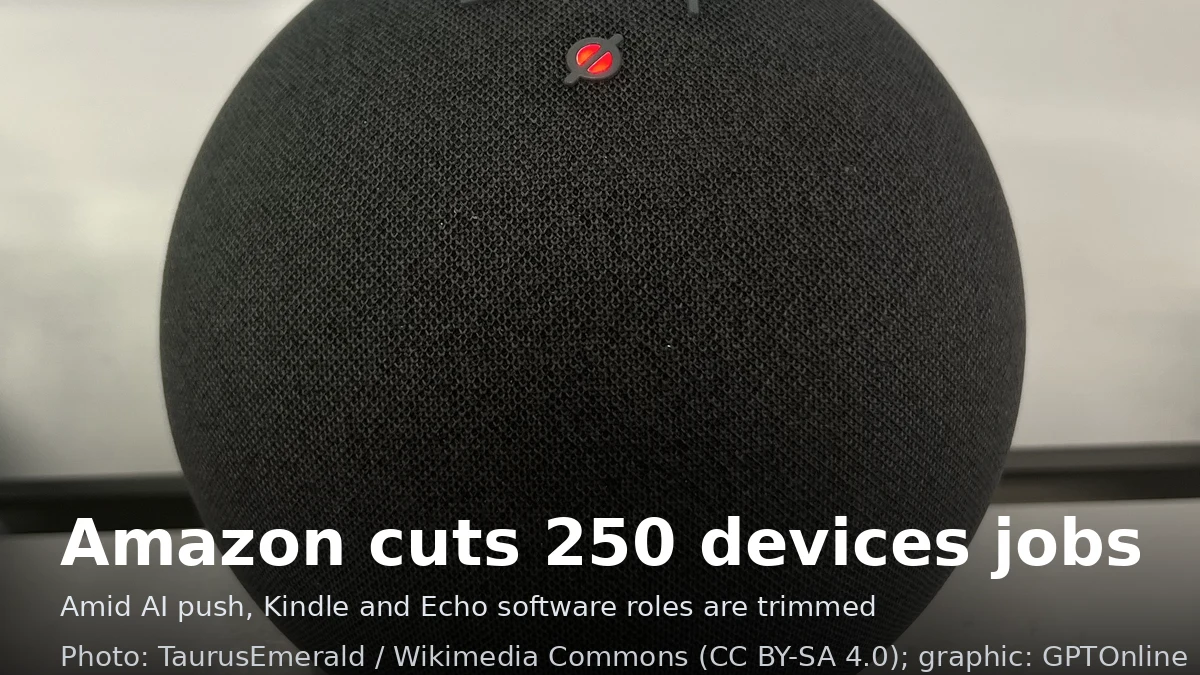
Amazon is cutting about 250 jobs in its devices and services unit, the team behind Kindle e-readers and Echo smart speakers, in a move the company says is meant to make operations leaner as it redirects resources toward artificial intelligence. The layoffs, announced on October 28, 2026, landed on the same day Amazon rolled out a new lineup of Alexa-powered hardware, underscoring how the company is reshaping its workforce even as it keeps shipping new devices.
The cuts were first reported by Reuters, which said the layoffs mainly affect software development roles. Amazon confirmed the reduction after a Reuters inquiry but did not publicly disclose a number; the figure of about 250 came from Reuters reporting cited by outlets including Oneindia.
What Amazon Said
In a statement, an Amazon spokesperson said: “We’ve made the difficult decision to eliminate a small number of roles.” The spokesperson added that the layoffs would help the company “operate more efficiently and better align with our product roadmap,” without elaborating further.
Employees affected by the decision were informed through emails and text messages early on Wednesday morning, according to Reuters. One of the emails was sent by Amazon Vice President Cherie Robinson, who said the company had reviewed its organizational structure before deciding to eliminate certain positions.
New Devices on the Same Day
The job cuts arrived alongside a fresh hardware push. Amazon announced five new Alexa-powered devices on the same day, including a redesigned Echo Show 16 smart display, an Alexa Photo Frame, and the Echo Time bedside clock, according to Oneindia. The launches follow weeks of product rollouts that also included new Kindle e-readers and tablet computers.
The timing highlights a recurring pattern in Amazon’s strategy: aggressive product releases in consumer hardware running in parallel with workforce reductions aimed at cost discipline. The devices unit sits at the center of Amazon’s consumer AI ambitions, with Alexa positioned as a key interface for its AI assistants, yet it is software development roles there that bore the brunt of the cuts.

Graphic: GPTOnline
Part of a Broader AI Workforce Reset
The devices unit reduction is not an isolated event. Earlier in October, Amazon pared about 1,000 jobs in its core retail division, according to Reuters. The back-to-back cuts point to a company-wide effort to control costs while pouring capital into AI infrastructure, where Amazon competes with Microsoft, Alphabet, and Meta on data center capacity and model development.
Internal messaging has been preparing employees for this shift for months. A memo from Amazon’s engineering leadership published in September urged developers to adapt to AI-driven changes in software development. “We all need to embrace this change and take the time to learn, or we risk being left behind,” the memo said, stressing the growing importance of AI in engineering work.
Graphic: GPTOnline
Why It Matters
The Amazon devices layoffs are part of a wave of technology giants restructuring their workforces around AI priorities this year. Microsoft has been offering buyouts to tens of thousands of employees, while other major firms have paired large AI capital expenditure announcements with targeted layoffs. For an AI news audience, the signal is clear: even as companies commit tens of billions of dollars to AI infrastructure, they are trimming teams in areas where AI-driven productivity gains are expected to replace human labor.
The question for Amazon’s devices business is whether a leaner team can sustain the pace of hardware releases while integrating increasingly sophisticated AI features into Alexa and Echo products. The company’s decision to cut and launch on the same day suggests it believes the answer is yes.