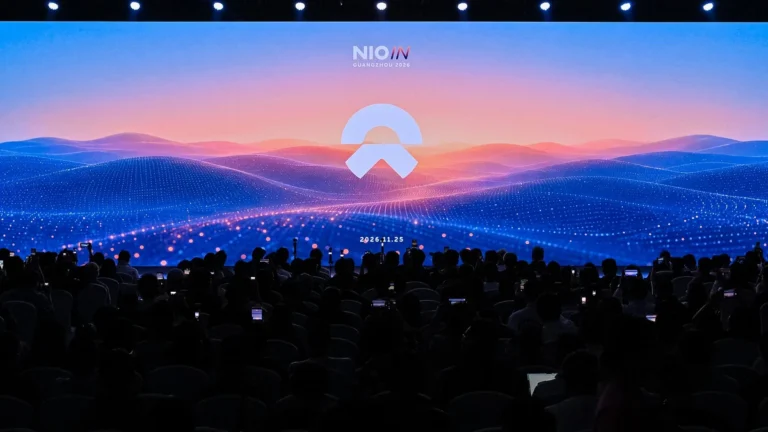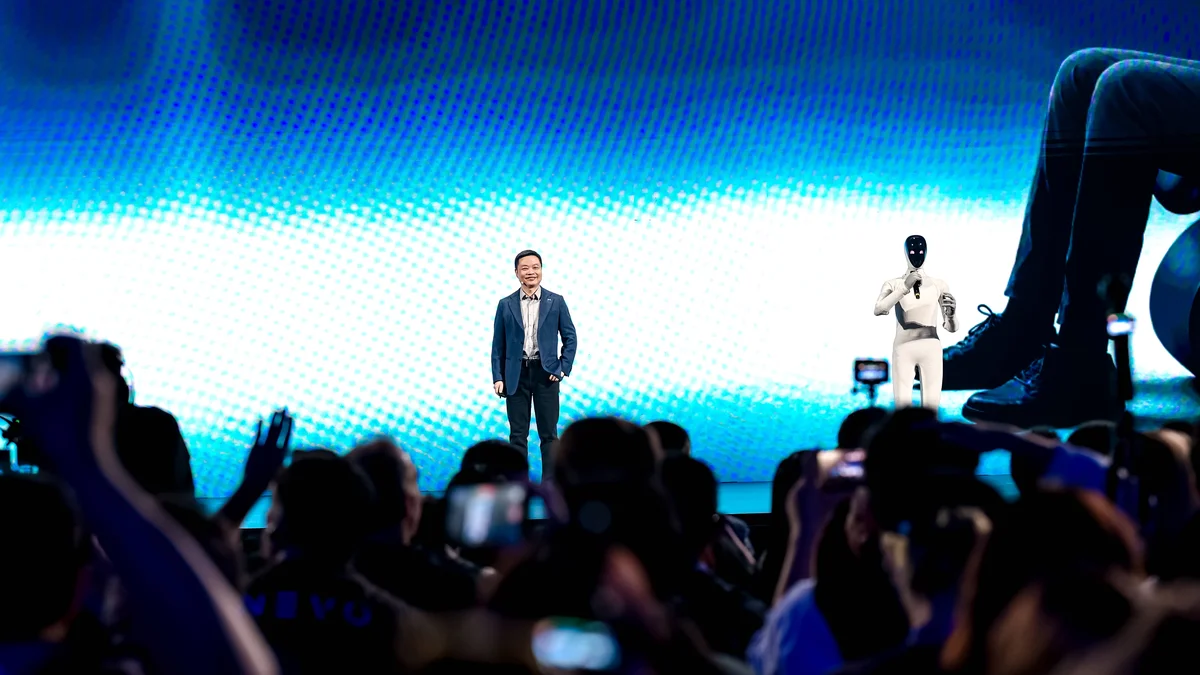
XPENG has publicly debuted its general-purpose humanoid robot IRON and unveiled the Turing Physical AI Architecture that will power it, using its eighth annual AI Day in Guangzhou on November 25 to set out a plan that takes the robot from a stage demonstration to store floors within months.
The Chinese electric vehicle maker presented IRON alongside a new three-layer architecture, called VLA 3.0, that connects AI cognition, real-time decision-making and physical execution across its cars and robots. IRON is scheduled to begin training as a store assistant in XPENG retail stores in the first quarter of 2027, with an official public release targeted for the second quarter of 2027.
What Was Announced?
XPENG unveiled the Turing Physical AI Architecture at AI Day 2026 under the theme “ORIGIN”, arguing that the next breakthrough in Physical AI will come from advancing intelligence and physical capabilities together, rather than from smarter models alone.
“For years, the AI industry has focused on making the brain smarter. But humans do not learn through the brain alone. We learn by touching, moving, trying, failing and trying again. I believe Physical AI must evolve in the same way,” said He Xiaopeng, Chairman and CEO of XPENG. “The brain and body must evolve together. By connecting intelligence all the way through to physical action, we want to build AI that does not simply understand our world, but can work alongside us and grow through real-world experience.”
The same event also introduced XPENG’s first purpose-built Robotaxi model for commercial deployment, the YOYO-01, scheduled for release in 2027, and a new co-driving feature for its cars.
IRON: The Robot
IRON is a general-purpose humanoid that XPENG is developing as a work partner for real-world roles, not as a household novelty. The robot has 76 degrees of freedom and more than 1,500 tactile sensing points, with tactile coverage across more than 80 percent of key body areas. Three proprietary Turing AI chips support its onboard AI models and whole-body control, with event coverage putting onboard compute at 2,250 TOPS.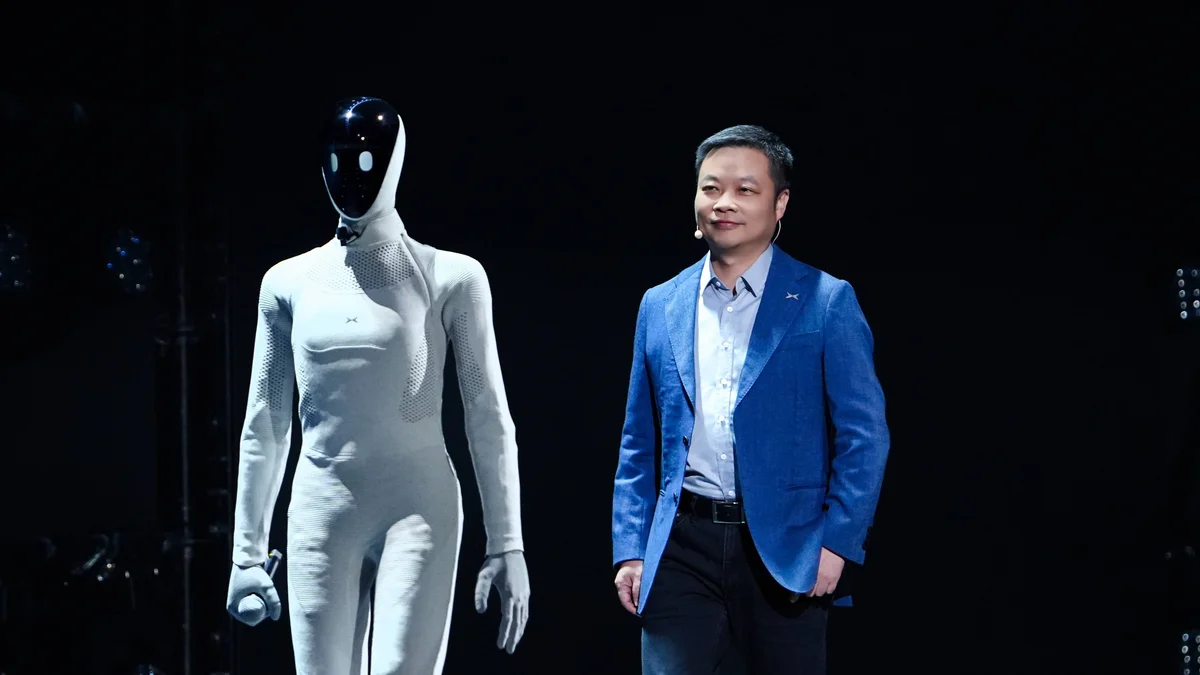
XPENG IRON on stage with Chairman and CEO He Xiaopeng at AI Day 2026. Image: XPENG.
According to XPENG, IRON supports autonomous navigation, task creation through voice or app instructions, autonomous charging, abnormal-condition reporting and operating-health monitoring. At AI Day, seven IRON robots took the stage for a bilingual question-and-answer session with the audience.
To prepare IRON for deployment, XPENG has built a Robot Data Factory covering more than 250 scenarios and 15 job categories. A dedicated automated assembly line uses more than 600 AI holographic quality-inspection items and over 1,000 tests for complete robots and key components. XPENG says hardware mass production is scheduled to begin in January 2027.
One Architecture for Cars and Robots
The Turing Physical AI Architecture connects three systems operating at different levels and speeds. System 0, the ultra-fast layer, integrates physical body control into the AI closed loop, coordinating power, energy, communication and execution. System 1, the fast layer, is powered by XPENG’s VLA 2.0 model and translates understanding of the environment into executable actions in real time. System 2, the slow layer, provides higher-level cognition, combining vision-language task planning with an Agent Runtime state machine.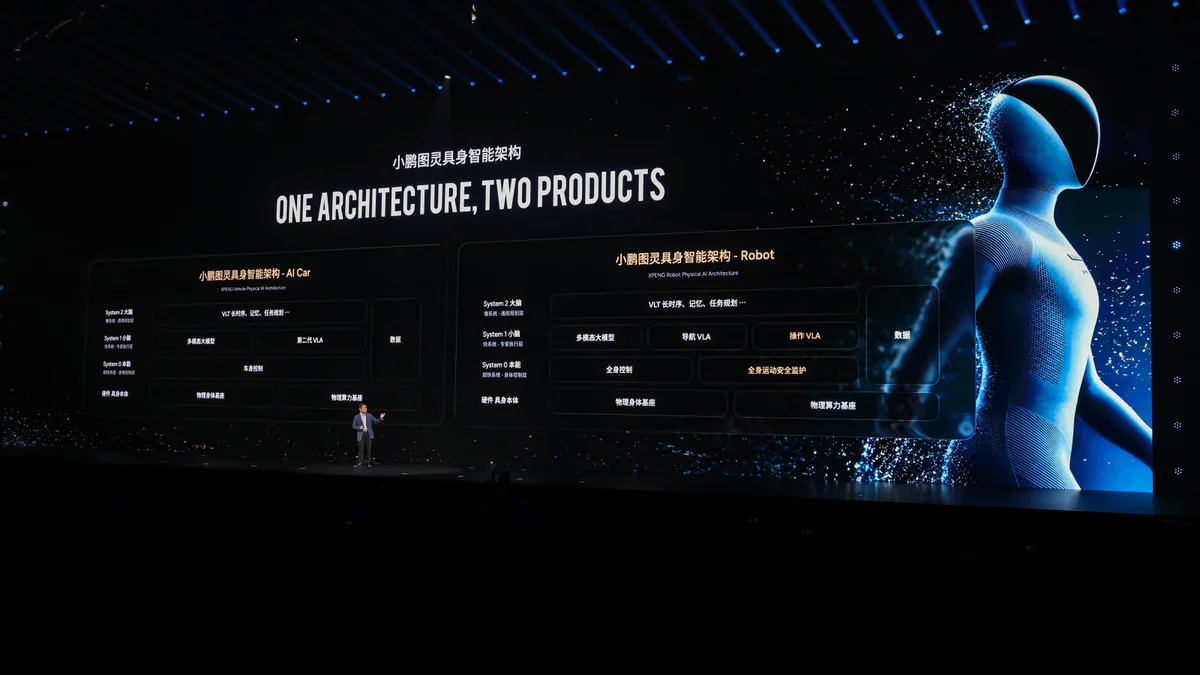
XPENG presents the Turing Physical AI Architecture as “one architecture, two products” at AI Day 2026. Image: XPENG.
XPENG also said its latest VLA 2.0 model, version 6.4.0, supports Agent-driven autonomous closed-loop training, increasing overall training speed by 10 to 12 times and enabling recursive self-improvement and model self-distillation.
The same architecture is reaching XPENG’s cars. Its X-VMC 2.0 vehicle motion control system connects propulsion, braking, steering and suspension, and a new Turing AI Co-driving feature, VLA Adaptive Deceleration, uses road-scene understanding to adjust deceleration and energy recovery. XPENG’s tests in urban congestion showed a 12.4 percent increase in usable driving range compared with energy recovery switched off, and the feature is scheduled for its first over-the-air rollout in December 2026. Since the rollout of VLA 2.0, XPENG reports a 13.93 percent reduction in vehicle accident claims in China.
The Robotaxi and the Road Ahead
XPENG’s Robotaxi programme has moved from staffed to driverless road testing in eight months and obtained its L4 demonstration operation qualification in Guangzhou, 11 months after the business was announced. Driverless passenger tests have begun, with demonstration operations in selected areas planned by the end of 2026.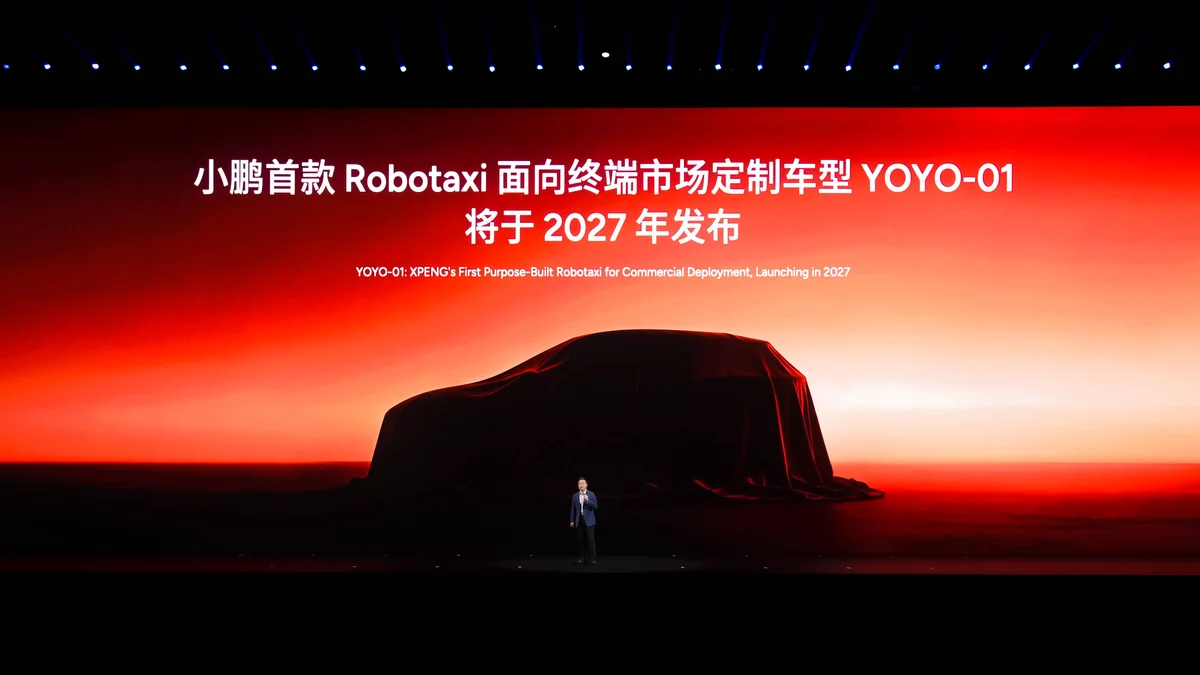
The YOYO-01, XPENG’s first purpose-built Robotaxi for commercial deployment, is scheduled for release in 2027. Image: XPENG.
XPENG is positioning itself as a technology and solution provider for autonomous mobility, supplying vehicle platforms and driving capabilities to operating partners, while its ARIDGE flying-car programme advances toward airworthiness certification.
Why It Matters
IRON puts XPENG in direct competition with a crowded field of humanoid developers, including Tesla, Figure and a wave of Chinese robotics startups, but its pitch is different: the same AI stack runs the car and the robot, and the car business supplies the data, testing and manufacturing scale. The store-assistant plan gives IRON a defined first job with measurable performance, and the January mass-production date, if met, would make it one of the earliest humanoids to move from prototype to production line.
The open questions are the ones XPENG did not answer on stage: no price, no weight, payload or battery-runtime figures, and no independent test of the robot working outside a staged demonstration. The Q1 2027 store training will be the first real-world evidence of whether IRON can do useful work, or whether it remains a showcase.
Sources
- XPENG, “XPENG Unveils Turing Physical AI Architecture and IRON Robot” (November 25, 2026)
- Tech Edition, “XPENG targets January 2027 for mass production of its IRON humanoid robot” (November 25, 2026)
- Robot Embodiment, “XPENG IRON Humanoid: Specs, Physical AI and the 2027 Production Plan” (November 25, 2026)
- Unite.AI, “XPENG Debuts IRON Humanoid and Outlines Store Training Plan” (November 25, 2026)