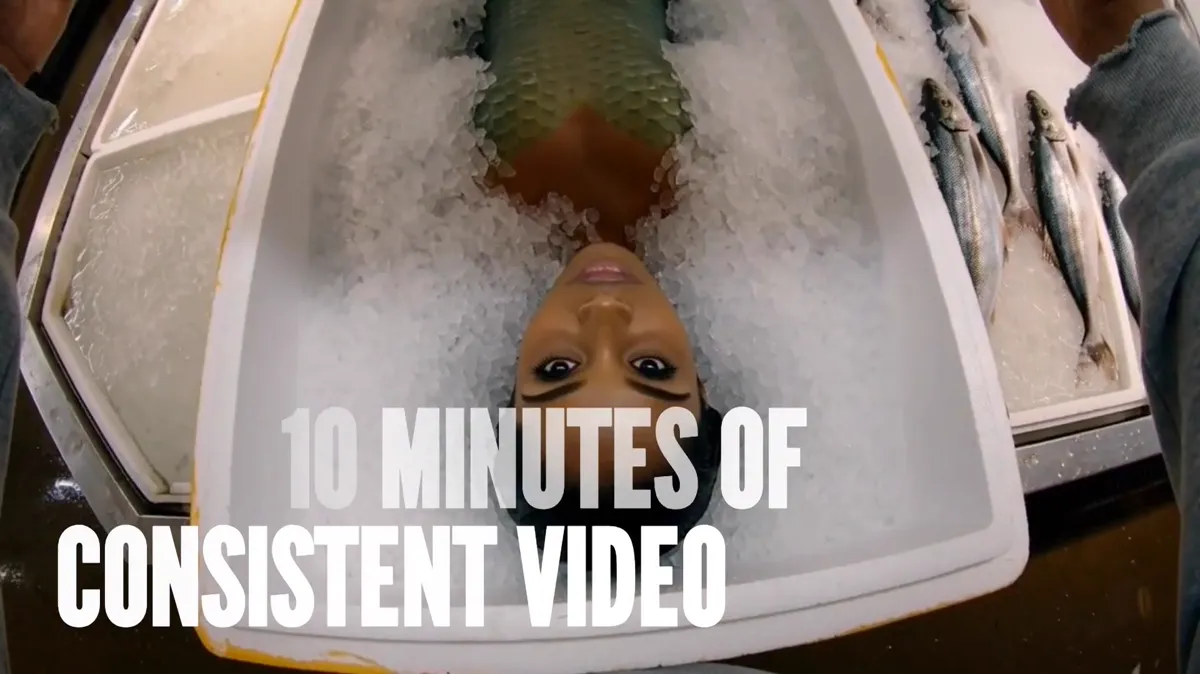
VideoGen, a San Francisco-based AI video company backed by Y Combinator, has unveiled VideoGen Model 1, its first AI video generation model. The model turns a text prompt, optionally paired with reference images, into a finished, multi-shot video up to 10 minutes long, complete with dialogue, audio and pacing. The company also opened applications for a $1 million pool of free AI credits for creators, filmmakers and studios.
The announcement, made October 20, 2026, pushes AI video generation well past the short-clip era. Where rival offerings have focused on clips measured in seconds, VideoGen is pitching an end-to-end production workflow: one brief in, one finished video out.
What Was Announced?
Model 1 combines creative planning, audio and video generation, and automated assembly in a single workflow, according to the company’s model page. Users start with a written brief and optional visual references. An AI “thinking harness” then develops the screenplay, dialogue, shots and pacing, carrying context across scenes to keep characters, locations, visuals, audio and narrative consistent. The planning system weighs storytelling, narrative arcs and even marketing persuasion to shape the finished piece around the user’s idea, whether that is a short film, a product ad or a longer video.
To show what that means in practice, VideoGen published a set of raw outputs “made with Model 1,” including a complete four-and-a-half-minute claymation film the company says was generated from a single prompt with no editing. A 32-second launch film accompanies the announcement.
Pricing and Availability
VideoGen has not published final pricing. Based on internal validation, the company says it expects Model 1 to cost more than 50% less than comparable models. Final pricing, official benchmarks and third-party validation are still underway, so that figure should be read as the company’s own estimate until independent testing lands.
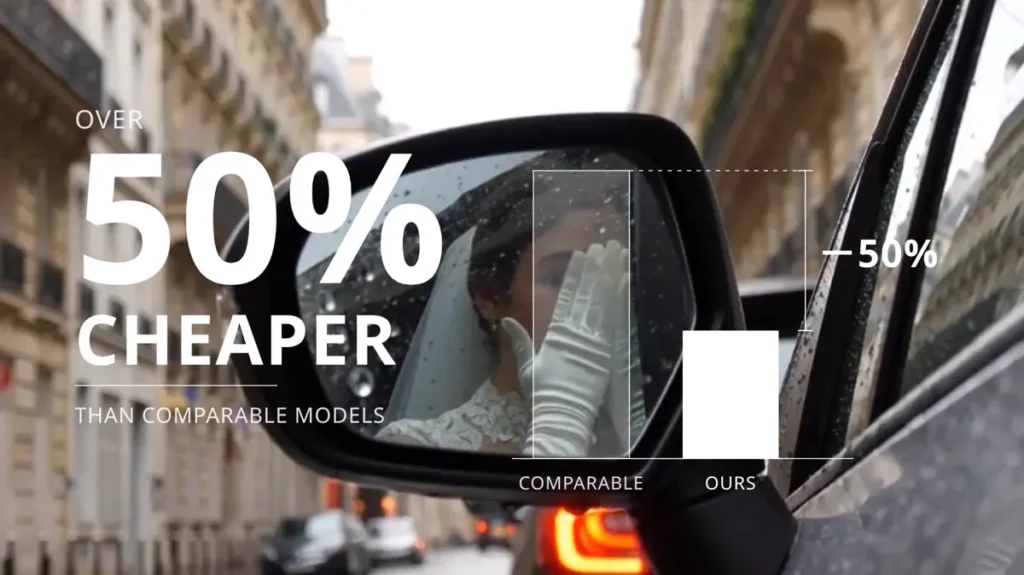
VideoGen says Model 1 should cost more than 50% less than comparable models, based on internal validation. Image: VideoGen
Access starts with a limited private-partner rollout that began October 20, 2026, with general availability to follow after additional safety testing.
Alongside the model, VideoGen opened applications for a $1 million pool of free AI credits aimed at creators, filmmakers and studios, including students and amateurs. The company plans to distribute the credits through the end of 2026, with individual allocations based on each project’s scope and scale. Selection will weigh the creative work and a viable distribution plan. To apply, creators follow the early-access link on the Model 1 page, sign in, and describe their project, distribution plan and the generation capacity they need.
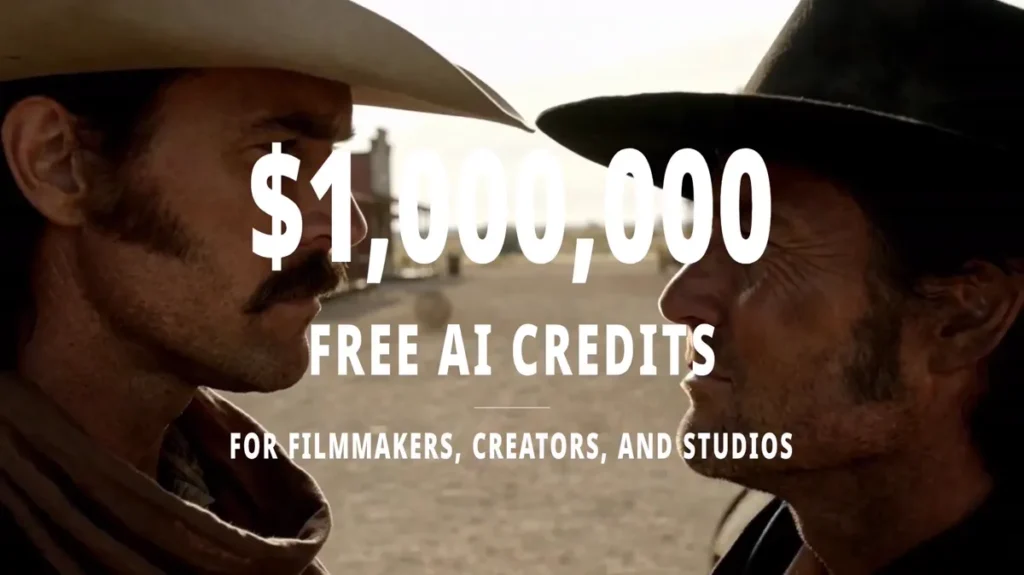
VideoGen is distributing $1 million in free AI credits to selected creators, filmmakers and studios through the end of 2026. Image: VideoGen
Safety Measures
Model 1 ships with safety guardrails designed to block adult and illegal content, and generated outputs carry invisible watermarks identifying their synthetic origins, according to the announcement.
Why It Matters
The video generation race has been defined by brevity. Midjourney’s V1 video model generates 5-second clips extendable to about 20 seconds, and HeyGen’s Video 1.0 made its headline the price ($0.01 per second) rather than the length. VideoGen is betting the next leap is duration plus direction: ten-minute, multi-shot videos where an AI system handles the screenplay and edit, not just the pixels.
“Lower costs and longer video generation give filmmakers room to work through scenes before they shoot and creators the ability to tell longer stories,” said Anton Koenig, CEO and co-founder of VideoGen. “Model 1 represents a major step toward AI becoming part of everyday production, from film pre-visualization to full-length YouTube videos and ads.”
The caveats matter. The cost claim and the quality bar both rest on VideoGen’s internal validation for now, with independent benchmarks explicitly pending. And the model is only in private-partner hands, so outside creators cannot yet test the consistency claims themselves. If the 10-minute promise holds up under third-party scrutiny, Model 1 could move AI video from a novelty clip tool toward something closer to an automated production assistant. Until then, the $1 million credit pool is the company’s way of getting real projects onto the model fast enough to prove it.