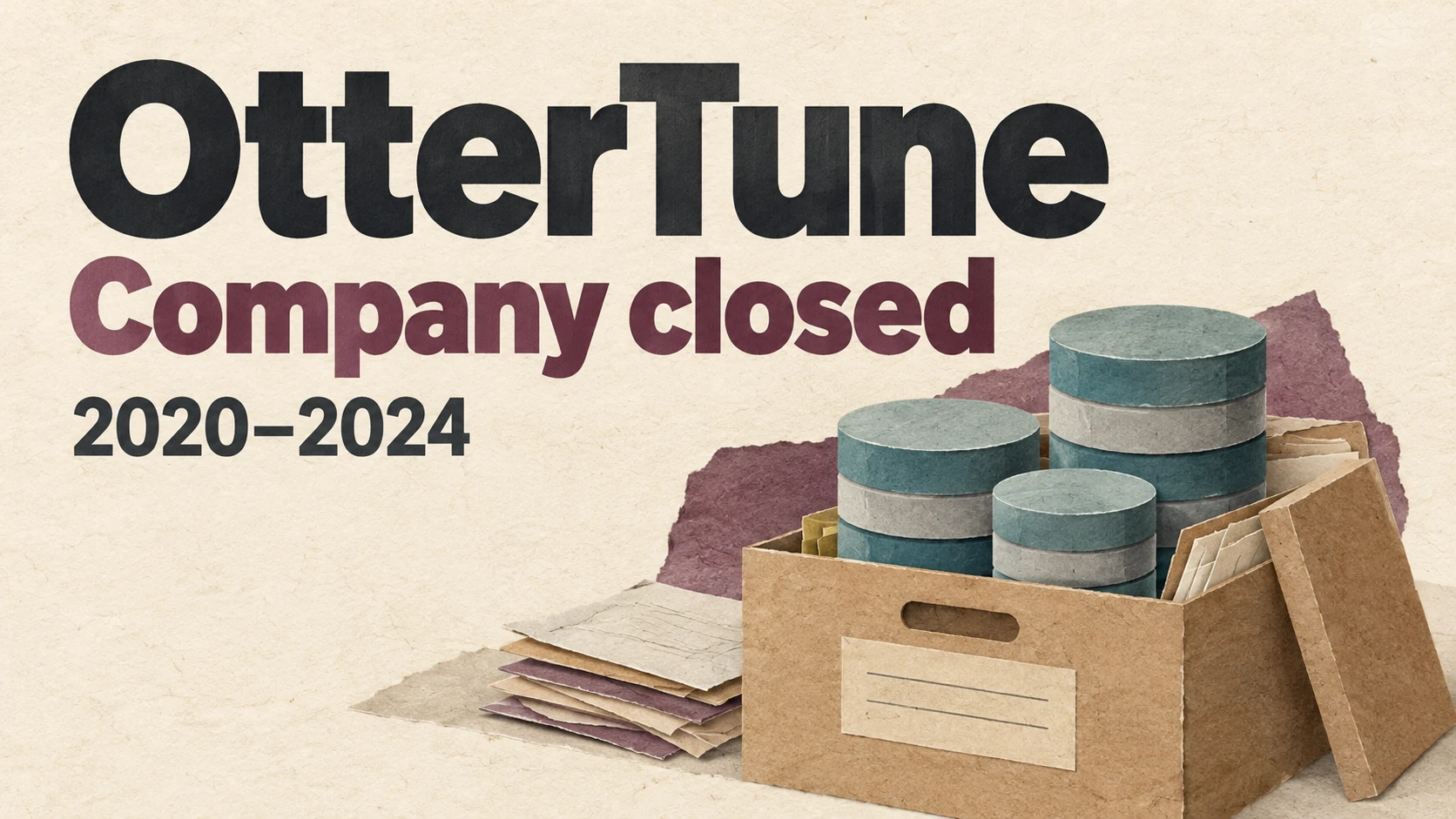
The image above is an original AI-generated editorial illustration of OtterTune’s closure, not a screenshot of an operating service.
Updated and sources checked: October 14, 2026.
OtterTune is no longer an operating company. Its official website identifies its lifespan as 2020–2024 and states that the company has ended. Treat this page as a historical product overview, not a recommendation to sign up for a currently supported service.
What was OtterTune?
OtterTune was a database-tuning startup originating from Carnegie Mellon University. It focused on automated database configuration: using performance information and machine learning to help select database settings for a workload.
The Carnegie Mellon research project page explains the underlying approach: learn from previous tuning efforts and workload measurements rather than treating every database installation as an entirely new experiment. The academic project and the later commercial company have different timelines. The university lists project years of 2013–2021; the company’s own site lists 2020–2024.
Can I still subscribe or start a free trial?
Do not rely on old listings advertising an OtterTune trial or subscription. The $220-per-database monthly plan previously listed on this page is not a verified current offer and has been removed. The current official website is a closure notice, not a live pricing or onboarding page.
The notice does not give a precise shutdown day or establish what happened to each former customer’s account, retained data or contractual arrangements. For those questions, consult your own account notices and records rather than assuming that a historical listing describes the outcome.
What remains useful for researchers?
The university project page links to publications about machine-learning-based database configuration, including a 2017 paper and later work on real-world database tuning services. These sources are useful for understanding the research problem and experimental approach. A research result is not evidence that a hosted commercial service is still available, nor a guarantee that the same configuration will help your workload.
What should former users or replacement buyers check?
If you are reviewing an old OtterTune integration, inventory it with your database administrator before changing anything. Record the configuration currently in use, any scheduled jobs, the access granted to the integration and the monitoring you still depend on. Decide which components need replacement or removal through your normal change-control process.
For a replacement tuning tool, evaluate these questions before connecting a production database:
- Compatibility: does it support your database engine, version and hosting environment?
- Scope: does it only recommend changes, or can it apply them automatically?
- Evidence: can you compare a representative workload before and after a change, including latency, throughput and resource use?
- Recovery: can you review the proposed settings, test them outside production and restore the previous configuration?
- Access and cost: what database permissions and data access are required, and how are instances, seats or usage billed?
Keep a baseline and test one controlled change at a time. Faster performance on one workload can conceal a regression on another; marketing claims are not a substitute for your own measurements. This checklist is general evaluation guidance, not an endorsement of a particular replacement or a claim that we tested OtterTune.
Our database tools directory can help you identify options to investigate. Verify each provider directly; a directory listing is not evidence of current availability or an endorsement.
Frequently asked questions
Is OtterTune still active?
The official company site says the company has ended and displays 2020–2024. We do not present it as an active subscription service.
Is the research the same as a supported product?
No. Academic publications can remain useful after a company closes. They do not establish ongoing commercial hosting, maintenance or customer support.
Sources: OtterTune’s company notice and the Carnegie Mellon OtterTune research project.