Oracle has abandoned a roughly $7 billion, five-year contract to lease about 100,000 advanced AI chips to Tencent after bowing to pressure from the Trump administration, Reuters reported on November 4, citing the Financial Times. The deal would have given the Chinese internet giant remote access to the chips, housed in Oracle data centers across Southeast Asia.
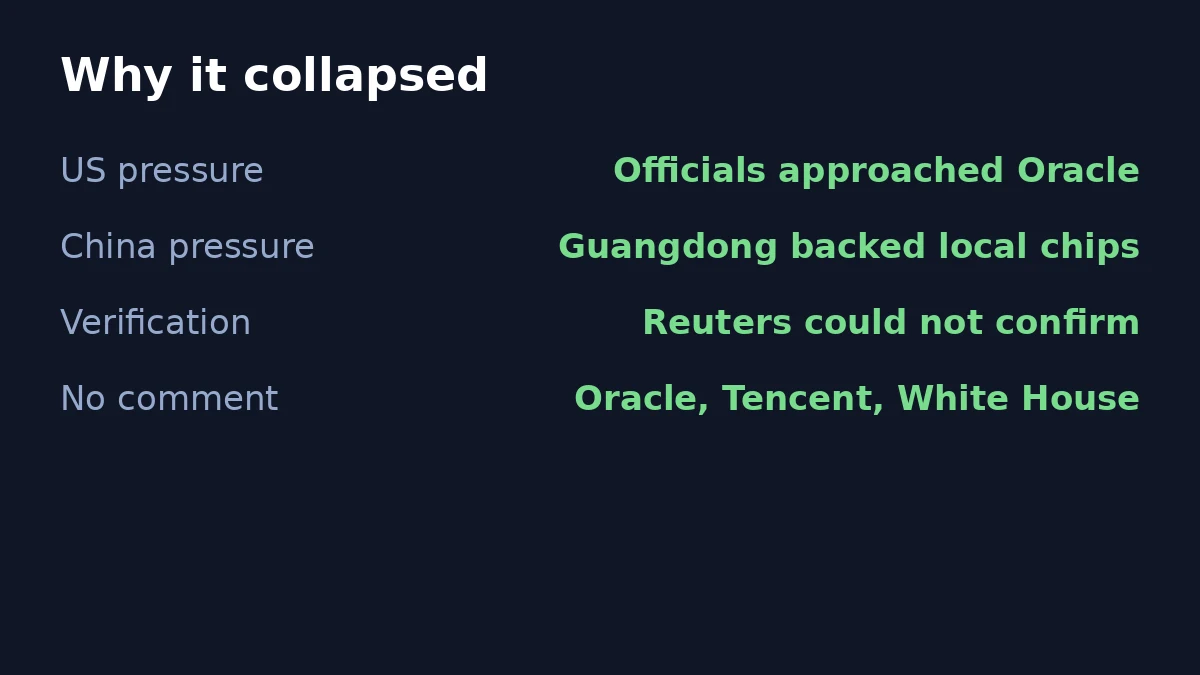
US officials approached Oracle to raise concerns about the arrangement, the FT said, citing people familiar with the matter. Tencent faced parallel pressure at home: top officials in Guangdong province, where the company is based, visited and pressed it to support domestic Chinese chips instead, the report added.
The Deal That Collapsed
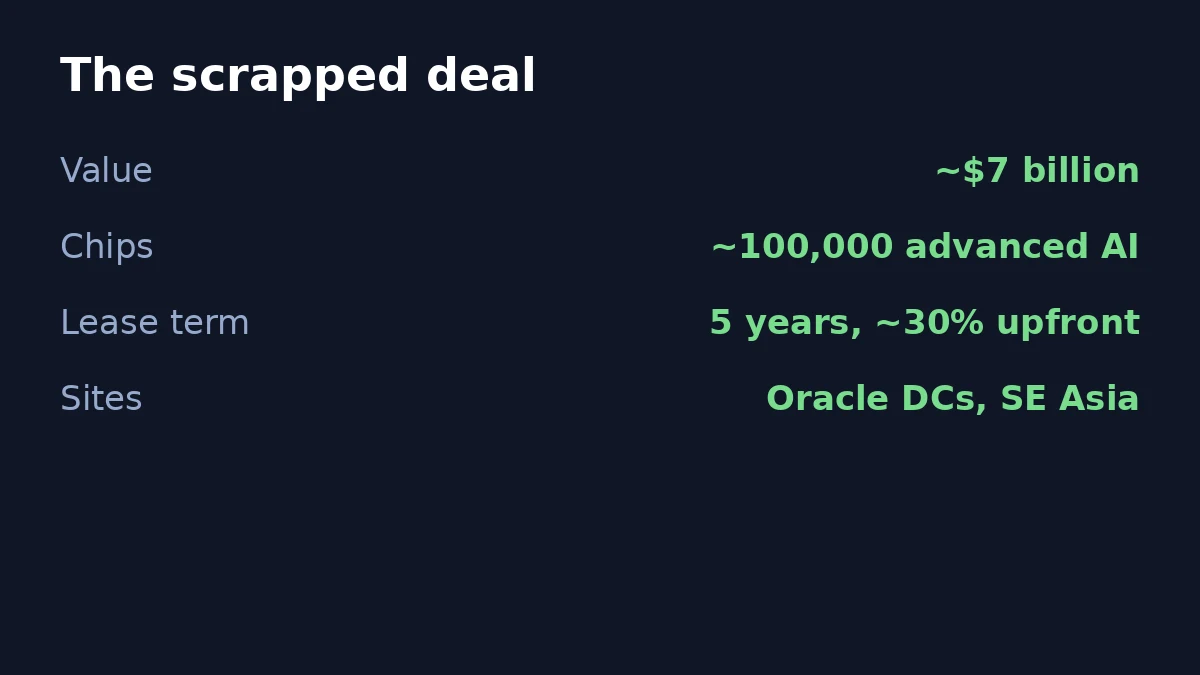
The Oracle Tencent AI chip lease was, according to the Financial Times, Tencent’s largest overseas lease deal ever signed. Under the contract, Tencent would have paid roughly 30 percent upfront for a five-year lease across multiple Oracle data centers in Southeast Asia.
The structure was designed to keep the hardware offshore while Tencent used it remotely, a workaround that effectively skirted Washington’s export restrictions on advanced AI processors. The chips involved were not available in China because of curbs imposed by Washington and Beijing alike, the FT reported.
Pressure From Both Sides
Washington’s objection centers on advanced computing power reaching Chinese firms despite export controls. The Trump administration has steadily tightened chip restrictions, and the Oracle arrangement was one of the largest attempts by a Chinese tech giant to access restricted-class compute through an offshore lease.
Beijing’s message pointed the other way. The Guangdong officials’ visits signaled China’s push for self-sufficiency in semiconductors, urging its tech champions to back domestic chipmakers rather than routing around restrictions through foreign cloud providers.
Caught between the two governments, the deal collapsed. Reuters said it could not independently verify the FT’s report, and Oracle, Tencent and the White House did not respond to its requests for comment.
Why It Matters
The collapse shows how geopolitics now overrides commercial AI deals at the largest scale. A $7 billion contract, already signed, was undone by direct government intervention on both sides of the Pacific, a precedent that will hang over every future offshore compute arrangement involving Chinese buyers.
For Tencent, the loss closes off one of the few channels to cutting-edge AI compute, at a moment when domestic alternatives still lag. For Oracle, walking away from one of its biggest cloud deals underscores how export-control politics have become a core business risk for US cloud providers selling to China-adjacent demand.