OpenAI said on November 4, 2026 that it will acquire Pierre Computer Company, Inc., the developer-tools startup behind Code Storage and a family of open-source code libraries already running inside Codex. The deal folds Pierre’s Git-based code infrastructure directly into OpenAI’s coding agent platform, extending Codex from writing code toward storing, reviewing and shipping it.
The announcement lands two days after OpenAI unveiled Pando, its in-house Git backend, which the company says cut median code-push latency by nearly 80%. Together, the two moves show OpenAI rebuilding the plumbing underneath AI-assisted software development.
What Was Announced?
According to OpenAI’s announcement, the acquisition aims to expand Codex’s tools “for building, understanding, and reviewing code.” Pierre’s existing libraries, Trees and Diffs, are already used inside the Codex app to help users browse files and review changes, and OpenAI plans to work with the Pierre team to adapt Git workflows to the way teams work with coding agents.
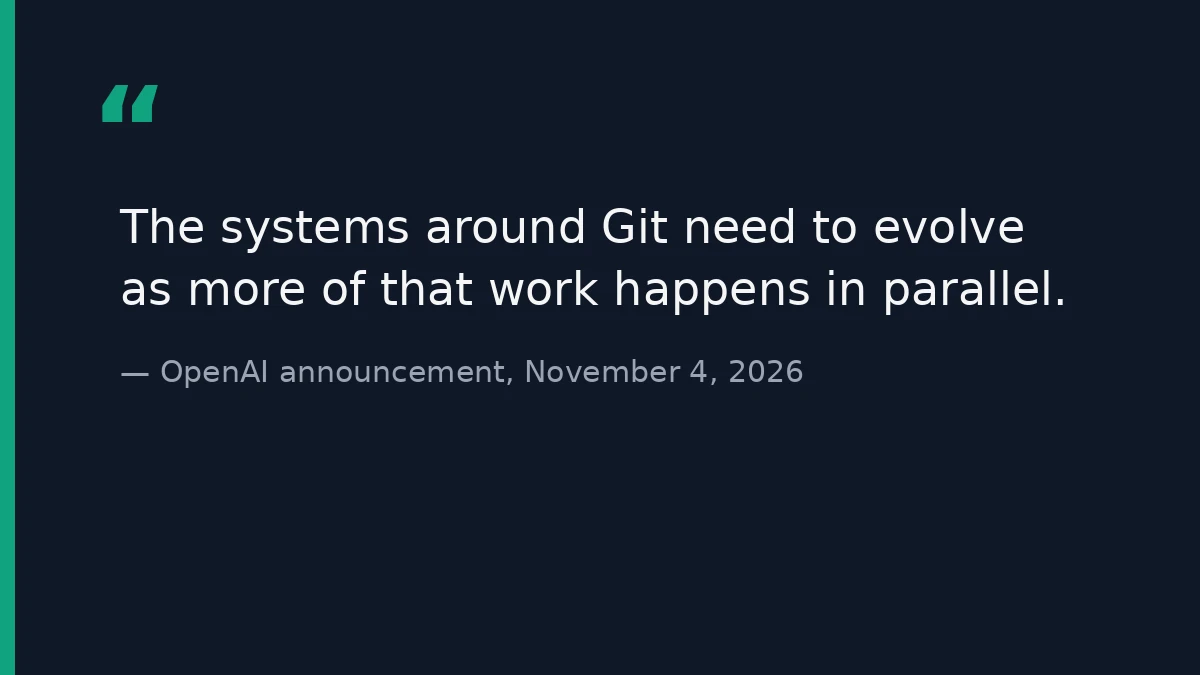
OpenAI said its own engineering work has shown that “the systems around Git need to evolve as more of that work happens in parallel.”
The deal was first reported as an Axios exclusive. Financial terms were not disclosed, Axios reported. Closing is subject to customary conditions, including receipt of regulatory approvals; until then, the two companies remain separate and independent.
Key Features and Details
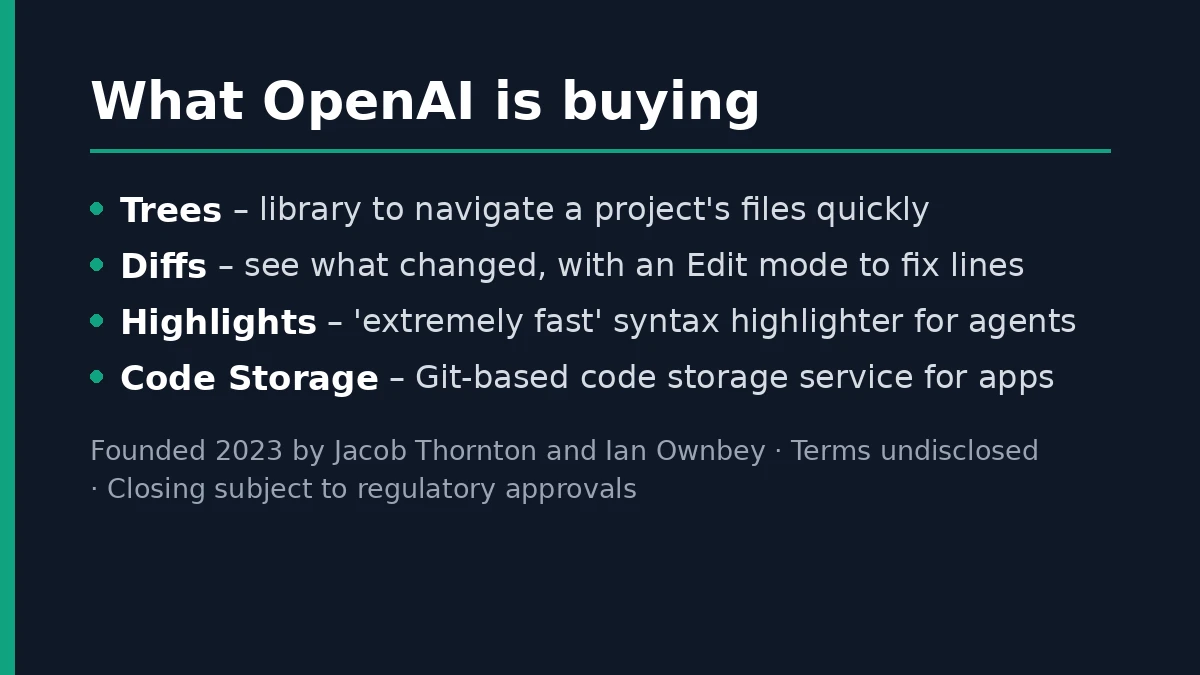
Pierre, founded in 2023 by Bootstrap co-creator Jacob Thornton and former Twitter engineer Ian Ownbey as part of Y Combinator’s Winter 2023 batch, builds low-level Git infrastructure designed for machine use. Its lineup includes:
- Trees: a library that lets developers quickly navigate a project’s files.
- Diffs: a library that makes it easy to see what changed, with an Edit mode that lets a reviewer fix a line of code where a problem is spotted.
- Highlights: a recently released syntax highlighter OpenAI describes as “extremely fast,” updating as a developer types or an agent streams code.
- Code Storage: a distributed Git-based storage service with an API designed for machines, already used by AI app builders including Lovable, Poke, Anything, Bolt, Amp and Parahelp.
OpenAI said Pierre’s open-source projects will remain open source and that it will keep contributing to them. Existing Code Storage customers can continue using the service after the acquisition closes while OpenAI works to integrate its features into Codex, though the company gave no timeline for that migration.
Why It Matters
The acquisition puts OpenAI deeper into territory long dominated by Microsoft’s GitHub. As Axios framed it, OpenAI is buying the startup whose technology it already relies on, then building that technology into Codex on its own terms. With AI agents now generating code at a scale that strains traditional Git workflows, owning the storage and review layer gives OpenAI control over the full loop, from the first branch an agent creates to deployment.
OpenAI said its ambition is to “set the standard for modern software development: from the first branch an agent creates to that magic moment when code is deployed to the world.” If regulators clear the deal, Codex could soon offer developers an end-to-end environment where agents not only write code but store, review and ship it, all inside OpenAI’s own infrastructure.
Sources
- OpenAI: OpenAI to acquire Pierre Computer Company, Inc. (official announcement, November 4, 2026)
- The Neuron: OpenAI’s Pierre Deal Brings the AI Coding Fight to GitHub
- Unite.AI: OpenAI to Acquire Pierre Computer and Bring Code Storage to Codex
- Modeldex: OpenAI to Buy Pierre, the Startup Behind Code Tools Already Inside Codex