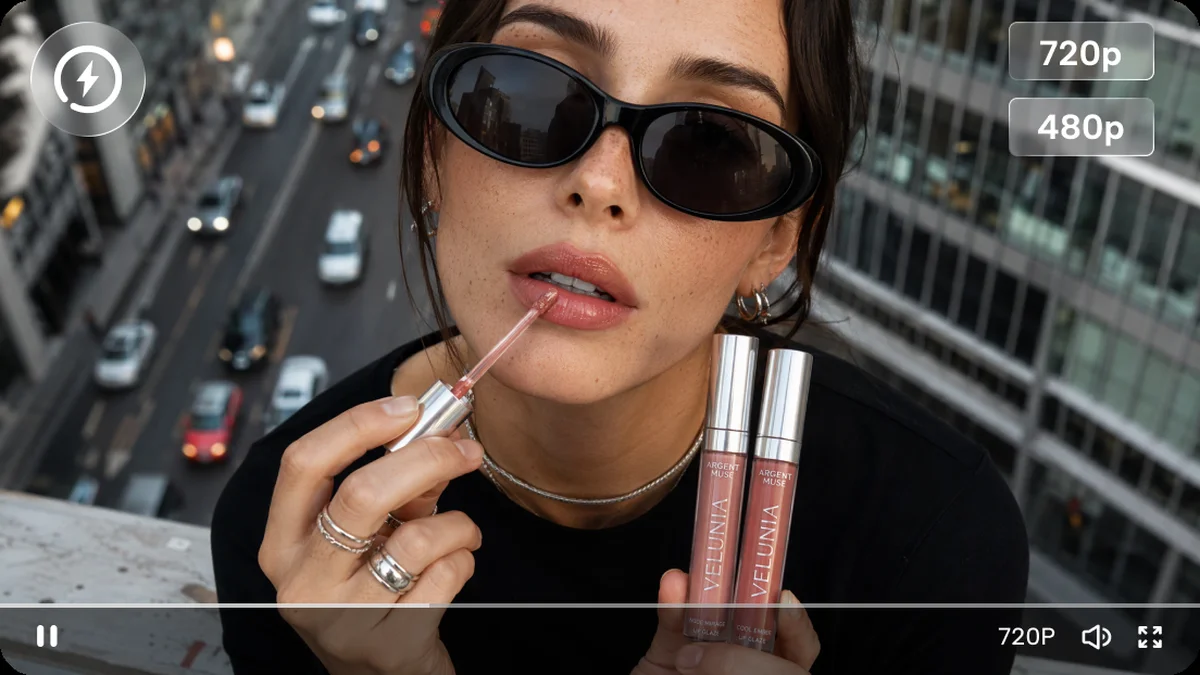
ByteDance has opened the API for Seedance 2.5 Flash, a faster and cheaper version of its Seedance 2.5 video model, giving developers and creators a lower cost way to test video ideas before paying for a full quality render. BytePlus, ByteDance’s cloud division, announced the model on November 12 and opened the API on November 15 through its ModelArk platform, and the model has since appeared on fal, PixVerse and ComfyUI.
Flash is positioned as the quick draft version of Seedance 2.5 rather than a replacement for it. “Seedance 2.5 Flash lets you test visual concepts 2x faster with lower-resolution previews and create videos up to 30 seconds long,” Dreamina says on its official product page, framing the model as a tool for trying ideas cheaply before committing to a final cut.
What Was Announced?
Seedance 2.5 Flash is an accelerated tier of Seedance 2.5, ByteDance’s flagship video generator, built by the Doubao team and sold internationally through BytePlus. It generates text-to-video and image-to-video clips at 480p or 720p, up to 30 seconds long, with synchronized audio built in. BytePlus says it runs at nearly twice the generation speed of Seedance 2.5 with quality close to the flagship, though no public benchmark backs that claim yet.
The model is available in Dreamina’s AI video generator, Canvas and Agent workflows, and in CapCut. Developers can call it on BytePlus ModelArk under the identifier dreamina-seedance-2-5-flash-261115. It also runs in ComfyUI from version 0.45.4, and third party platforms fal and PixVerse have added it to their model lists.
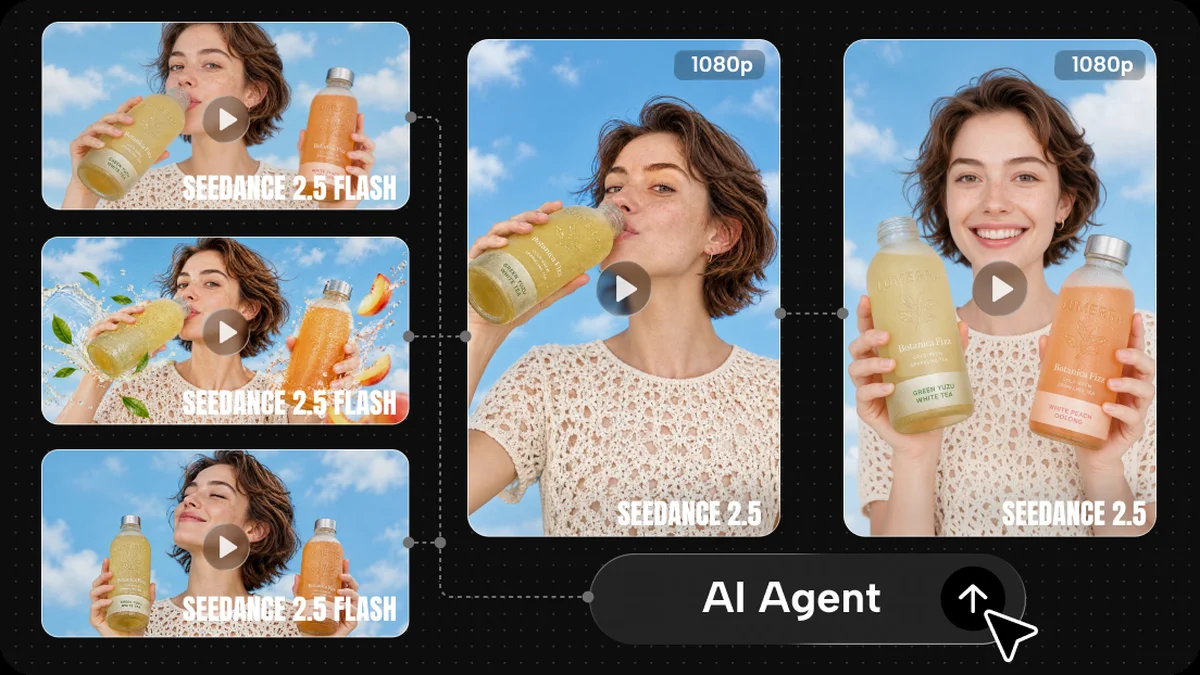
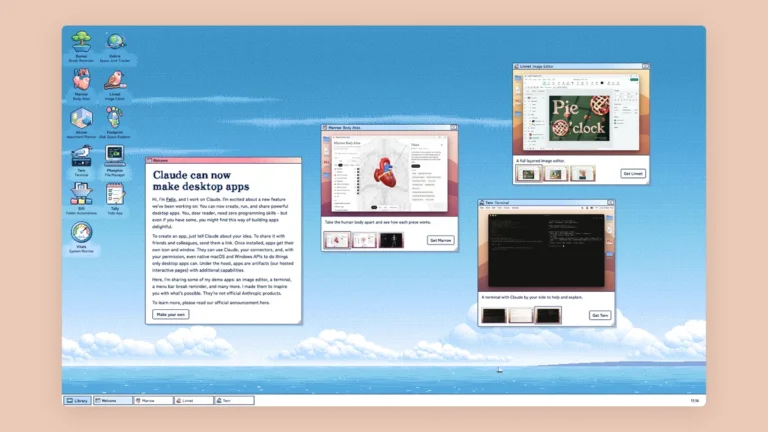
Dreamina’s AI Agent uses Seedance 2.5 Flash for quick previews before a Seedance 2.5 final render. Image: Dreamina (ByteDance).
https://x.com/BytePlusGlobal/status/2120760891344036304
Pricing and Availability
The price cut is the clearest part of the announcement. BytePlus lists Flash at $7.00 per million tokens for 480p and 720p, against $10.70 for the full Seedance 2.5, a reduction of about 34%. In per second terms, a 720p clip costs about $0.152 per second, so a 10 second clip costs about $1.52, while 480p costs about $0.07 per second. BudgetPixel, which resells the model, measured a 4 second 480p prompt rendering in 61 seconds on Flash against 123 seconds on Seedance 2.5, matching BytePlus’s speed claim in one real test.
Flash is live now in Dreamina, CapCut, ComfyUI, fal and PixVerse. BytePlus opened the ModelArk API on November 15, and Runway posted availability on November 13. Dreamina lists Flash in its model dropdown rather than making it the default, so users pick it when speed matters more than final quality.
What It Gives Up
The lower price comes with hard limits. Flash tops out at 720p, with no 1080p or 4K option, while the full Seedance 2.5 reaches 1080p and 4K for enterprise accounts. It also accepts fewer references: up to 10 images, 5 videos and 5 audio clips in one request, against 50 reference files for the flagship. Dreamina is direct about the tradeoff, saying Flash is not a complete replacement for Seedance 2.5 because the two models serve different needs, with Flash built for fast previews and the standard model kept for polished 1080p finals.
Two caveats apply to the headline numbers. First, the “nearly twice as fast” figure is BytePlus’s own claim, and no independent benchmark has been published. Second, the claim that quality stays close to the flagship is also a vendor statement, not a measured result. The prices, by contrast, come from BytePlus’s published price list and are confirmed by several independent trackers reading the same page.
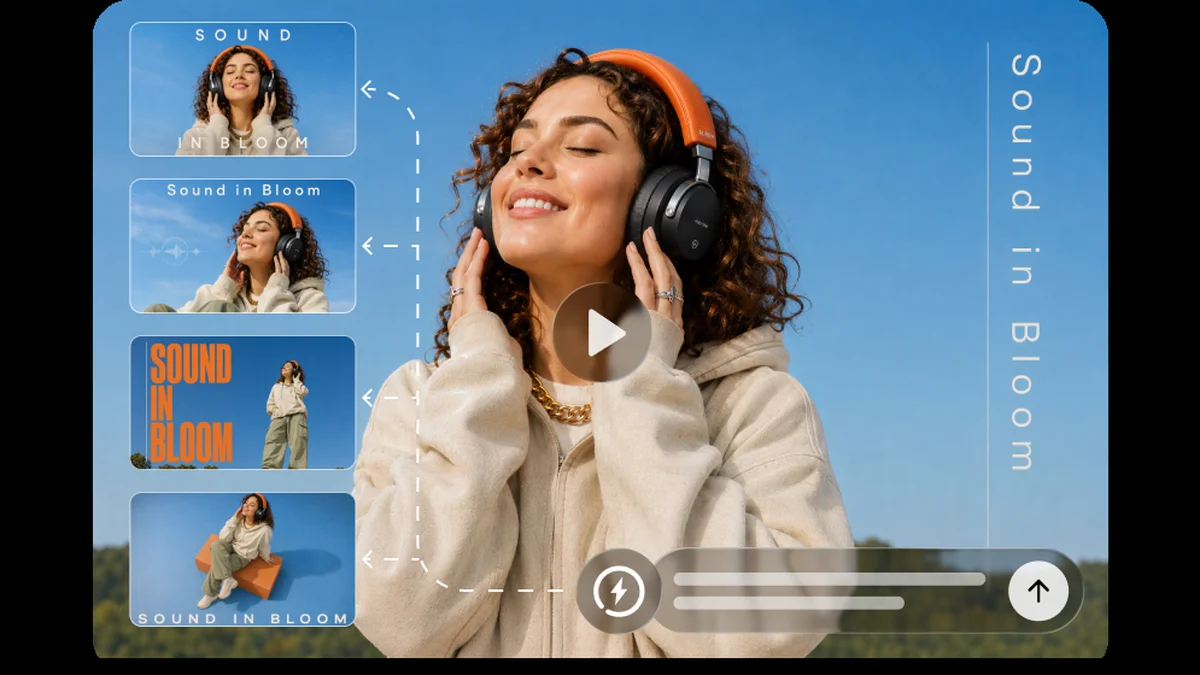
Flash keeps native audio, so clips arrive with sound built in. Image: Dreamina (ByteDance).
Why It Matters
Flash arrives in the middle of a price war in AI video. ByteDance’s flagship Seedance 2.5 launched on July 31, and since then fal has shipped FLUX 3 Max, a video model that renders a 10 second clip in about 11 seconds, while Alibaba and Tencent launched Qwen4-Max and Hy4 on November 16. Every lab is now competing on the same three numbers: speed, price and quality. Flash concedes quality at the top end and wins on the other two, which is the combination that matters most to the people who generate video in bulk: advertisers testing many concepts, marketers producing high volume campaigns, and developers building video features into apps.
That is exactly how Dreamina sells it. The product page pitches Flash for quick motion tests, camera direction checks and batch previews, and for high frequency marketing assets such as animated product shots and posters. A team can run ten rough versions of an ad through Flash, pick the winner, and only then pay the flagship price for the final render. For ByteDance, the model also keeps developers inside its own ecosystem, since the cheapest way to call Seedance is now through BytePlus rather than a reseller.
The open question is whether the quality gap is as small as BytePlus claims. If Flash clips hold up at 720p for social and ad placements, the price cut could pull a large share of everyday video generation down to the cheaper tier. If they do not, Flash will stay what Dreamina says it is: a fast way to test ideas, with the real work still done by the full model.
Sources
- Seedance 2.5 Flash: Test Video Ideas Fast and Spend Less (Dreamina, official product page)
- Introducing Dreamina Seedance 2.5 Flash (BytePlus on X, November 12, 2026)
- Seedance 2.5 Flash Price: What a 720p Clip Costs (Creative AI News, November 2026)
- ByteDance opens its cheaper Seedance 2.5 Flash video model to API users (Startup Fortune, November 15, 2026)
- Seedance 2.5 Flash Is Live, So Testing AI Video Costs Less (cwyz, November 16, 2026)