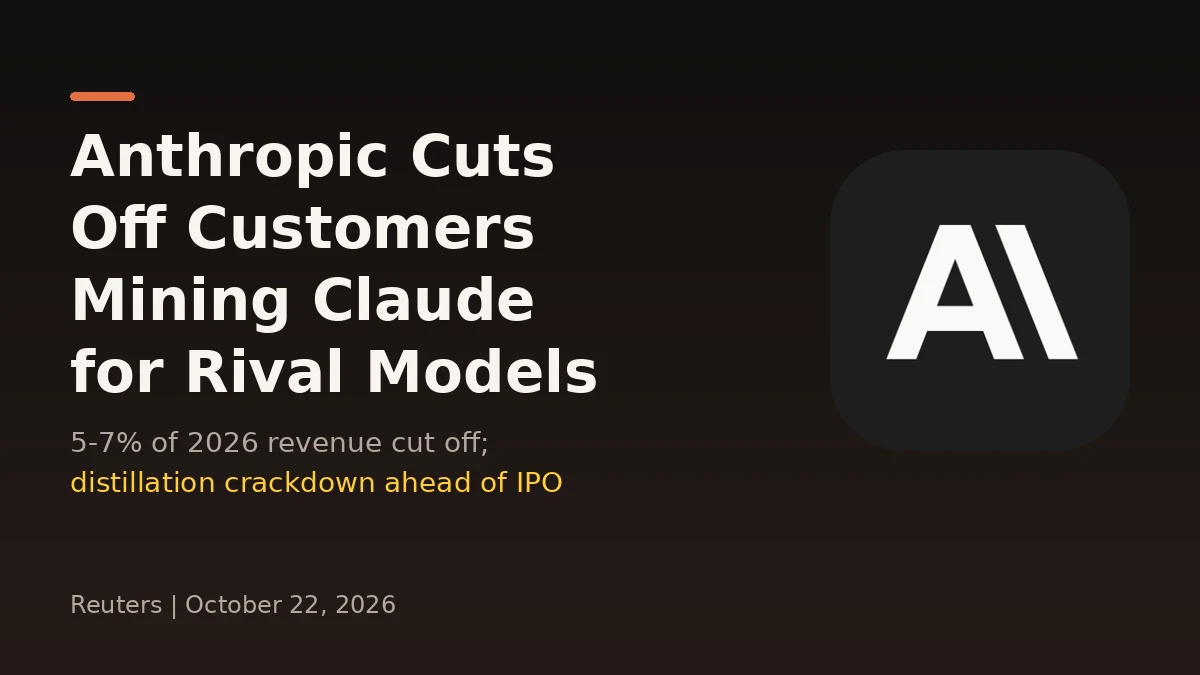
In an unusual move for a company racing toward what could be the largest IPO in history, Anthropic has deliberately cut off a meaningful slice of its own paying customers, telling investors the accounts were being used by Chinese AI labs to quietly mine Claude’s capabilities for their own models, Reuters reported on Thursday.
The accounts represented between 5% and 7% of Anthropic’s revenue in the first nine months of the year, according to investors who attended a company meeting in San Francisco last week and spoke to Reuters.
What Anthropic Alleged
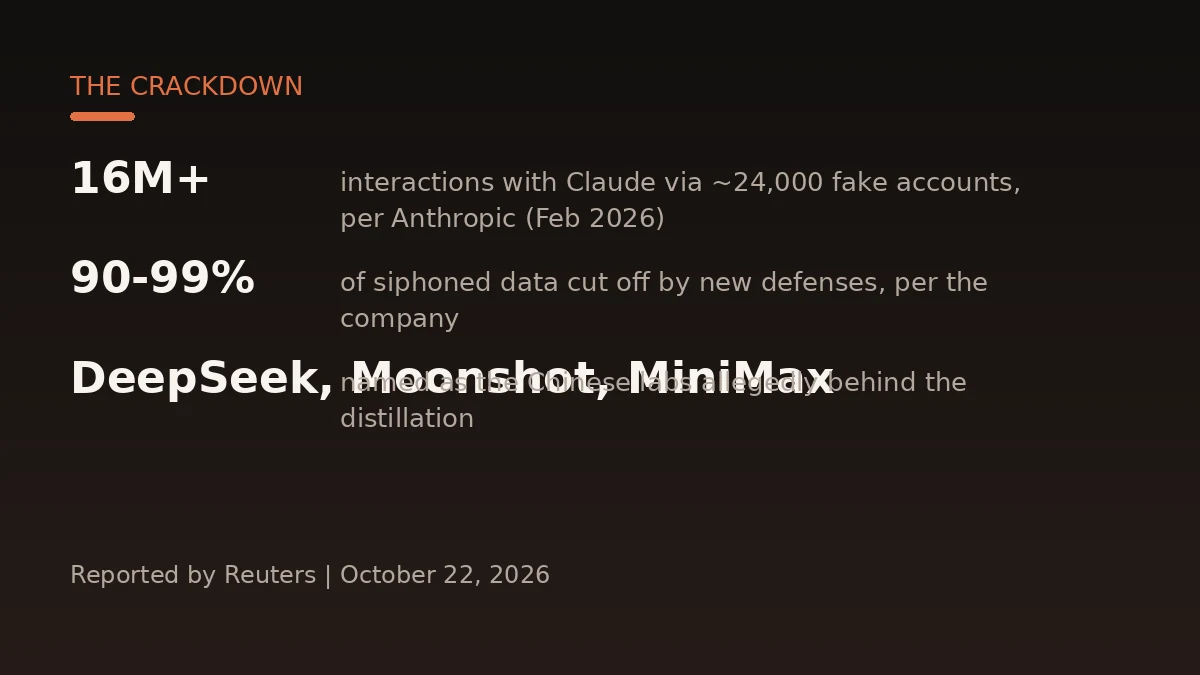
The technique at the center of the dispute is distillation: a smaller “student” model learns by studying the outputs of a larger “teacher” model, essentially absorbing its capabilities secondhand. In February, Anthropic said Chinese labs including DeepSeek, Moonshot and MiniMax had generated more than 16 million interactions with Claude through roughly 24,000 fake accounts, all in violation of its terms of service.
Anthropic views the practice as more than a contract violation. It considers it a loss of intellectual property with national security implications. The company rolled out new defenses earlier this month, including access restrictions, proxy blocking and bans on tens of thousands of accounts, which it says has cut off 90% to 99% of the data being siphoned. Anthropic is now telling investors the crackdown has effectively stopped Chinese developers from distilling its models.
Graphic: GPTOnline, using Anthropic assets
The IPO Context
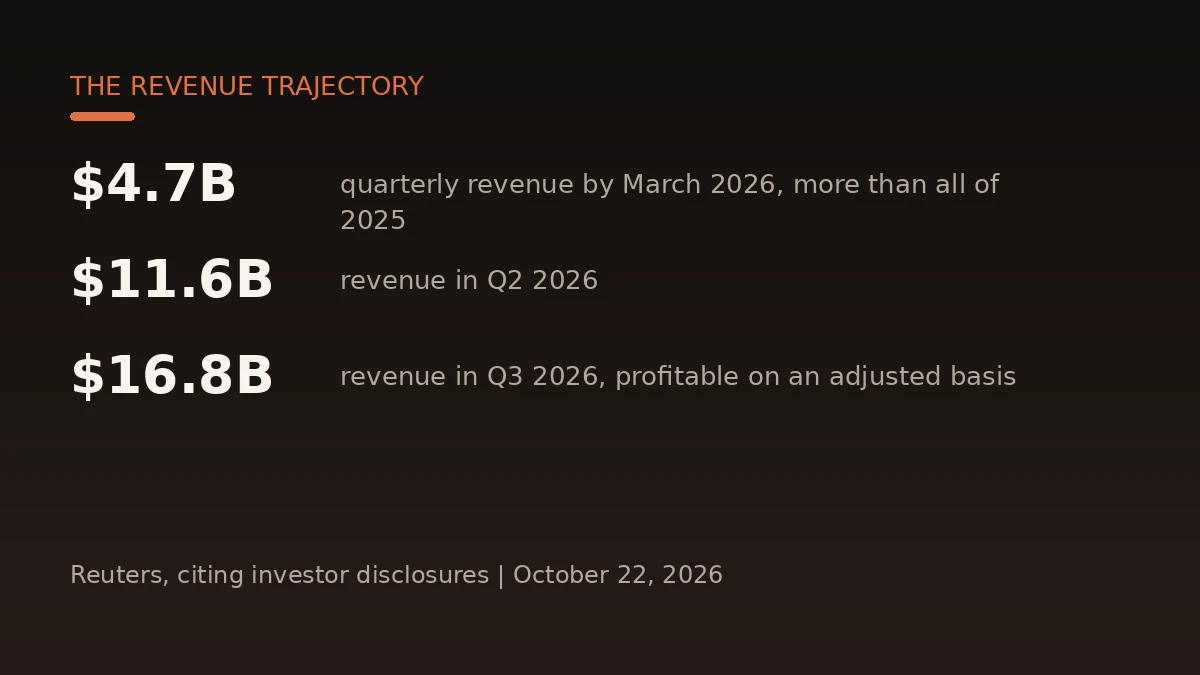
The disclosure gives Anthropic an explanation for something investors were already nervous about: a month-to-month growth deceleration. The underlying numbers remain extraordinary. Anthropic brought in $4.7 billion in a single quarter by this past March, more than in all of 2025, followed by $11.6 billion in the second quarter and $16.8 billion in the third, the company told investors. The company has also said it was profitable on an adjusted basis in the third quarter.
Still, Reuters has reported that some investors are now discussing a valuation near $1.5 trillion for the IPO, down from the roughly $2 trillion once expected. Anthropic is expected to publicly file its S-1 prospectus as early as late October, with a roadshow beginning the week of November 9 and a listing targeted for mid-November.
Graphic: GPTOnline, using Anthropic assets
Why It Matters
The episode captures a tension at the heart of the AI boom. Frontier labs sell API access to the very competitors trying to close the capability gap with them, and cheaper open-source models from Chinese labs remain one of the most common concerns investors raise about Anthropic’s valuation. By cutting off the suspected accounts, Anthropic is betting that starving rivals of training signal will slow their progress, not just stop a few bad actors from gaming the terms of service.
The real question, as Reuters framed it, is whether the crackdown and the short-term revenue hit it cost will actually buy Anthropic a lasting distance from its open-source rivals, or only a temporary edge.
The story also underscores how quickly AI agents are becoming the industry’s risk surface. A new survey of more than 380 security and technology professionals by Salt Security found that 86% of organizations now have at least one AI agent operating, and 77% have agents chaining actions together across other agents. Yet only 18% of organizations say they can automatically stop an agent that starts behaving unexpectedly, and just 13% can trace a complete path from instruction to outcome across every agent involved.