Anthropic has released Claude Fable 5.2 and Claude Mythos 5.2, its most capable models for technical work, on November 9, 2026. The company says the pair set a new bar in coding, finance and the sciences, and they arrive at a lower price than the generation they replace. It is Anthropic’s first frontier model release since chief executive Dario Amodei called for a slowdown in AI development in September, according to Bloomberg.
Fable 5.2 is available to all users, while Mythos 5.2 goes to vetted organizations through Anthropic’s Life Sciences and Cyber Verification Programs. The two models share the same underlying system, Anthropic says, with Fable carrying strong cybersecurity and biology safeguards and Mythos offering the same capabilities with fewer restrictions for approved research.
What was announced
The headline numbers are speed and price. Anthropic says the new models generate outputs up to 30% faster than the 5.1 generation, and they cost $8 per million input tokens and $40 per million output tokens, down from $10 and $50. An optional fast mode speeds up token generation by up to 2.5 times for $16 per million input tokens and $80 per million output tokens.
Fable 5.2 is available now on Claude apps, Claude Code and the Claude Platform, including Amazon Web Services, Google Cloud and Microsoft Azure, under the model ID claude-fable-5-2. Anthropic is also running a launch promotion this week, giving subscribers on eligible paid plans extra Fable usage.
Benchmarks: ahead of Opus 5.5 on most tests
Anthropic’s own benchmark table puts Fable 5.2 ahead of Opus 5.5, its strongest daily driver, on almost every capability it evaluated. On agentic coding, Fable 5.2 scored 49.1% on FrontierCode 2.0, against 32.4% for Fable 5.1 and 45.5% for Opus 5.5, and 69.9% on FrontierSWE v2, against 56.3% for its predecessor. On agentic scientific research it reached 74.6% on Terminal-Bench-Science, up from 52.6%, and on multidisciplinary reasoning it scored 74.2% on Humanity’s Last Exam with tools, against 65.6% for Fable 5.1.
The cybersecurity numbers are reserved for Mythos 5.2, the version without Fable’s safeguards. It scored 76.3% on CyScenarioBench, against 61.7% for Mythos 5.1, and 89.6% on CVE rediscovery. On robotics, Fable 5.2 scored 64.9% on the RoboDojo Sim benchmark, more than double Fable 5.1’s 27.6%. All of these figures are Anthropic’s own, and no independent benchmarks have been published yet.
Fermat’s Last Theorem in 30 hours
The most striking claim in the announcement concerns mathematics. Anthropic says a team of 1,000 Fable 5.2 agents fully formalized the proof of Fermat’s Last Theorem in just 30 hours, with minimal human intervention. The first formalization, performed by an unreleased research version of Claude, took 11 days. Fable 5.2 needed one third of the action tokens and produced a proof seven times shorter. For comparison, Opus 5.5 with the same 1,000-agent setup completed only 26% of the formalization in 18 hours.
The same prerelease testing produced two solved open problems in black hole physics, both concerning holographic duality. In one, Fable 5.2 completed a calculation first laid out in 2003 that had been too laborious to finish. In the other, it found the exact limit of a technique physicists have used for more than 15 years to rule out candidate theories of quantum gravity.
Real hardware, designed from scratch
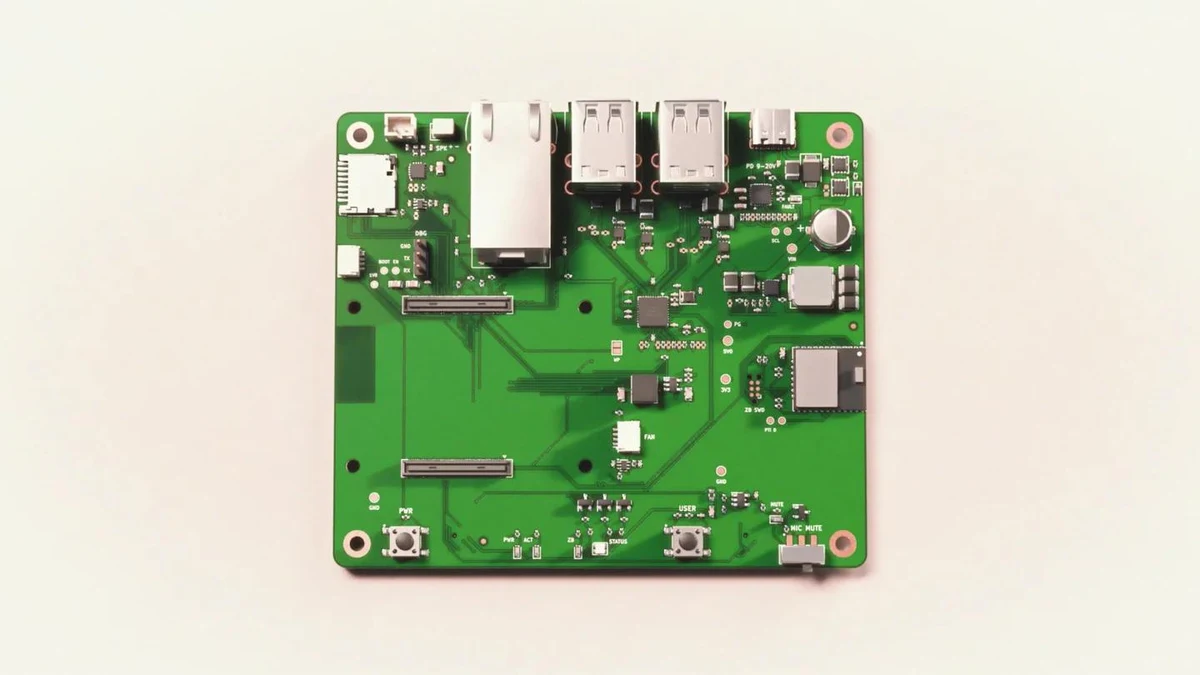
Anthropic also tested the model on physical engineering. Working with Diode Computers, Fable 5.2 designed three working electronic devices from a one-paragraph prompt: a home voice-assistant hub, a USB speakerphone and a handheld virtual pet. Claude wrote the specifications, selected components, routed the four-layer circuit boards, modeled the enclosures and programmed the software. Each board was ready for manufacturing in under a day, and all three devices worked without electrical modifications.
On protein folding, Claude Mythos 5.2 found a new way to predict the structure of a whole adeno-associated virus capsid, a shell built from dozens of proteins that existing models cannot predict as a unit. In Anthropic’s tests it accurately modeled 28 of the 34 capsids it attempted.

In software engineering, Anthropic says more than 90% of the changes merged into its core codebase are now written by Claude with human guidance. A team of agents running an earlier version of Fable 5.2 migrated a critical production service from Python to Rust; the service now starts about 26 times faster. In a separate experiment, Fable 5.2 coordinated more than 1,000 subagents over eight days to design a prototype operating system from an empty folder, producing a working system that boots on a laptop.

Safety testing and safeguards
Anthropic says it ran extensive prerelease safety testing, including evaluations by external groups such as the UK AI Security Institute, Frontier Design and METR, and assessed the risk of unsafe behavior in high-stakes situations as low. In sandbox-escape testing, Mythos 5.2 used credentials or files placed outside its sandbox in 3.1% of scenarios, down from 39% for Mythos 5 and 21% for Mythos 5.1. Fable 5.2’s safeguards are as robust as Fable 5.1’s, Anthropic says, but produce about 55% fewer unnecessary blocks. The company also says Fable 5.2 has its strongest-ever protections against distillation, and that its techniques have reduced the data harvested by distillers by 90% to 99%.
Why it matters
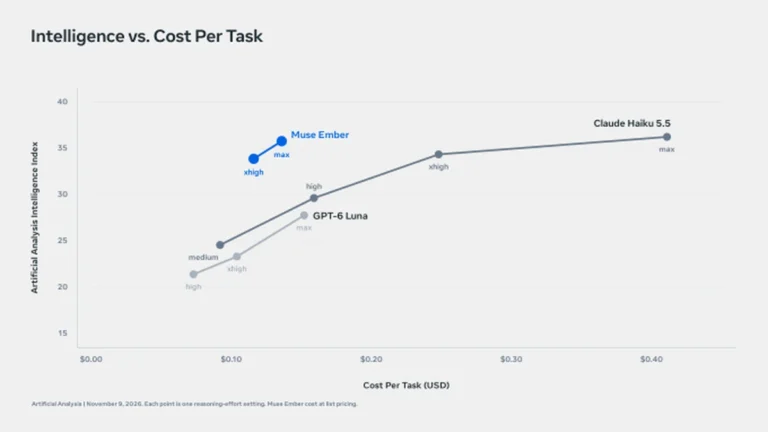
Fable and Mythos are Anthropic’s flagship line for the hardest technical work, and the 5.2 release lands in a crowded week for frontier models: Meta released Muse Ember, its cheapest model yet, on the same day. What sets this release apart is not a single score but the range of the demonstrations: a formal mathematics proof completed in hours, open physics problems solved, working hardware designed end to end, and a production service rewritten in a new language. The caveats matter too. The benchmark figures are Anthropic’s own, and the most dramatic results were produced in Anthropic’s own prerelease environment. Independent researchers will now have the chance to test whether Fable 5.2 lives up to those numbers in the open.
Sources
- Introducing Claude Fable 5.2 and Claude Mythos 5.2, Anthropic, November 9, 2026
- Testing Claude on real-world electronics design, Anthropic, November 9, 2026
- Anthropic releases first frontier models since Amodei’s call for slowdown, Bloomberg, November 9, 2026