India has launched its first homegrown sovereign foundation models under the IndiaAI Mission. The Chariot-1 suite, unveiled in New Delhi on November 26, pairs an 11-billion-parameter language model with a text-to-speech model covering English and 10 Indian languages, both pre-trained from scratch in India.
S. Krishnan, Secretary of the Ministry of Electronics and Information Technology (MeitY), inaugurated the launch and research showcase at Bharat Mandapam, according to the government’s Press Information Bureau. Chariot Artificial Intelligence is among the first four teams selected under the IndiaAI Mission to develop sovereign foundation models, part of India’s push to build domestic AI capability and reduce dependence on externally developed technology.
What Chariot-1 Includes
The Chariot-1 LLM is an 11-billion-parameter mixture-of-experts model, with 4 billion active parameters per token. It comes in three sizes, 10.7 billion, 1.7 billion, and 745 million parameters, so the same model family can run in data centers, on laptops and smartphones, and on edge devices.
The companion Chariot-1 TTS model generates speech in English and 10 Indian languages: Hindi, Bengali, Marathi, Tamil, Telugu, Kannada, Malayalam, Gujarati, Punjabi, and Odia. The speech model is designed to understand context and decide how numbers, dates, currencies, units, URLs, and abbreviations should be spoken, which the Ministry says makes its output more natural in real-world use.
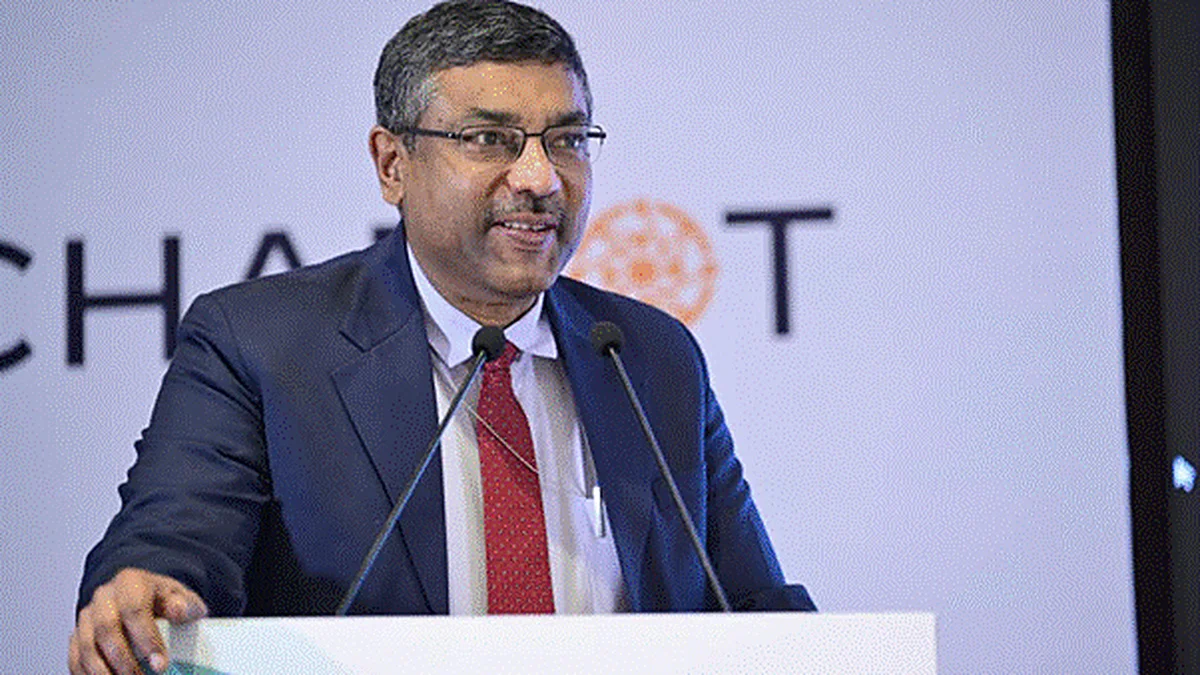
MeitY Secretary S. Krishnan speaking at the Chariot-1 launch in New Delhi. Image: Press Information Bureau, Government of India.
On the Async TTS Pronunciation Benchmark, which covers 1,029 real-world sentences and 2,251 instances of non-standard text across 42 categories, the model recorded over 97% verbalisation accuracy, according to the Ministry. It also achieved a Hindi character error rate of 7.60% and an average character error rate of 6.47% across nine other Indian languages, the lowest among the systems evaluated in the reported tests.
Three Research Innovations Behind the Models
The launch showcased three research ideas the Chariot team built into the training of its models. The first, IndicShift, is an open-source innovation that introduces a shared alphabet for Indian scripts, letting models use the similarities across languages instead of treating each script separately. Covering 1,012 characters across 12 Indian scripts through 350 letters, it uses up to 2.5 times fewer tokens on Indian text than OpenAI’s GPT tokenizer, and the team reports a 5% to 8% improvement on Indian languages at the same compute, while maintaining performance in English and code.
The second, Nested Training, trains all three model sizes simultaneously in a single training run with one set of weights. The approach delivers a reported 62% improvement in training speed compared with training the three sizes separately.
The third, Mixture of Vocabularies, splits the model’s vocabulary into 11 groups and scores only the relevant group at a time. That cuts the number of vocabulary entries scored per word by 5.7 times and delivers a 38% improvement in training speed on the same GPUs, with negligible change in model loss, according to the Ministry.
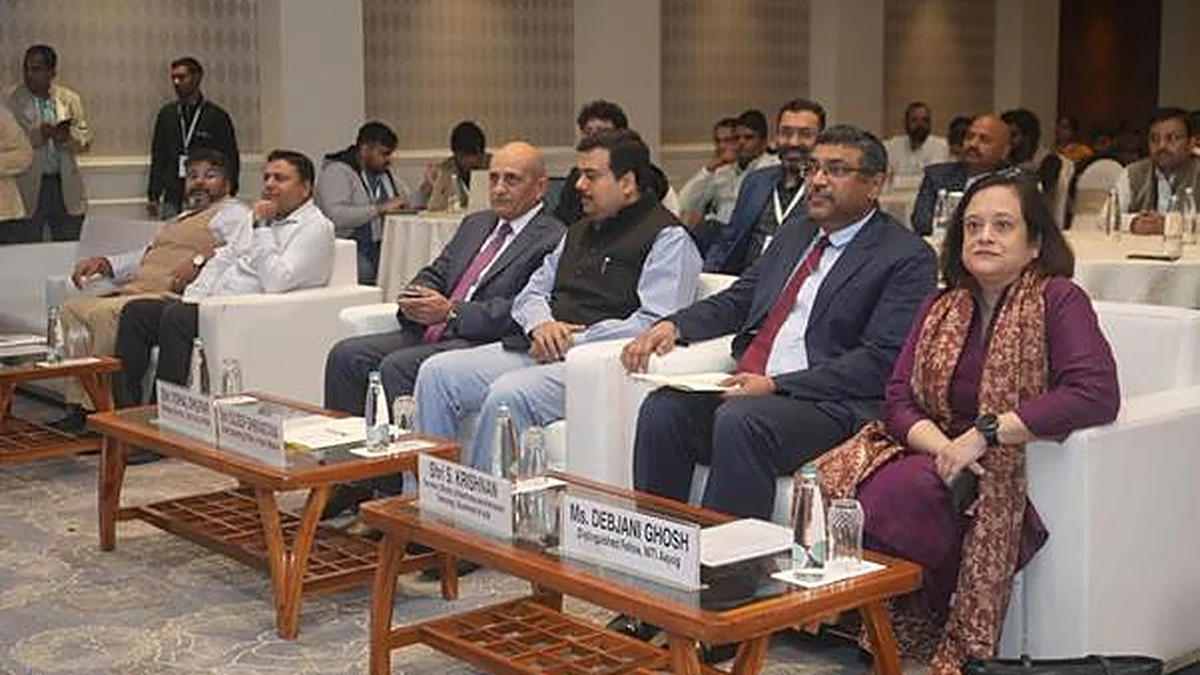
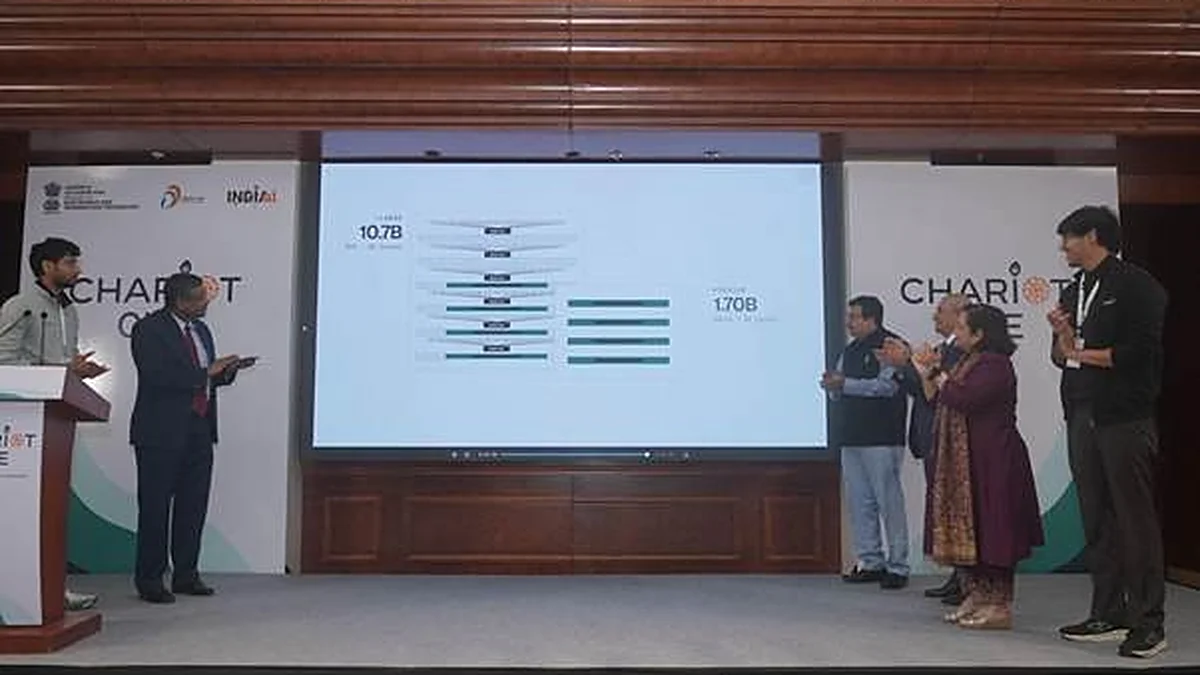
Dignitaries at the Chariot-1 launch event at Bharat Mandapam, New Delhi. Image: Press Information Bureau, Government of India.
Why It Matters
India’s linguistic diversity is the core reason Chariot-1 exists. The country has 22 scheduled languages and hundreds of millions of people whose first language is not English, yet most frontier models are trained primarily on English and a handful of other languages. A model family pre-trained from scratch in India, with a tokenizer built for Indian scripts, is designed to serve those users directly rather than as an afterthought.
The launch also reflects a deliberate strategy. The IndiaAI Mission was set up to nurture domestic teams building foundation models for India’s own technological, linguistic, and societal needs, and Chariot is one of the first four teams it selected. The startup was founded earlier this year by Stanford alumni Parth Sarthi and Suvrat Bhooshan, who returned to India to build the technology, according to Inc42. The launch event also featured a fireside conversation between Vishal Dhupar, Managing Director for South Asia at NVIDIA, and Bhooshan, a sign of how closely India’s sovereign AI effort is tied to the hardware that trains it.
All performance figures cited here are as reported by the Ministry and the Chariot team; independent benchmarks have not yet been published. Even so, Chariot-1 is a concrete step in a race that matters well beyond India: whether countries can build capable foundation models in their own languages, on their own terms, instead of depending entirely on models built elsewhere.
Sources
- Press Information Bureau, Government of India, “IndiaAI Mission-supported Chariot-1 Foundation Models Launched to Boost Indigenous AI Capabilities” (November 26, 2026)
- Inc42, “IndiaAI Mission-Backed Chariot AI Unveils 11 Bn Parameter LLM, Speech Models” (November 26, 2026)
- Asianet Newsable, “MeitY Launches Chariot-1 Foundation Models Under IndiaAI Mission” (November 26, 2026)