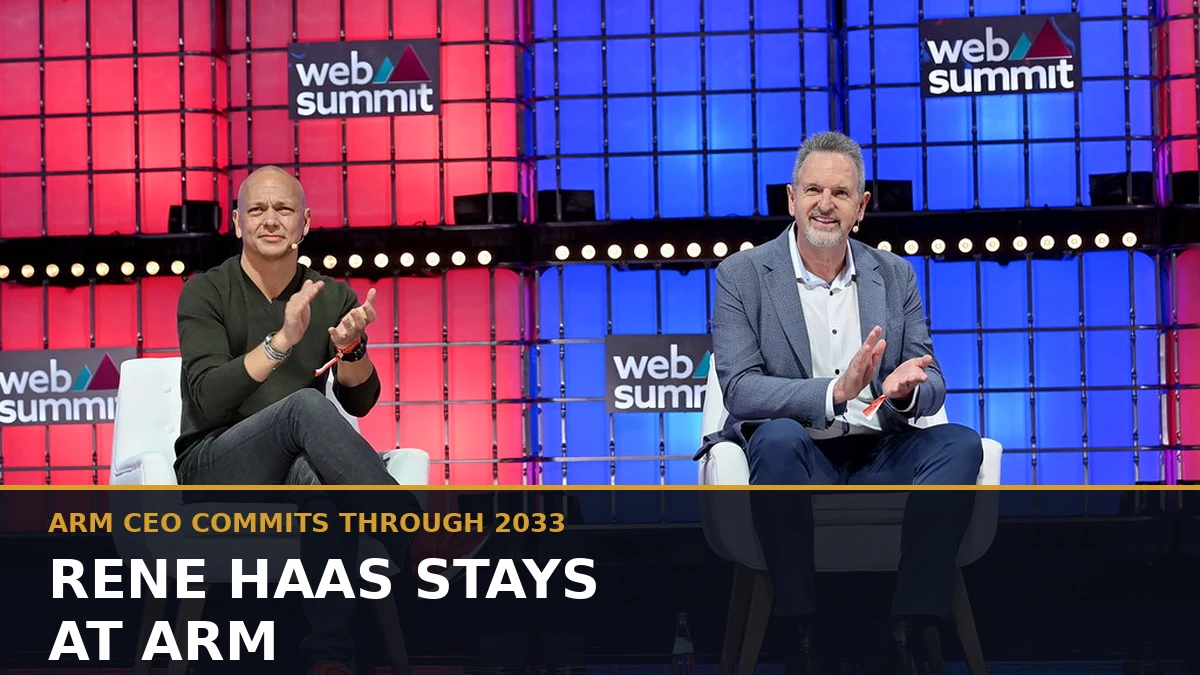
Arm chief executive Rene Haas signed a new agreement on Monday to lead the chip designer through 2033, ending weeks of speculation that he could leave to run Nvidia. Arm also said Haas will become vice chairman of SoftBank Group, its majority owner, effective December 1, 2026, tightening the link between the two companies at the center of the global AI chip race.
Haas had been floated as a leading candidate to succeed Jensen Huang at Nvidia after Huang resigned on November 12. The Wall Street Journal previously reported that Haas was in contact with a search firm hunting for Huang’s replacement, and Bloomberg reported that Nvidia’s board search firm, Heidrick and Struggles, had approached him. Nvidia’s board has said it has not formally engaged any candidate and that speculation about individuals was premature. Monday’s announcement settles the question from Arm’s side: Haas is staying.
What Was Announced?
Reuters reported that Haas signed a new agreement to lead Arm through 2033 and will assume the SoftBank Group vice chairmanship on December 1. Arm said Haas is committed to leading the company through its next phase of growth, backed by the agreement running through 2033.
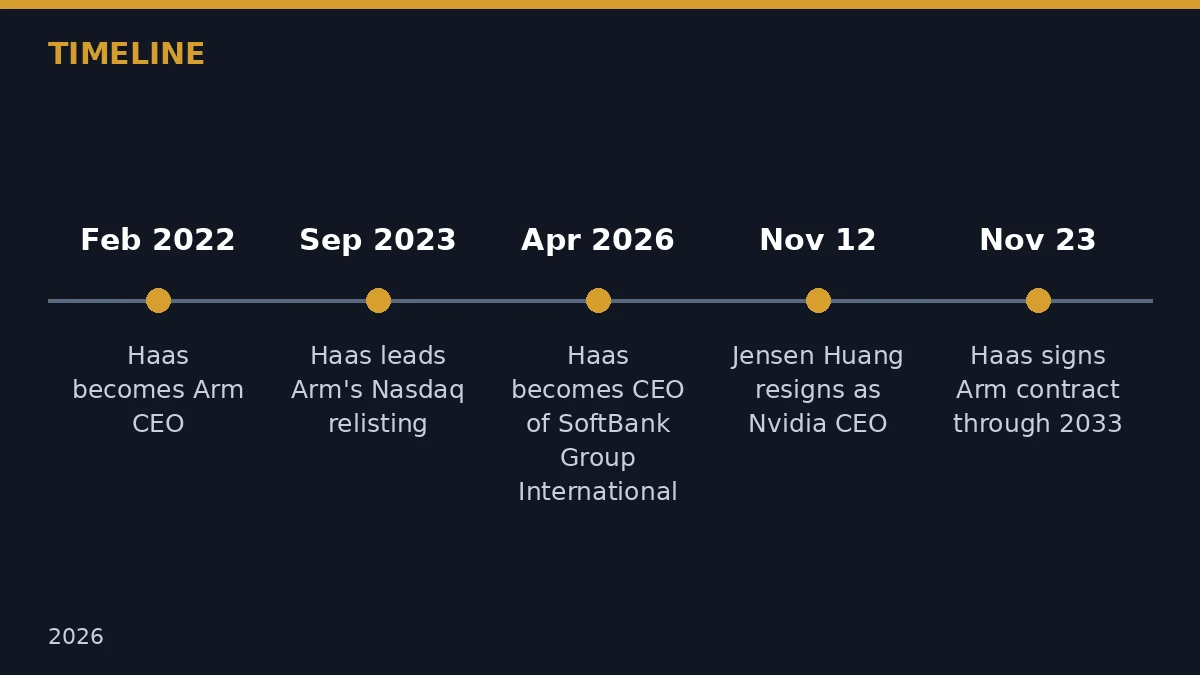
Haas has led Arm since February 2022 and took the company back to the Nasdaq in September 2023. In April 2026 he also became chief executive of SoftBank Group International, giving him oversight of SoftBank’s investments in chips and artificial intelligence, including Ampere and Graphcore. SoftBank owns about 86 percent of Arm, and Arm accounts for more than half of the value of SoftBank’s holdings.
Investors welcomed the certainty. MarketWatch reported that Arm shares extended gains and rose about 9 percent in premarket trading on Monday after the announcement.
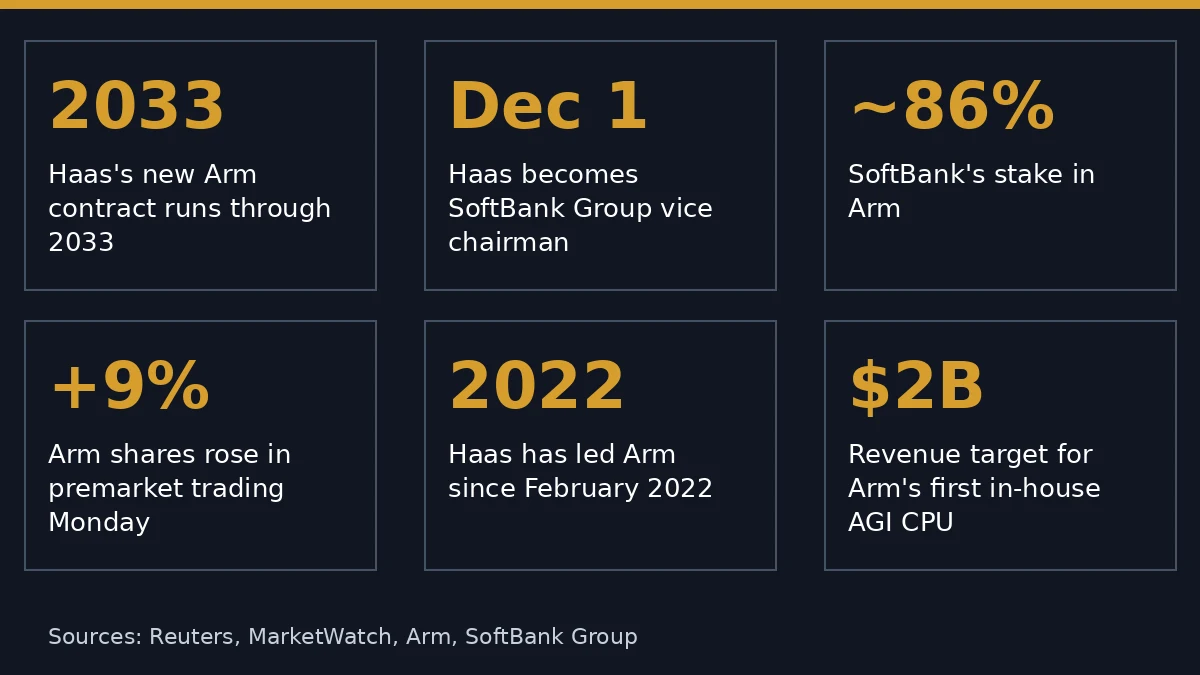
Graphic: GPTOnline, using figures from Reuters, MarketWatch and company disclosures.
Why Haas Was Linked to Nvidia
Haas spent seven years at Nvidia, running its computing products business until 2013, before joining Arm. That history, plus his record leading Arm’s return to public markets, made him one of the most frequently named outside candidates after Huang’s abrupt exit. The Financial Times first reported Nvidia’s interest in Haas on November 13, and prediction markets briefly made him the favorite to take the job.
The succession search remains one of the most consequential in the chip industry. Nvidia’s board, now run by interim chief executive Colette Kress, has said it does not intend to reinstate Huang, and Huang is due to testify before Congress on December 1 about the company’s China chip sales. Moody’s cut Nvidia’s outlook to stable from positive on November 18, citing governance uncertainty and the lack of a formal succession plan.
Graphic: GPTOnline.
Why It Matters
Haas staying at Arm matters beyond one executive’s career. Arm’s architecture sits inside nearly every smartphone and an expanding share of data center chips, and Nvidia’s own Grace and Vera data center CPUs are built on Arm technology. Arm has also moved beyond licensing into designing its own chips, doubling its revenue target for its first in-house AGI CPU to as much as $2 billion after reporting record second quarter revenue of $1.44 billion, up 27 percent year over year.
The vice chairman role also signals how SoftBank chief executive Masayoshi Son wants the group run. Haas is a favorite of Son’s, and the new title puts the Arm chief near the top of the parent company just as SoftBank pours capital into AI infrastructure. For Nvidia, the search for Huang’s permanent successor now moves on without its most obvious external candidate.