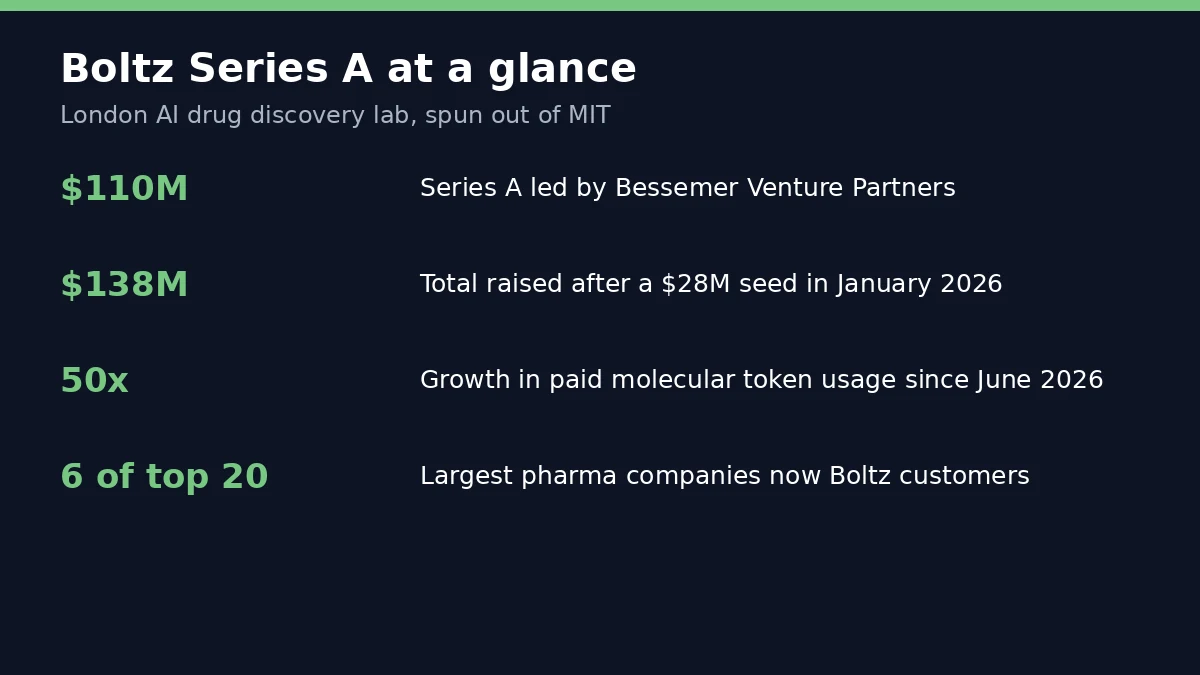
London AI drug discovery startup Boltz has raised a $110 million Series A led by Bessemer Venture Partners, less than a year after emerging from stealth. The round brings the MIT spinout’s total funding to $138 million and signals growing commercial demand for AI models that design molecules instead of just predicting their shapes.
The funding was announced on November 18, with Bessemer leading the round. Existing investors Andreessen Horowitz, Amplify Partners, Zetta Venture Partners and Obvious Ventures all participated, alongside new investors Greycroft, F-Prime Capital, Hummingbird and Benchling. Nvidia, which announced an investment earlier this year during Jensen Huang’s visit to the UK, also joined.
What Boltz Builds
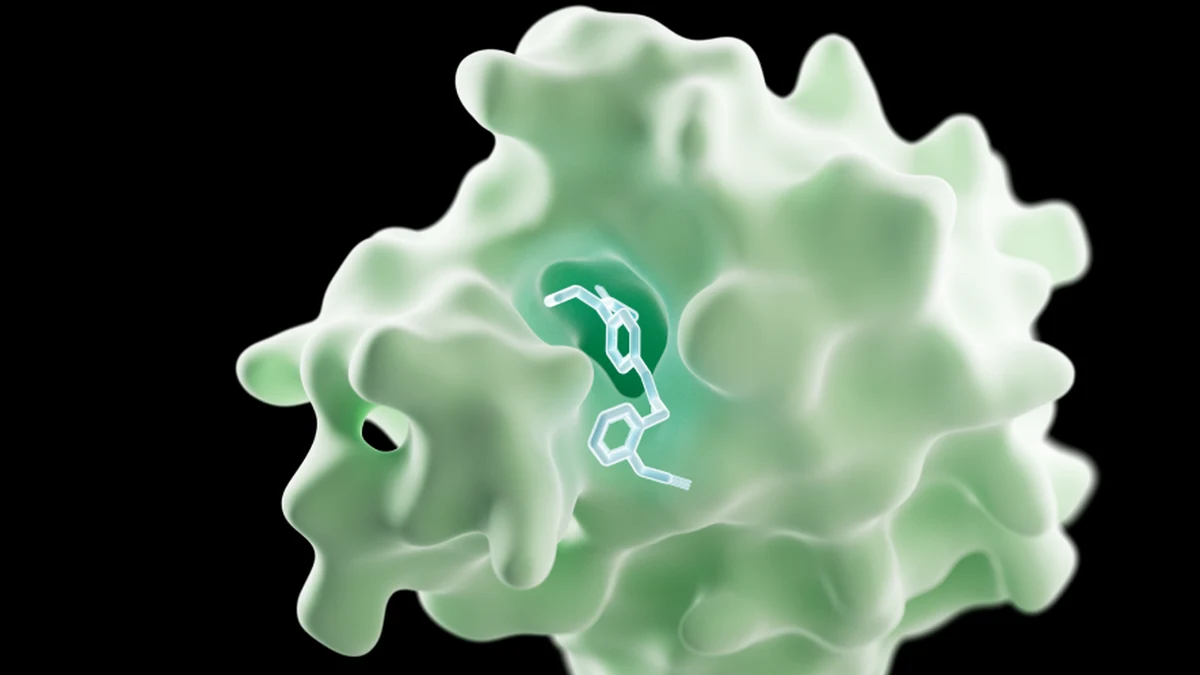
Boltz develops foundation models for biomolecular modeling, small-molecule design and protein design. The company was founded in 2025 by MIT researchers including CEO Gabriele Corso, Saro Passaro and Jeremy Wohlwend, and grew out of research in Professor Regina Barzilay’s lab at MIT’s CSAIL and Jameel Clinic. It is now based in London’s King’s Cross district, where it employs 40 AI researchers.
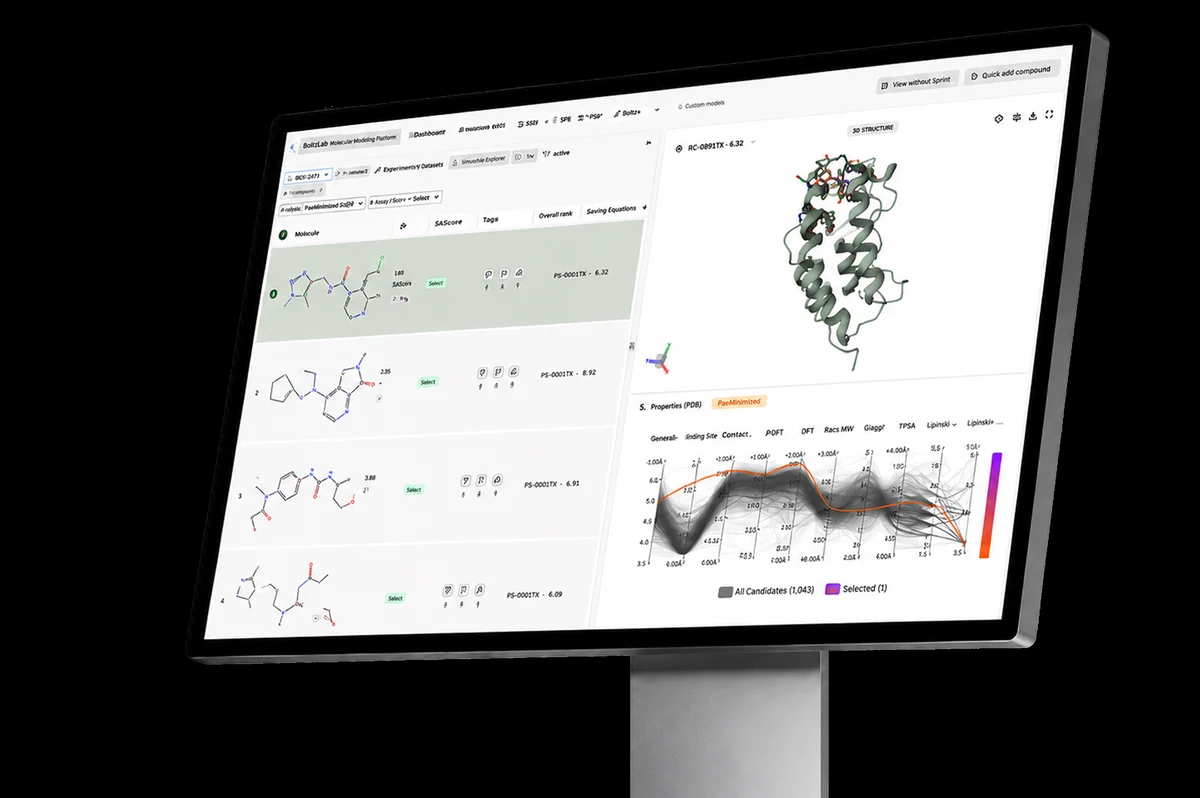
Its open-source models, which the company says match the performance of closed counterparts such as DeepMind’s AlphaFold3, have been downloaded more than 5 million times and are used by over 100,000 scientists. In June 2026, Boltz launched its first paid proprietary models, BoltzMol-1 for small-molecule design and BoltzProt-1 for protein design, sold through a consumption-priced API the company calls “molecular tokens,” plus a platform called Boltz Lab for scientists.
Traction With Big Pharma
The commercial numbers help explain the size of the round. Boltz says paid molecular token usage has grown roughly 50-fold since the June launch of its paid models. Six of the world’s 20 largest pharmaceutical companies are now paying customers, including Pfizer, GSK, Takeda and Bristol Myers Squibb, along with DSM Firmenich.
On performance, the company reports that BoltzMol-1 delivered validated hits against six of ten challenging targets while testing just 28 to 51 compounds per target, and that it cuts the time to a validated hit from months to weeks and the cost from hundreds of thousands of dollars to as low as $10,000. BoltzProt-1, it says, delivers nearly triple the hit rate of its earlier BoltzGen model. Those are company-reported figures, not independently audited case studies.
What the Money Is For
Boltz says it will use the funds to invest more deeply in compute and data, meet growing demand from partners and expand its team. The raise comes as AI drug discovery moves from research demos toward paid, production use: Boltz’s pitch is that molecular design is shifting from physical experimentation to computation, and that drugmakers are now willing to pay per token for it.
The round also reflects how crowded the field has become. Open-weight models from Boltz and others have become default tools in early-stage drug discovery, while proprietary models compete on validated hit rates and integration into pharma workflows. Bessemer’s bet is that usage, measured in molecular tokens consumed, will matter more than model ownership in the long run.
Why It Matters
A $110 million Series A is large for a company founded in 2025, and it puts Boltz among the best-funded AI biology startups in Europe. If its paid models keep converting free open-source users into paying pharma customers at the current pace, the company could become a template for how research labs commercialize foundation models: give the base models away, then charge for the specialized versions that produce validated results.
The open question is whether the reported hit rates hold up across more targets and more customers. For now, the funding gives Boltz room to find out, with six of the world’s biggest drugmakers already paying to watch.