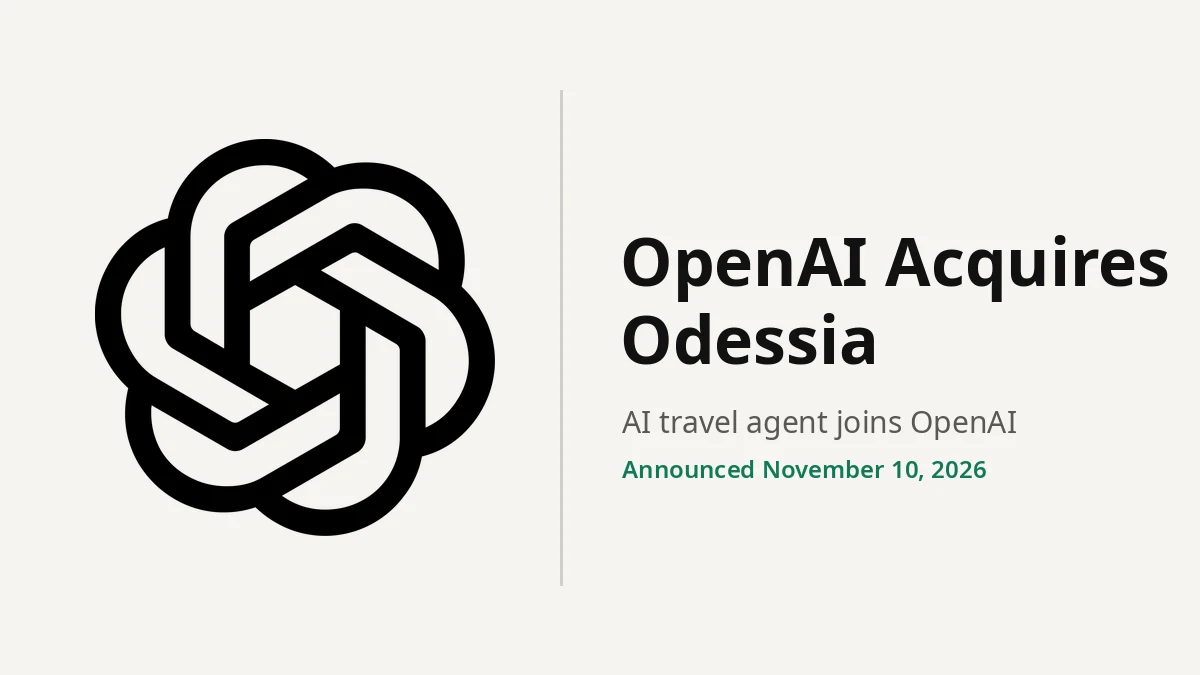
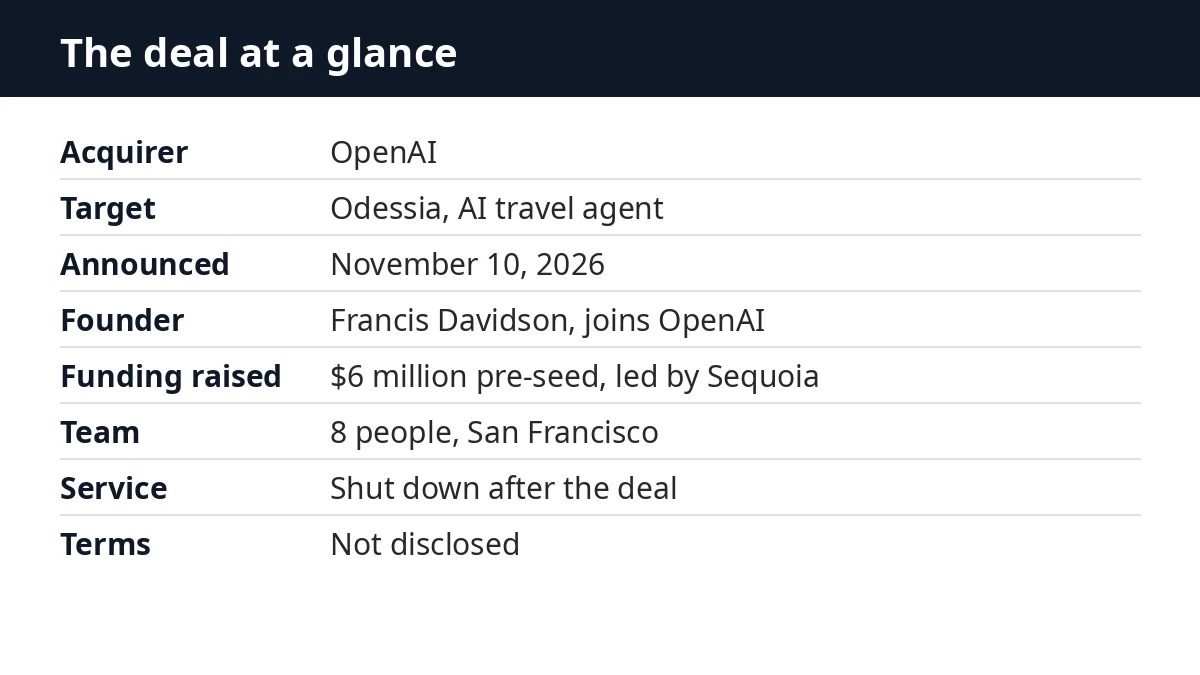
OpenAI has acquired Odessia, an AI travel agent startup, and hired its founder Francis Davidson to work on the future of travel inside the company. Davidson announced the deal on November 10, and an OpenAI spokesperson confirmed his hire to TechCrunch. The terms were not disclosed, and Odessia’s consumer service has already shut down.
What Was Announced?
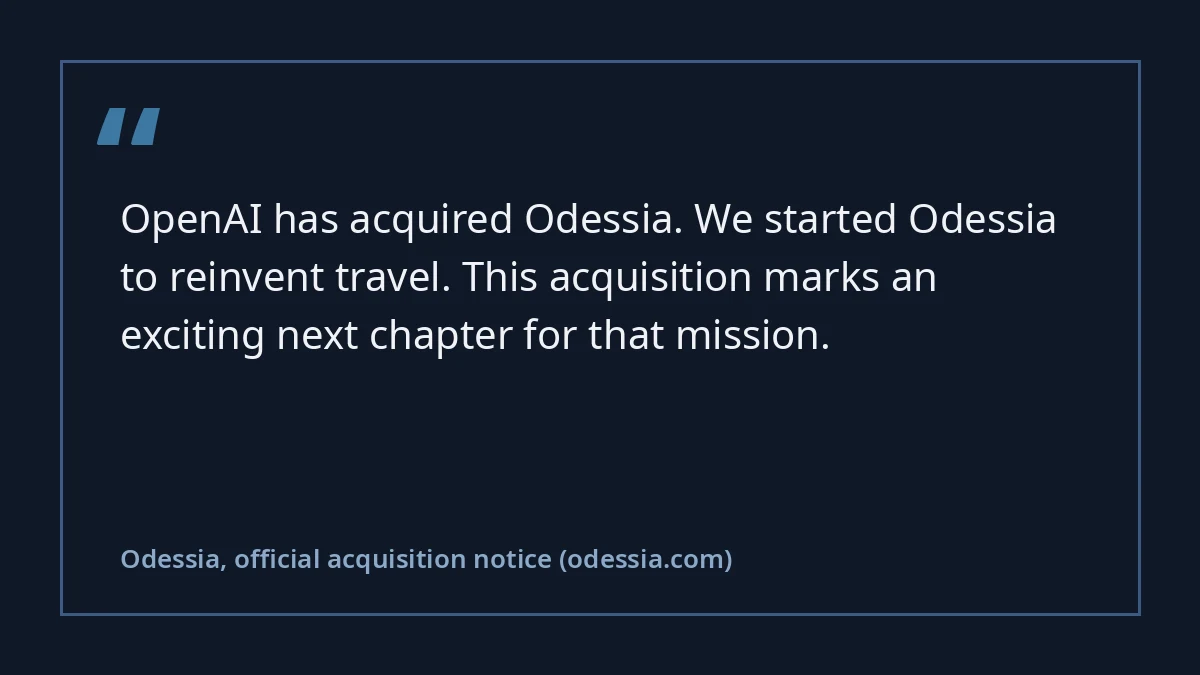
Davidson announced the acquisition in a post on X, saying he is joining OpenAI to focus on the future of travel. Odessia’s own website now carries a short notice confirming the deal: “OpenAI has acquired Odessia. We started Odessia to reinvent travel. This acquisition marks an exciting next chapter for that mission.” The notice adds that the Odessia service is no longer available, while support remains open for existing bookings and travel plans.
— Francis Davidson (@FDavidsonT) November 10, 2026
TechCrunch described the deal as looking like an acqui-hire, with the founder and his team as the main prize rather than an operating business. An OpenAI spokesperson confirmed the hire, saying: “We’re thrilled to welcome Francis to OpenAI. Francis is a proven founder who has built multiple businesses to help people travel, and we’re excited he’s chosen to build with us.”
Odessia was a small startup with an outsized idea. The year-old company raised a $6 million pre-seed round led by Sequoia and launched its AI travel agent about five months ago, with a team of eight in San Francisco. Davidson built the agent by directing teams of AI agents, and he said tens of thousands of early adopters planned more than $60 million worth of travel through Odessia over the summer. Industry coverage also noted that Odessia held accreditation from IATA, the airline trade body, which would let it issue tickets directly rather than handing travelers off to a booking site, as Hospitality Net explained.
Why Travel, and Why Now?
Travel is one of the main things people ask ChatGPT to help with. The OpenAI spokesperson noted that “1.2 billion people turn to ChatGPT each week for help with everyday tasks,” including planning a trip, adding: “We see a real opportunity to make these experiences even more useful.”
OpenAI signaled this direction more than a year ago. When it launched the ChatGPT agent in July 2025, it named travel as one of its potential uses, and the company already counts Booking.com, Expedia and KAYAK as customers or partners. Buying a team that has already shipped a working AI travel agent, and that holds airline ticketing accreditation, gives OpenAI a shortcut into a market where booking is the hard part, not chatting about destinations.
The market noticed. Shares of Expedia, Tripadvisor and Booking Holdings slipped on the day the deal was announced, with Expedia down nearly 4 percent, Tripadvisor more than 3 percent and Booking Holdings more than 2 percent, according to market coverage. The next day, United Airlines barred unauthorized AI agents from booking flights on behalf of customers, a move GPTOnline covered here.
Who Is Francis Davidson?
Davidson is a familiar name in travel. He founded Sonder in 2014 as a college student and built the short-term rental company into a unicorn with over $600 million in revenues, before the pandemic battered the business. He resigned as chief executive in June 2025, and the company later went bankrupt after a key partnership with Marriott fell through. Its name, trademarks and website domain were sold to TravelAI in 2026. As TechCrunch put it, Davidson is “the kind of battle-scarred founder that Silicon Valley often values.”
What Happens Next?
OpenAI has announced no travel product and no timetable, and its spokesperson had little more to share beyond saying that travel is one of the areas ChatGPT users frequently ask about. For now, the deal reads as a talent and capability bet: a small team that knows how to plan and book real trips, inside a company whose assistant already fields travel questions from more than a billion people a week. Whether that turns into a ChatGPT travel feature, and how the big booking platforms respond, is the open question.